
Table of Contents
Healthcare careers are changing rapidly. A decade ago, most pharmacy and life science graduates believed that clinical practice, research laboratories, or pharmaceutical sales were the only realistic career paths available. Today, things look very different. Digital healthcare, AI-powered medical communication, online education, pharmaceutical marketing, and clinical research expansion have created massive demand for specialized writers. This is where the debate of medical writer vs scientific writer becomes extremely important for students and professionals trying to build a stable career.
Many students search questions like “what is medical writer,” “what is a scientific writer,” or “how to become a medical writer” because these professions offer flexibility, remote work options, and strong salary growth. Companies now need professionals who can explain complicated scientific concepts in simple language for doctors, researchers, regulators, and even patients. A medical writer focuses more on healthcare, clinical studies, regulatory documents, and pharma communication. A scientific writer covers broader scientific fields including biotechnology, chemistry, biology, environment, and research communication.
The best part? These careers are no longer limited to experienced professionals. Freshers with PharmD, BPharm, MPharm, MSc, MBBS, or life science backgrounds can enter the field through internships, certifications, and freelance projects. Many organizations also offer medical writer jobs work from home, making this one of the most attractive non-clinical career paths in 2026.
Current salary reports show promising trends. The average medical writer salary in India is around ₹5.4 lakh annually according to Indeed India. TCS scientific medical writer salaries reportedly range between ₹4.5 lakh and ₹11 lakh depending on experience and specialization. These numbers clearly show why thousands of healthcare graduates are considering writing-based careers today.
Understanding the Growing Demand for Medical and Scientific Writers
Why Healthcare Content Is Booming
The healthcare industry runs on communication. Every medicine launched in the market requires clinical trial documentation, safety reports, patient education material, promotional literature, scientific publications, and regulatory submissions. Without accurate writing, even the best pharmaceutical product cannot reach patients safely. This enormous documentation requirement has increased the demand for medical scientific writer professionals worldwide.
Pharmaceutical companies, CROs, hospitals, healthcare startups, and digital health platforms are hiring writers at a fast pace. India especially has become a major outsourcing hub for global medical writing projects. Cities like Hyderabad, Bengaluru, Mumbai, Pune, and Gurugram are seeing rapid growth in medical communications jobs.
Another major reason for growth is the explosion of online healthcare education. Patients now actively search symptoms, diseases, treatments, and medicines online. Pharma brands want scientifically accurate blogs and educational content that still feels easy to read. This balance between science and communication is exactly why professional writers are needed.
How AI Is Changing Writing Careers
Many students worry that AI tools will replace medical writers. The reality is more balanced. AI can help with drafting, summarizing, and editing, but healthcare writing still requires human expertise. Clinical interpretation, scientific accuracy, regulatory compliance, and ethical responsibility cannot be fully automated.
Experienced professionals on Reddit medical writing communities repeatedly mention that AI works more like an assistant rather than a replacement. Human writers are still required to verify data, interpret scientific studies, and maintain compliance standards. This means students entering the field today should learn both scientific communication and AI-assisted workflows for long-term success.
What Is a Medical Writer?
What Does a Medical Writer Do?
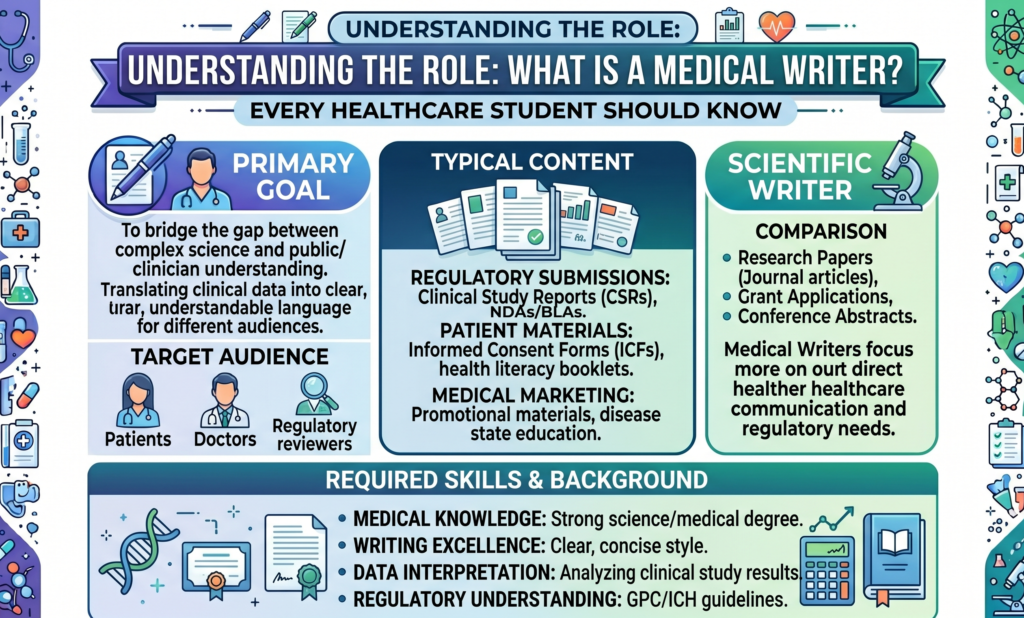
A medical writer creates healthcare-related documents using scientific evidence and medical knowledge. Their work involves transforming complex medical information into understandable and accurate content for specific audiences. Some write for doctors and researchers, while others create patient-friendly educational material.
Medical writers commonly work on:
- Clinical study reports
- Regulatory documents
- Drug safety narratives
- Research manuscripts
- Medical blogs
- CME content
- Patient education leaflets
- Scientific presentations
- Pharma marketing content
Imagine a bridge connecting researchers and the real world. That is essentially the role of a medical writer. They convert technical medical data into meaningful communication.
Medical Writer Job Description
A typical medical writer job description includes literature review, data interpretation, scientific documentation, editing, referencing, and collaboration with healthcare professionals. Writers are expected to understand clinical terminology, pharmacology, disease pathology, and publication guidelines.
Strong grammar alone is not enough. Employers look for analytical thinking, research skills, attention to detail, and the ability to simplify complex scientific ideas. Regulatory medical writers especially need deep knowledge of ICH guidelines, FDA standards, and clinical documentation structures.
Types of Medical Writing Jobs
The field is surprisingly broad. Different specializations include:
| Type of Medical Writing | Main Work |
|---|---|
| Regulatory Writing | Clinical trial and submission documents |
| Medical Communication | Promotional and educational content |
| Publication Writing | Research papers and manuscripts |
| Health Content Writing | Blogs and healthcare websites |
| Pharmacovigilance Writing | Drug safety reports |
| CME Writing | Continuing medical education |
This variety makes the field attractive because professionals can switch niches as their interests evolve.
What Is a Scientific Writer?
What Does a Scientific Writer Do?
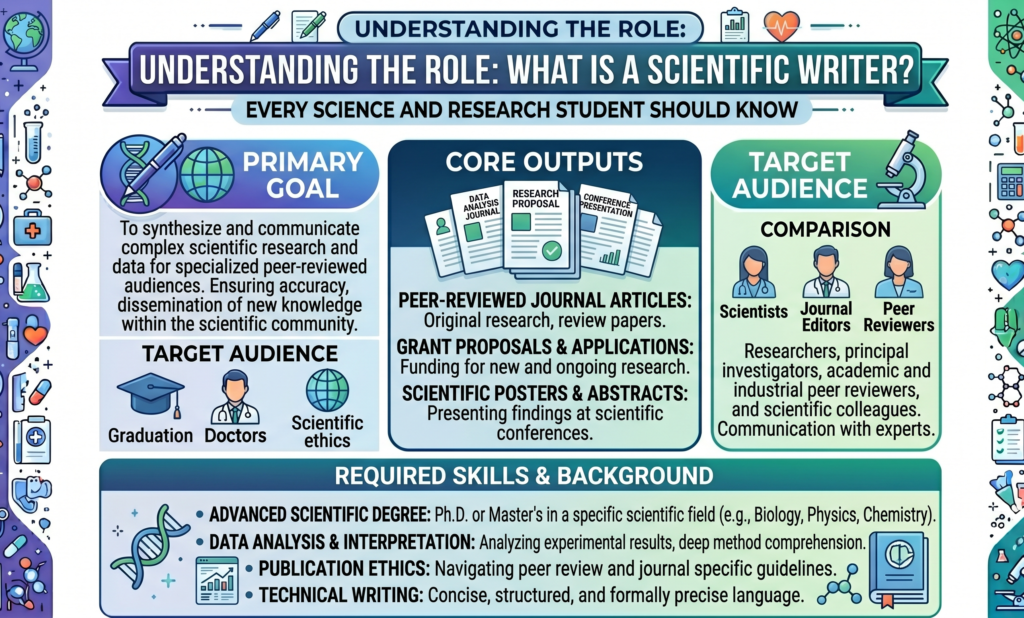
A scientific writer communicates scientific concepts to different audiences. Unlike medical writers who mainly focus on healthcare and pharmaceuticals, scientific writers may work across biology, chemistry, biotechnology, environmental science, physics, and research journalism.
Scientific writers often prepare:
- Research summaries
- Scientific articles
- Grant proposals
- White papers
- Technical reports
- Science news articles
- Educational materials
- Academic publications
Think of scientific writing as a larger umbrella where medical writing is one specialized branch. Every medical writer is involved in science communication, but not every scientific writer works in healthcare.
Scientific Writer Job Roles in Pharma and Research
In pharmaceutical industries, scientific writers help prepare research publications, conference abstracts, promotional content, and educational resources. Academic institutions also hire scientific writers to help researchers publish findings effectively.
The demand for scientific writer remote jobs has increased because digital publishing and virtual collaboration are now common worldwide. Many companies hire freelance writers for manuscript development, editing, and publication support.
Current salary data suggests that scientific writers in India earn approximately ₹7 lakh annually on average depending on experience and specialization.
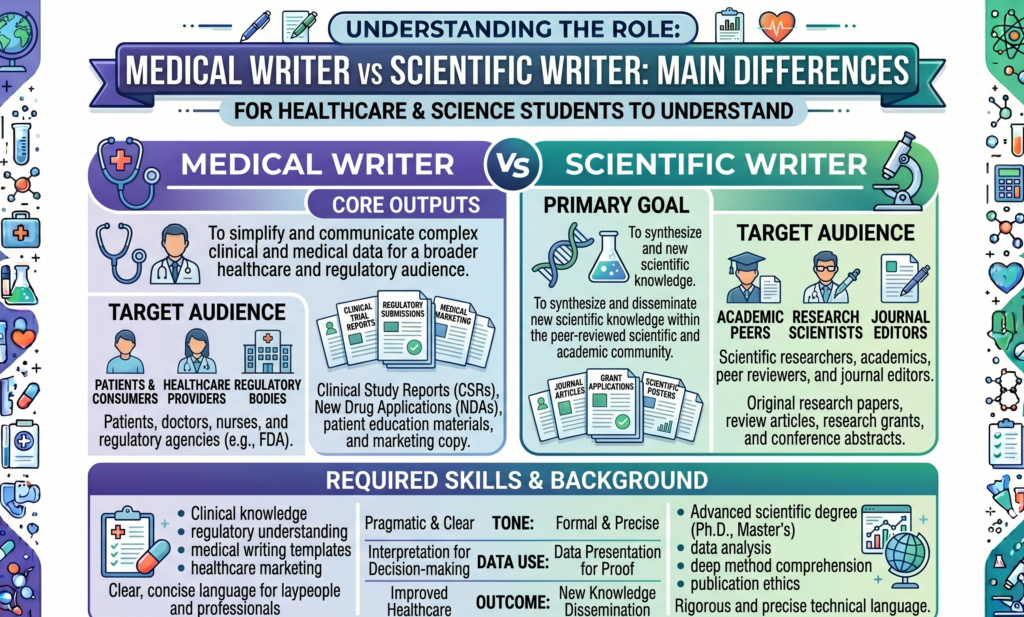
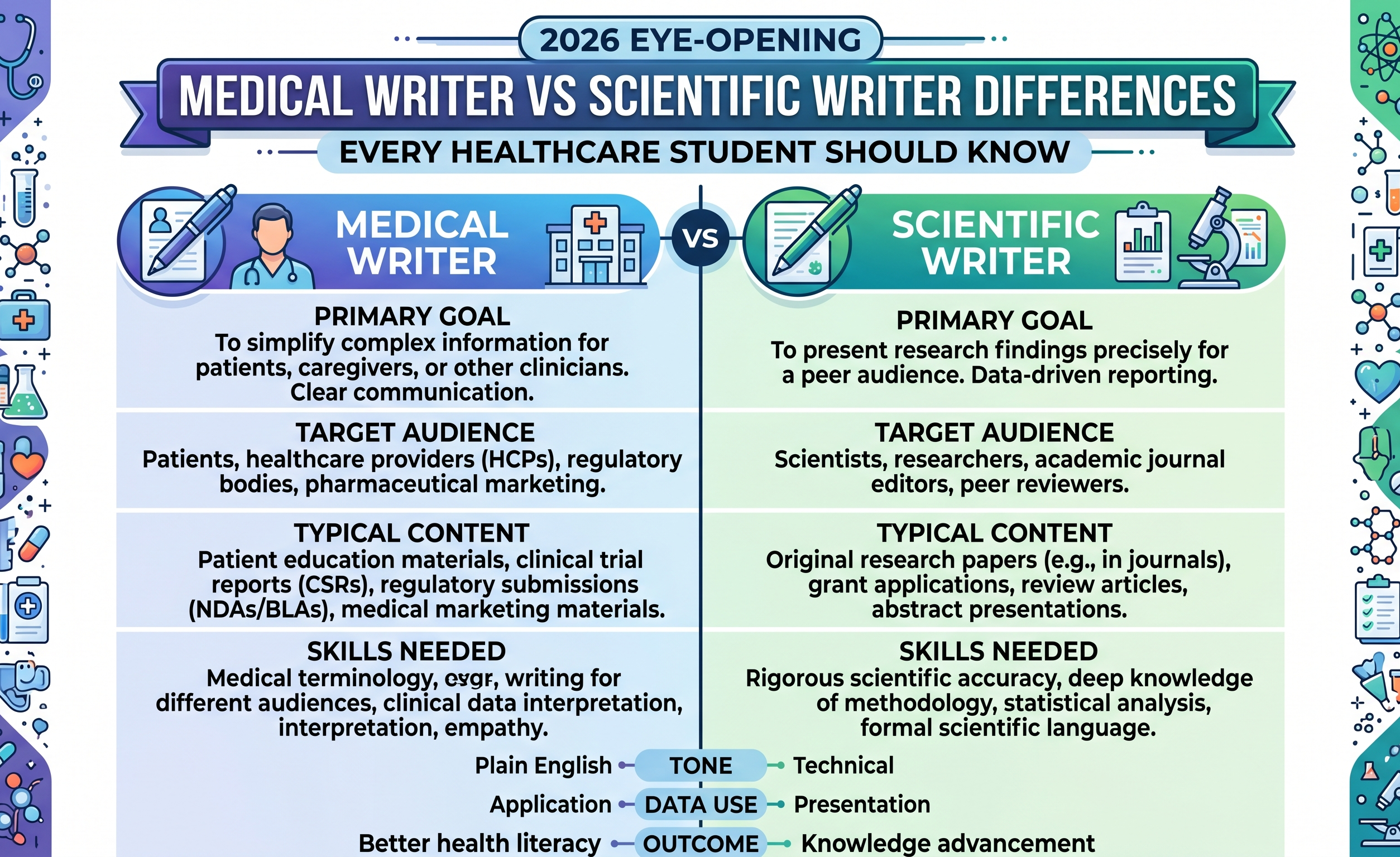
Medical Writer vs Scientific Writer: Main Differences
Educational Background
Medical writers usually come from healthcare backgrounds such as PharmD, MBBS, BDS, BPharm, MPharm, nursing, or life sciences. Scientific writers may come from broader science disciplines including biotechnology, microbiology, chemistry, or environmental science.
A PharmD graduate generally has an advantage in medical writing because of exposure to pharmacology, therapeutics, and clinical practice.
Writing Style and Audience
Medical writing is highly structured and often regulated. Accuracy is critical because documents may influence patient safety or drug approvals. Scientific writing can sometimes be more flexible depending on the audience.
For example:
- Medical writing audience: doctors, regulators, healthcare professionals
- Scientific writing audience: researchers, students, scientific communities
Medical writers must follow strict compliance standards. Scientific writers may focus more on storytelling and scientific interpretation.
Salary Comparison
| Role | Average Salary in India |
| Medical Writer | ₹5–7 LPA |
| Scientific Writer | ₹5–9 LPA |
| Senior Regulatory Writer | ₹10–18 LPA |
Salary varies based on expertise, therapeutic domain, company type, and writing specialization.
Career Growth Opportunities
Medical writers generally have more opportunities in pharma, CROs, and regulatory industries. Scientific writers may have broader opportunities in academia, publishing, and science journalism.
If someone wants long-term corporate growth, medical writing may offer better structured progression. Scientific writing may provide more creative flexibility.
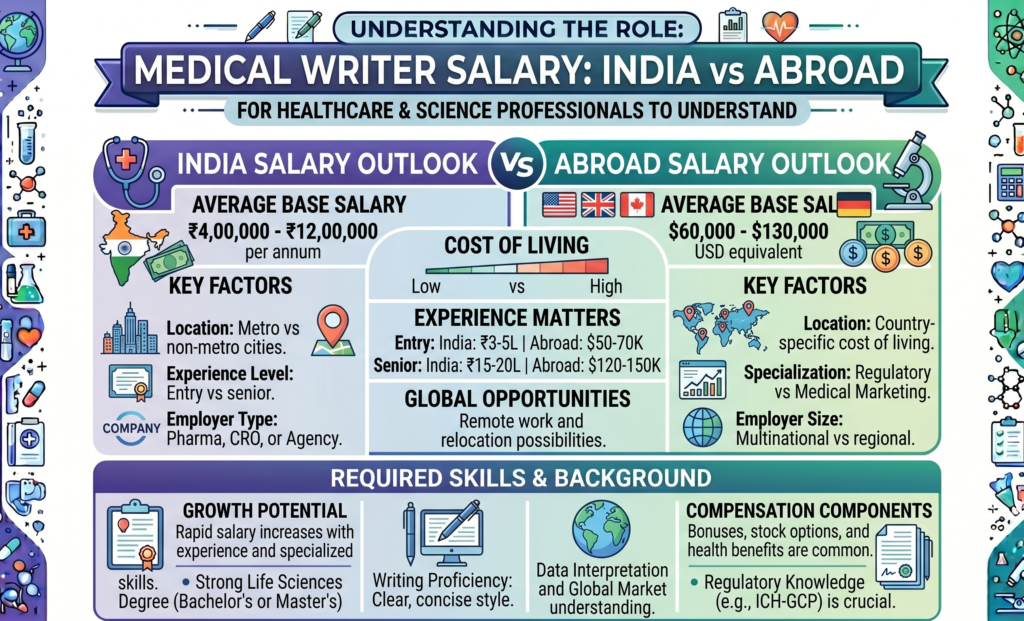
Medical Writer Salary in India and Abroad
Fresher Salary
Freshers usually start between ₹3–5 LPA depending on location and company. Larger organizations in Bengaluru, Hyderabad, and Mumbai often offer higher packages.
Senior-Level Salary
Experienced medical writers with regulatory expertise can earn ₹10–18 LPA or even more. Writers managing global submissions or specialized oncology projects often receive premium salaries.
What Is the Salary of Medical Writer in TCS?
According to recent salary reports, TCS medical writers reportedly earn around ₹7.2 lakh annually on average, while scientific medical writer roles range between ₹4.5 lakh and ₹11 lakh yearly depending on experience.
TCS and similar companies also hire for:
- Medical reviewer
- Clinical safety writer
- Scientific writer
- Pharmacovigilance specialist
- Regulatory associate
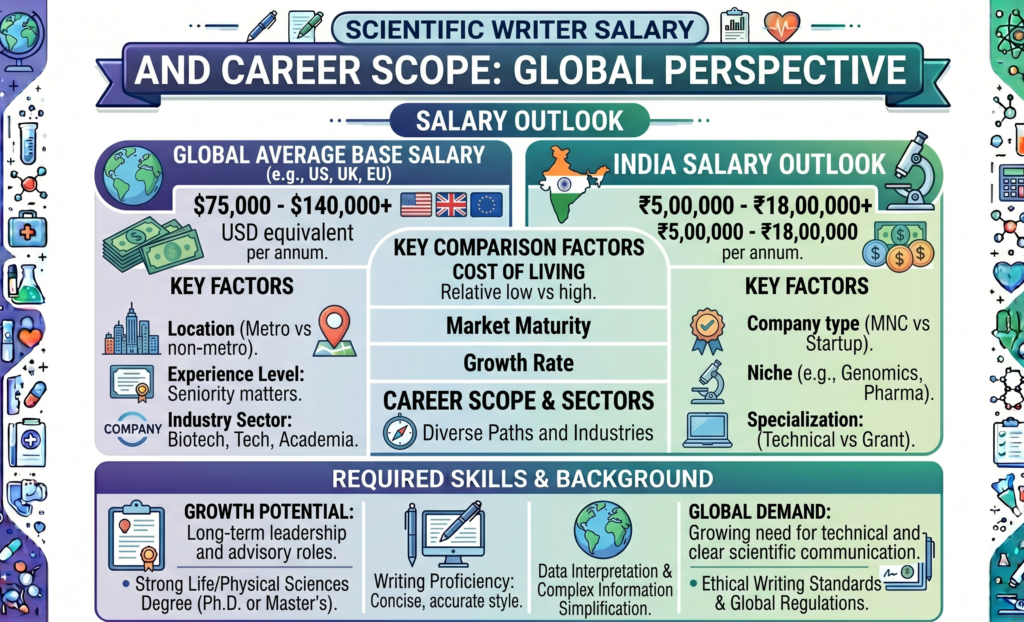
Scientific Writer Salary and Career Scope
Scientific Writer Remote Jobs
Remote scientific writing is becoming increasingly common. International startups, journals, healthcare brands, and biotech firms frequently outsource content development globally.
Freelancers can earn through:
- Research editing
- Manuscript writing
- Science blogging
- LinkedIn ghostwriting
- Pharma educational content
Scientific Writer Salary in India
Glassdoor estimates average salaries around ₹7 lakh annually for scientific writers in India. Senior specialists with publication expertise or regulatory knowledge can earn substantially more.
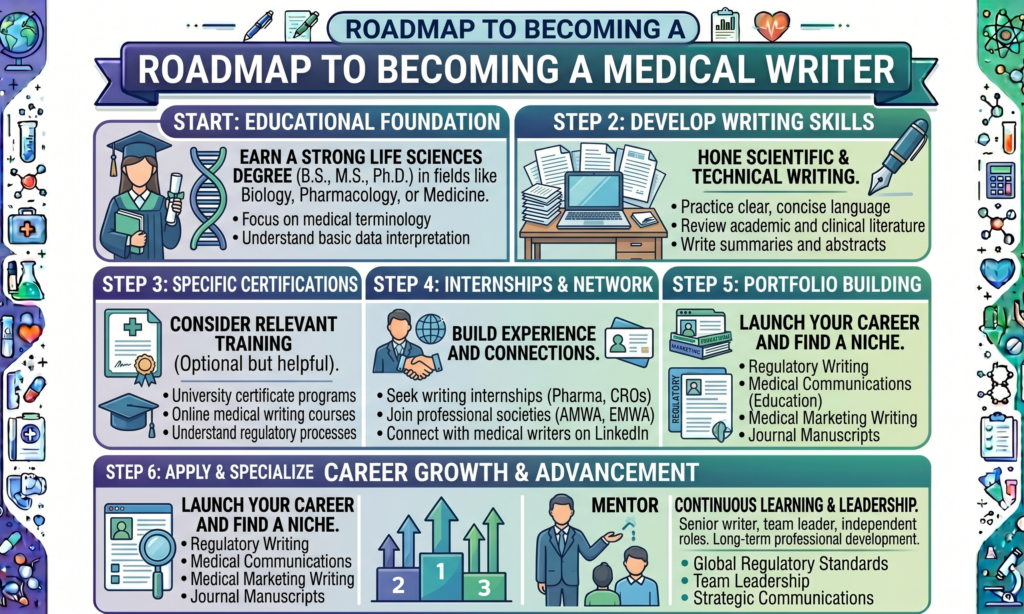
How to Become a Medical Writer
Required Skills
To become a successful medical writer, students should focus on:
- Scientific literature analysis
- Grammar and editing
- Clinical terminology
- Research interpretation
- Referencing styles
- Data presentation
- SEO basics
- Communication skills
The biggest myth is believing writers only “write.” In reality, medical writers spend enormous time reading, analyzing, and understanding data.
Certifications and Internships
A strong portfolio matters more than certificates alone. Still, these can help:
- Medical writing internships
- Scientific writing workshops
- Publication writing courses
- Regulatory writing certifications
Students searching for medical writing free courses with certificate or free medical writing courses online in India with certificate can begin with MOOCs, pharma academies, and university learning platforms.
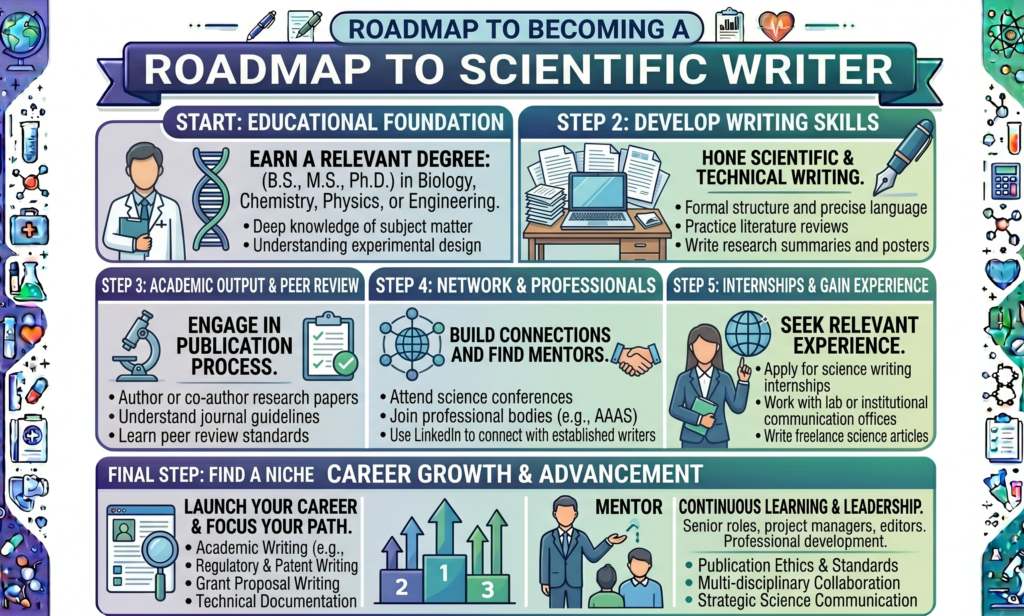
How to Become a Scientific Writer
Scientific Writing Courses
Students interested in scientific writing course online free with certificate programs should focus on courses teaching:
- Research communication
- Academic writing
- Data visualization
- Literature review methods
- Publication ethics
Building LinkedIn visibility and writing sample articles can dramatically improve hiring chances.
Freelance Scientific Writer Opportunities
The freelance market is expanding quickly. Many biotech startups and health platforms hire independent writers instead of full-time employees.
A successful freelance scientific writer often combines:
- Technical expertise
- SEO knowledge
- Networking
- Portfolio development
- Consistent publishing
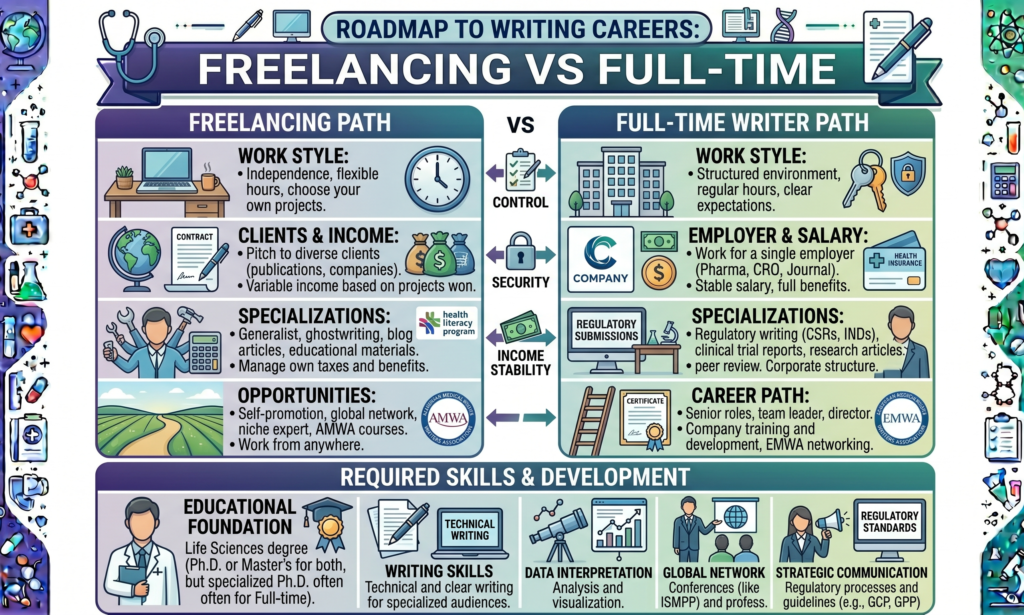
Freelancing vs Full-Time Writing Careers
Freelancing offers flexibility, remote work, and international clients. Full-time jobs provide stable income, mentorship, and structured growth.
| Freelancing | Full-Time Job |
| Flexible timing | Stable salary |
| Global clients | Employee benefits |
| Variable income | Career progression |
| Self-marketing needed | Team collaboration |
For beginners, full-time roles are usually better for learning industry standards before moving into freelance work.
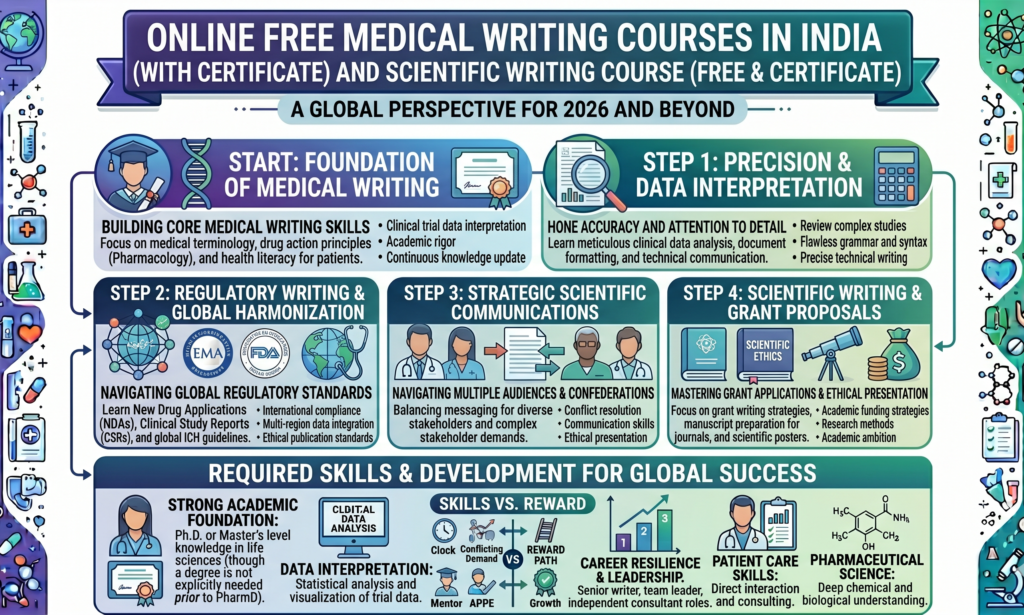
Free Medical Writing Courses Online in India with Certificate and Scientific Writing Course Online Free with Certificate
| Course Name | Platform | Focus Area | Certificate | Course Link |
|---|---|---|---|---|
| Introduction to Medical Writing | Alison | Basics of medical writing, clinical research, healthcare communication | Yes | Alison Medical Writing Course |
| Writing in the Sciences | Coursera (Stanford) | Scientific manuscript writing and publication | Yes (Paid/Financial Aid Available) | Stanford Writing in the Sciences |
| NIeCer 103: Scientific Writing in Health Research | SWAYAM/ICMR | Health research and scientific publication writing | Yes | ICMR Scientific Writing Course |
| CDC/TEPHINET Scientific Writing Course | CDC & TEPHINET | Scientific writing for public health researchers | Free Completion | CDC Scientific Writing Course |
| Medical Writing Course | Elevify | Medical documentation and patient communication | Yes | Elevify Medical Writing Course |
| Medical Writer Course 2026 | Elevify | Clinical writing, regulatory writing, pharmacology writing | Yes | Elevify Medical Writer Course |
| Scientific Writing Course | Elevify | Research paper and journal writing | Yes | Scientific Writing Course |
| Scientific Writing Course 2026 | Elevify | Academic and publication writing | Yes | Scientific Writing Course 2026 |
| Writing Powerful Business Reports | Great Learning | Professional writing and reporting skills | Yes | Great Learning Writing Course |
| Free Medical Writing Certificate Course | YouTube + WriteClinic | Beginner medical writing skills | Yes | Medical Writing Free Course Video |
Best Courses for Different Goals
| Goal | Recommended Course |
|---|---|
| Beginner in Medical Writing | Alison Introduction to Medical Writing |
| PharmD/BPharm Students | NIeCer 103 + Elevify Medical Writer Course |
| Research Publication Skills | Stanford Writing in the Sciences |
| Freelance Scientific Writer Career | Scientific Writing Course by Elevify |
| Regulatory Writing Basics | Medical Writer Course 2026 |
| Free Government-Recognized Learning | SWAYAM/ICMR Course |
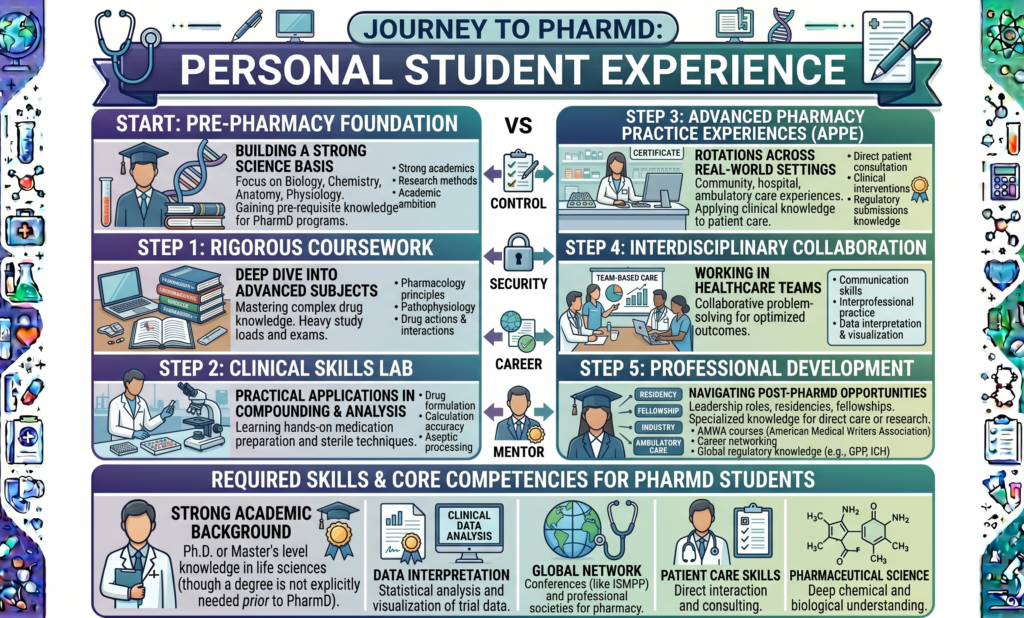
Personal Experience as a PharmD Student
As a PharmD student, entering the writing field initially felt intimidating. During clinical postings, there was constant exposure to patient cases, disease discussions, and pharmacotherapy plans. But translating this scientific knowledge into readable content was a completely different challenge.
The turning point came while preparing drug information assignments and journal club presentations. Writing scientifically accurate explanations in simple language gradually became enjoyable. Instead of memorizing information, there was a desire to communicate it clearly.
One major realization was that pharmacy students already possess valuable knowledge for medical writing careers. Understanding pharmacology, adverse effects, dosage forms, and patient counseling provides a strong advantage over general content writers.
Initially, freelance opportunities seemed difficult to find. Rejections were common. Many companies requested experience even for internships. Building a LinkedIn profile, publishing healthcare posts regularly, and networking with professionals eventually created opportunities.
The biggest lesson? Writing improves only through consistent practice. No course alone can transform someone into a great writer overnight.
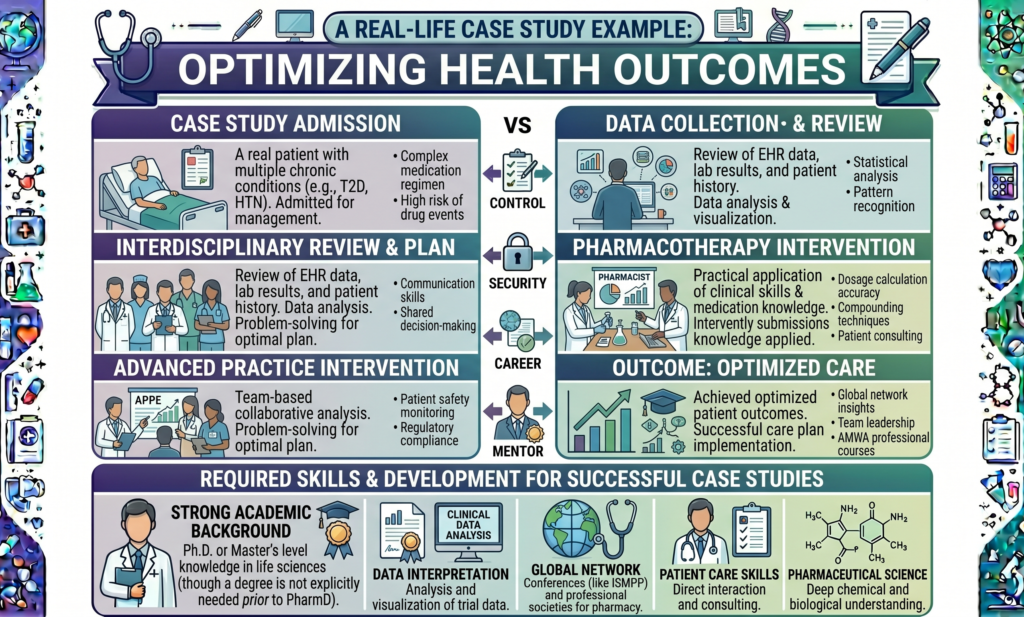
Real-Life Case Study Example
A PharmD graduate from Hyderabad started as a trainee medical writer in a CRO with a salary of ₹3.8 LPA. Initially, work involved literature reviews and adverse event narratives. The workload felt overwhelming because accuracy standards were extremely high.
Within two years, the individual specialized in oncology publication writing and regulatory documentation. Salary increased to ₹8.5 LPA after switching companies. Freelance manuscript editing projects added additional monthly income.
Today, the same professional handles global publication planning projects remotely for international pharmaceutical clients. The career path evolved from simple data summarization to strategic scientific communication.
This case reflects a common trend in medical writing careers. Specialization dramatically improves growth opportunities.
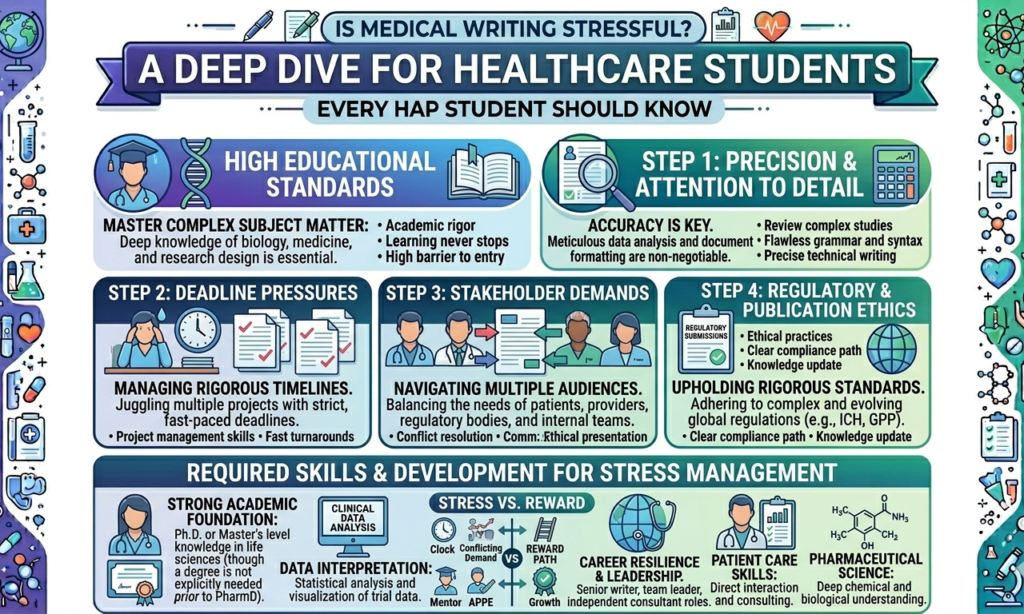
Is Medical Writing Stressful?
One of the most searched questions online is: “Is medical writing stressful?”
The honest answer is yes, sometimes. Deadlines, accuracy expectations, reviewer comments, and regulatory compliance can create pressure. Regulatory writers especially work under strict timelines during drug submission periods.
However, stress levels vary by company and role. Compared to many clinical healthcare jobs, medical writing often provides:
- Better work-life balance
- Remote work flexibility
- Reduced physical exhaustion
- Structured schedules
The key challenge is mental concentration rather than physical workload.
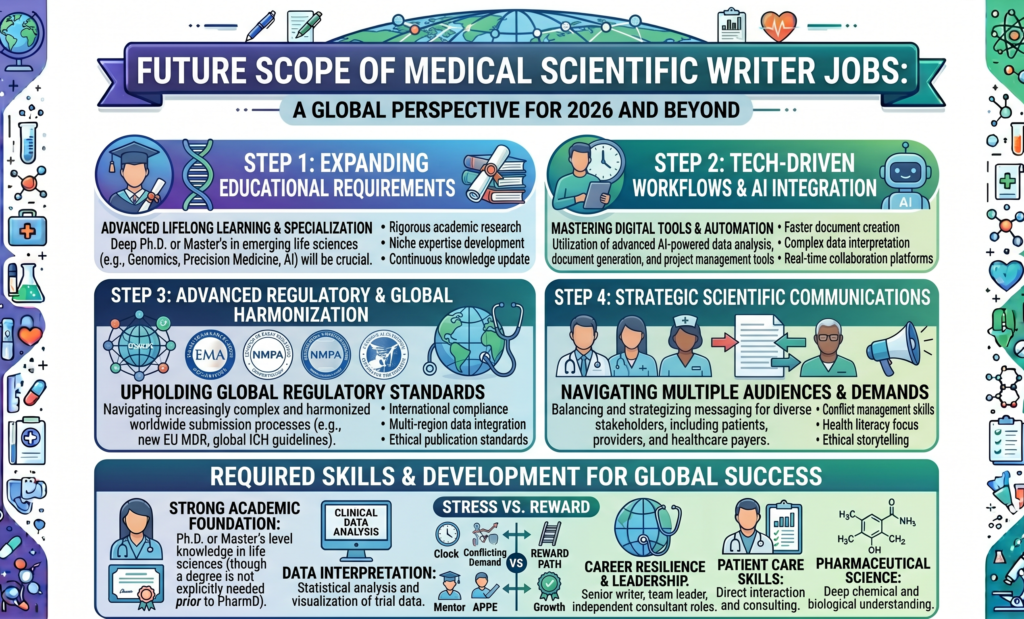
Future Scope of Medical Scientific Writer Jobs
The future looks extremely promising for medical scientific writer jobs. Several factors are driving demand:
- Growth of clinical trials
- Expansion of pharmaceutical markets
- Increased healthcare awareness
- AI-assisted healthcare communication
- Digital publishing growth
- Regulatory documentation needs
Even with AI tools becoming smarter, companies still require domain experts who can critically evaluate scientific accuracy. Writers who combine healthcare expertise with AI-assisted productivity may dominate the industry over the next decade.
Healthcare communication is becoming one of the strongest non-clinical career paths for pharmacy and life science graduates.

Conclusion
Choosing between a medical writer and a scientific writer career depends on personal interests, educational background, and long-term goals. Medical writing is ideal for those deeply interested in healthcare, clinical research, pharmaceuticals, and regulatory communication. Scientific writing offers broader flexibility across scientific disciplines and creative science communication.
For pharmacy students, especially PharmD graduates, medical writing often feels like a natural extension of clinical knowledge. The industry offers remote work opportunities, strong salary growth, international exposure, and career stability. Scientific writing can be equally rewarding for those passionate about broader science communication and research storytelling.
Neither field is “better” universally. The best career is the one aligned with your strengths and curiosity. If you enjoy simplifying complex healthcare concepts and want a future-ready non-clinical career, both professions hold tremendous potential in 2026 and beyond.

FAQs
What is a scientific medical writer?
A scientific medical writer is a professional who creates scientifically accurate healthcare and medical content for pharmaceutical companies, healthcare organizations, journals, or research institutions.
What is the qualification for a medical writer?
Most employers prefer PharmD, MBBS, BPharm, MPharm, MSc, biotechnology, or life science backgrounds. Strong writing and research skills are equally important.
What is the salary of a medical writer?
Medical writers in India generally earn between ₹3–12 LPA depending on experience, specialization, and company type.
What is the salary of medical writer in TCS?
Recent reports suggest TCS medical writer salaries average around ₹7.2 lakh annually, while scientific medical writers may earn between ₹4.5 lakh and ₹11 lakh yearly.
Are science writers in demand?
Yes. Healthcare expansion, pharmaceutical growth, digital publishing, and scientific communication needs are significantly increasing demand for science and medical writers globally.