
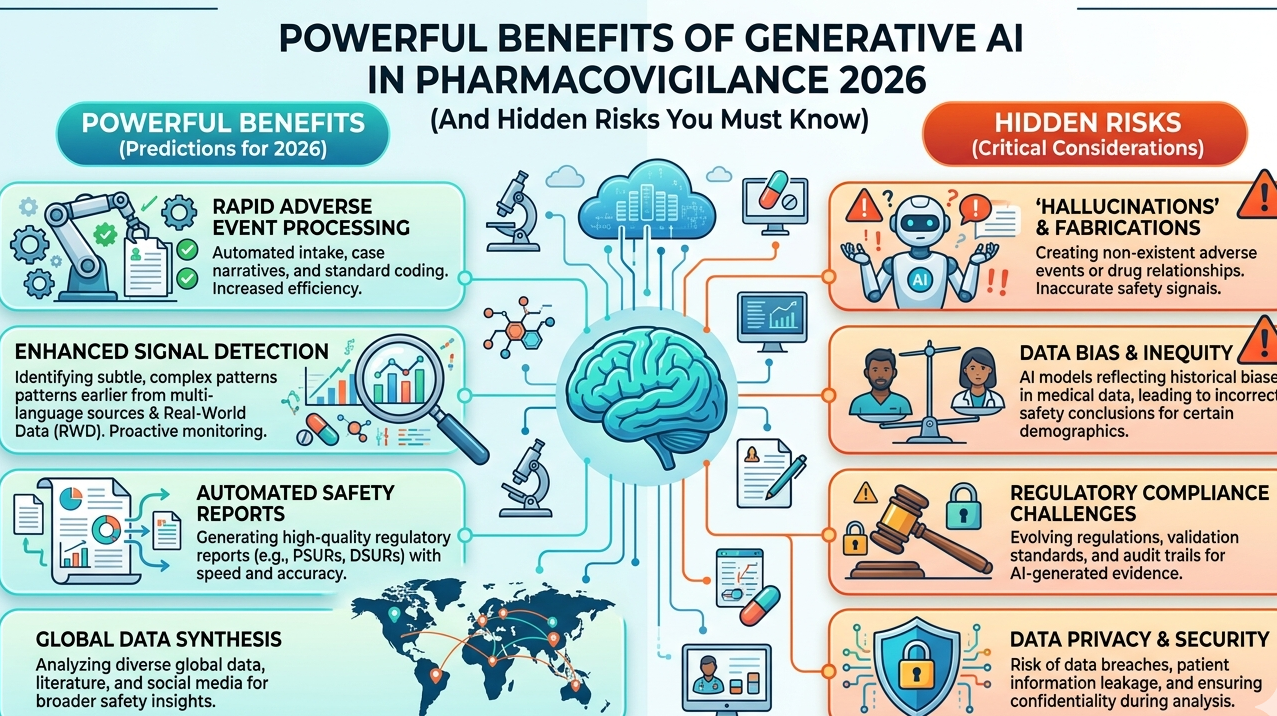
Table of Contents
Introduction to AI in Pharmacovigilance
What is Pharmacovigilance?
If you’ve ever wondered who ensures that medicines are actually safe after they hit the market, that’s where pharmacovigilance (PV) steps in. It’s the science of detecting, assessing, understanding, and preventing adverse drug reactions (ADRs). Traditionally, this involved a lot of manual work—case processing, literature review, signal detection—basically a mountain of repetitive tasks handled by humans. But as drug data exploded from clinical trials, social media, and real-world evidence, manual systems started struggling to keep up.
What is AI in Pharmacovigilance?
Enter AI in pharmacovigilance—a game changer that uses machine learning, natural language processing (NLP), and predictive analytics to handle massive datasets efficiently. AI doesn’t just process data faster; it identifies patterns that humans might miss. According to recent research, AI has already reduced pharmacovigilance processing time from days to hours in some systems . That’s not just improvement—it’s transformation.
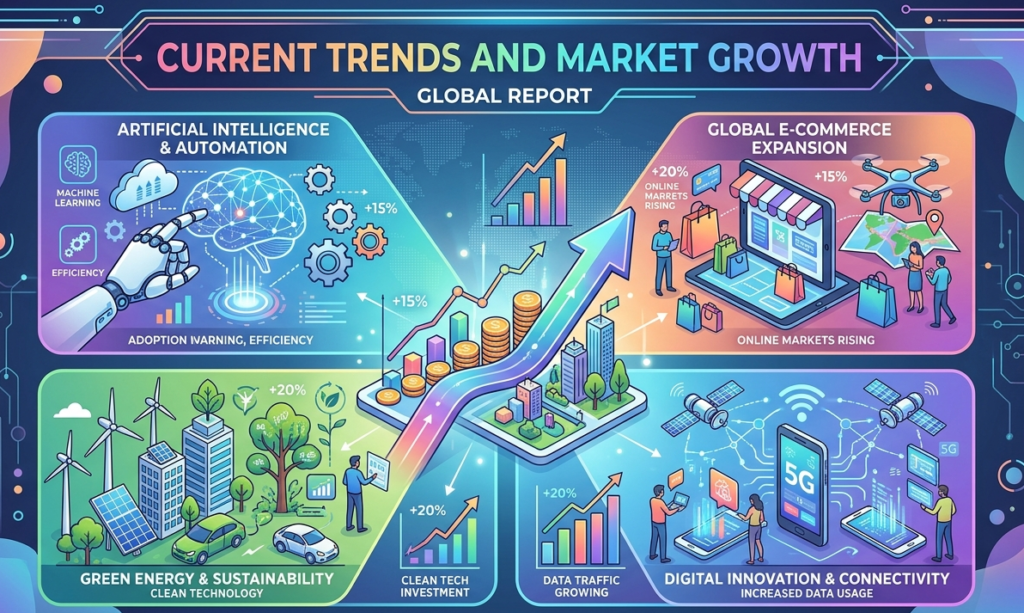
Current Trends and Market Growth
Latest Statistics and Market Size
The numbers tell a compelling story. The global pharmacovigilance market is already worth over $10 billion in 2025, and AI in pharmacovigilance alone is expected to grow from $600 million in 2024 to nearly $2 billion by 2034, with a CAGR exceeding 20% . That’s explosive growth, signaling one thing clearly—AI is not a trend, it’s the future backbone of drug safety.
Why Pharma is Adopting AI Rapidly
Pharma companies are drowning in data—EHRs, clinical trials, wearable devices, and even patient tweets. Traditional systems simply can’t keep up. AI helps automate repetitive tasks, reduce errors, and improve accuracy. It’s like upgrading from a bicycle to a bullet train—same destination, but radically faster and smarter.
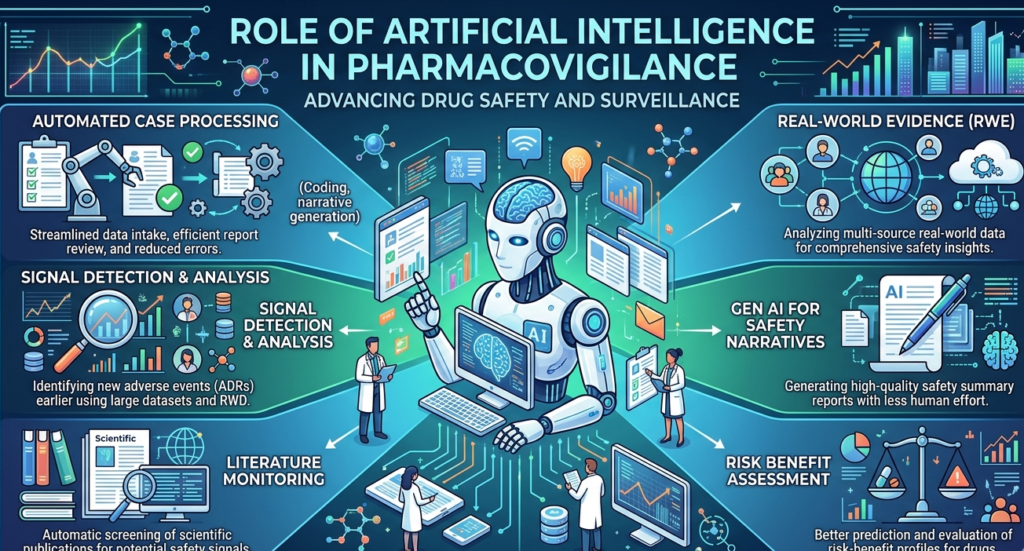
Role of AI in Pharmacovigilance
AI in Pharmacovigilance Literature Monitoring
One of the most time-consuming tasks in PV is literature monitoring. Imagine reading hundreds of journals daily just to find relevant ADR reports. AI tools now scan thousands of publications in seconds using NLP, extracting relevant safety data automatically. This significantly improves efficiency while reducing human fatigue and oversight errors.
AI in Signal Detection and Case Processing
Signal detection is where AI truly shines. It can identify hidden patterns in large datasets, enabling early detection of potential drug risks. AI algorithms also help in duplicate detection, data cleaning, and prioritization, making the entire PV workflow smoother and more reliable.
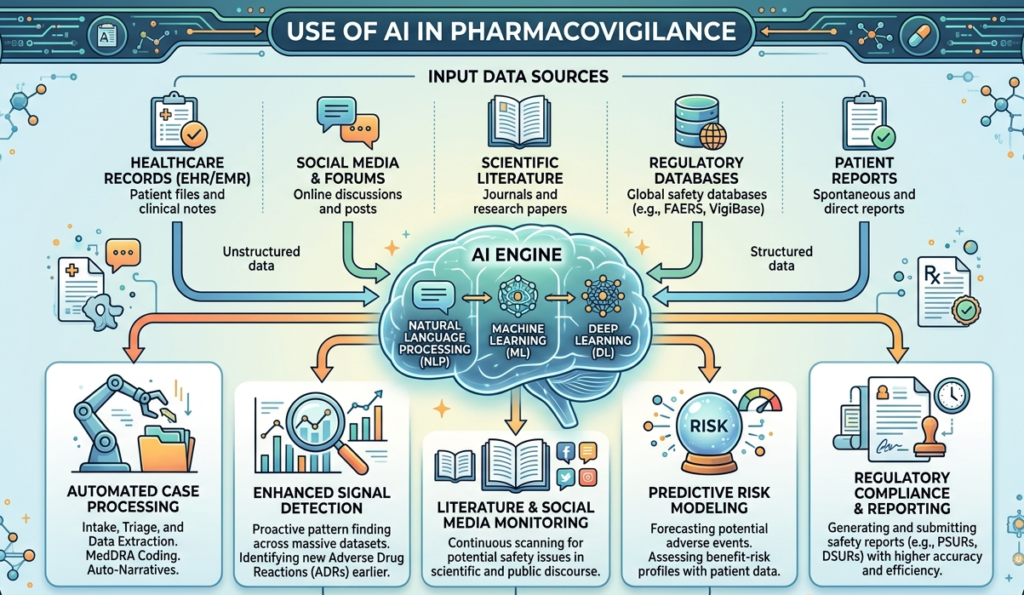
Use of AI in Pharmacovigilance
Automation of ICSR Processing
Individual Case Safety Reports (ICSRs) are the backbone of PV. AI automates case intake, coding, and triage. Instead of manually entering data, AI extracts information directly from structured and unstructured sources. This not only saves time but also reduces human error.
Predictive Analytics for ADRs
AI doesn’t just react—it predicts. Advanced models can forecast potential adverse drug reactions before they occur. This proactive approach improves patient safety and helps regulators make informed decisions faster.
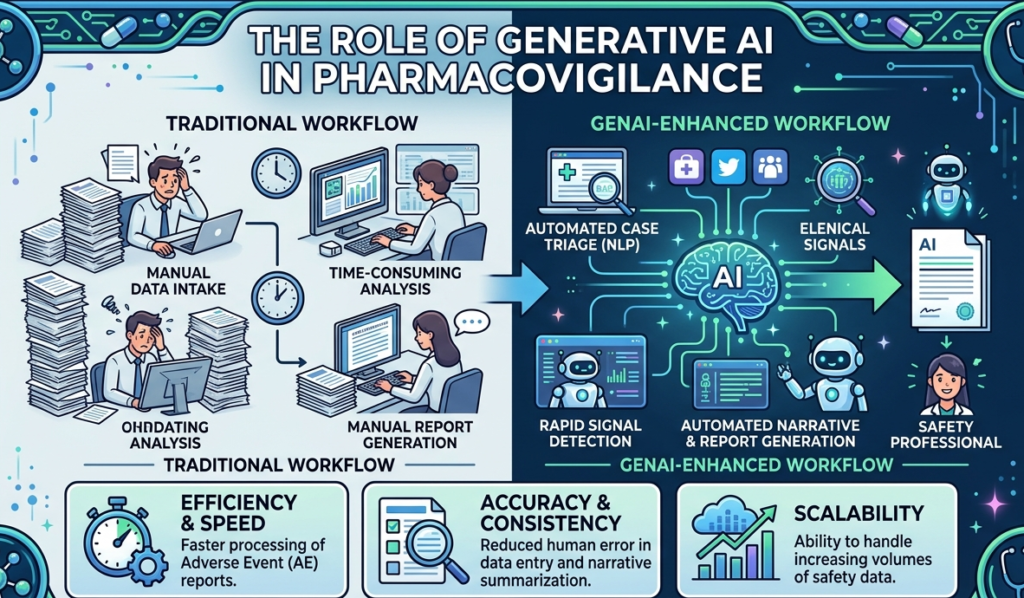
Generative AI in Pharmacovigilance
What is Generative AI in Pharmacovigilance?
Generative AI in pharmacovigilance refers to AI systems that can create content—like narratives, reports, or summaries—based on data inputs. Think ChatGPT-style tools generating safety narratives automatically.
Potential of Generative AI in Pharmacovigilance
The potential of generative AI in pharmacovigilance is massive. It can draft case narratives, summarize literature, and even assist in regulatory submissions. Tools like generative AI in pharmacovigilance Udemy courses are already training professionals to use these systems effectively.
Agentic Generative AI in Pharmacovigilance
Now things get even more interesting. Agentic AI in pharmacovigilance refers to AI systems that can make decisions and take actions autonomously. Imagine an AI that not only detects a safety signal but also initiates follow-ups, flags regulatory concerns, and suggests risk mitigation strategies. That’s not science fiction—it’s already being explored.
Benefits of AI in Pharmacovigilance
The benefits of AI in pharmacovigilance are hard to ignore:
- Faster case processing
- Improved accuracy
- Early signal detection
- Reduced operational costs
- Better patient safety outcomes
AI acts like a super-efficient assistant that never gets tired, never misses details, and continuously learns.
Challenges and Limitations
Despite the hype, AI isn’t perfect. Data quality issues, regulatory constraints, and lack of transparency in algorithms remain major challenges. AI models also need human validation, especially in critical healthcare decisions. So while AI is powerful, it’s not yet fully autonomous.
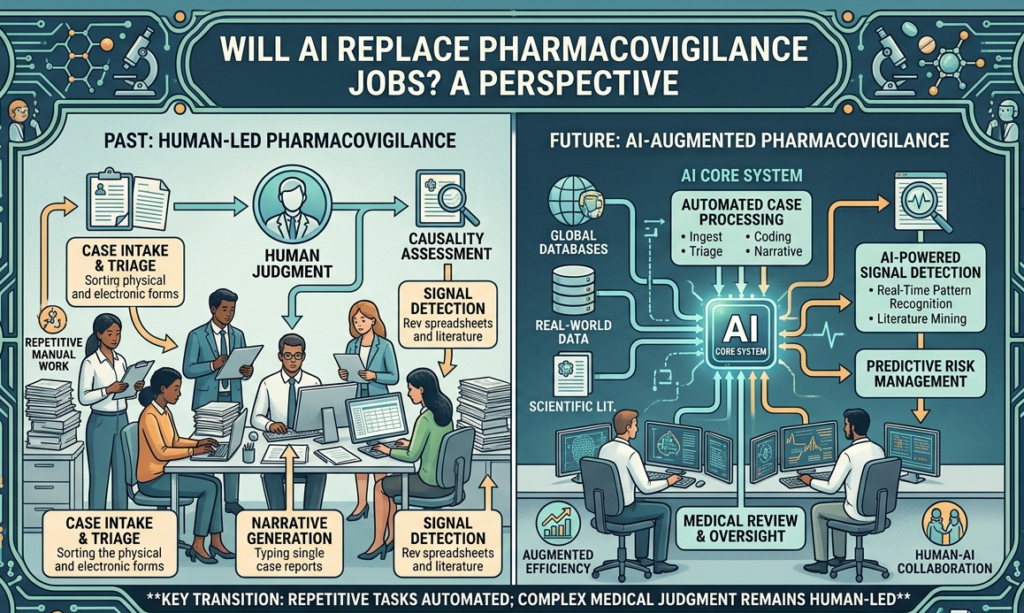
Will AI Replace Pharmacovigilance Jobs?
Let’s address the elephant in the room. Will AI replace PV jobs?
Short answer: No—but it will transform them.
AI will automate repetitive tasks like data entry and basic case processing. But roles requiring critical thinking, medical judgment, and regulatory expertise will remain human-driven. In fact, AI might reduce workload rather than eliminate jobs.
New Job Roles Created by AI
Here’s the twist—AI is actually creating new opportunities:
| Role | Description |
|---|---|
| PV AI Specialist | Works with AI tools in drug safety |
| Data Scientist (Pharma) | Analyzes safety data |
| AI Validation Expert | Ensures AI compliance |
| Safety Automation Lead | Implements AI workflows |
So instead of job loss, we’re seeing job evolution.
Skills Required for Future PV Professionals
To stay relevant, you need to adapt. Key skills include:
- Understanding AI tools
- Data analysis
- Regulatory knowledge
- Automation workflows
Think of it as upgrading your skillset rather than starting from scratch.
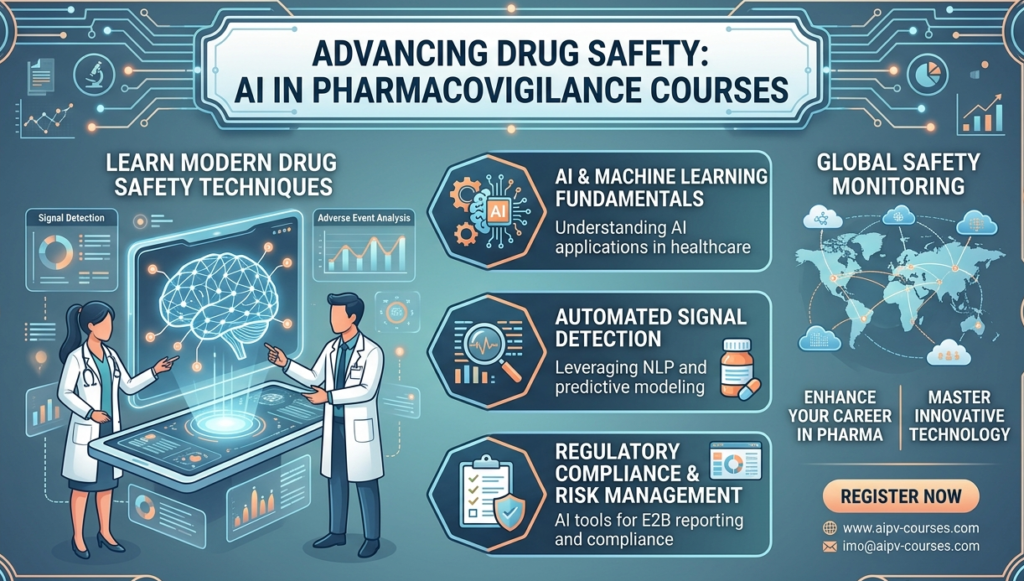
AI in Pharmacovigilance Courses
Free Courses and Certifications
There are several AI in pharmacovigilance course free options available online, including:
- Government-backed pharmacovigilance free certificate course
- MOOCs on AI in healthcare
Popular Platforms (Udemy, Skill India)
Platforms like generative AI in pharmacovigilance Udemy and AI in pharma Skill India programs are gaining popularity. These courses bridge the gap between traditional PV and modern AI tools.
Free Pharmacovigilance Courses (With Links)
| Course Name | Platform | Key Features |
| Good Pharmacovigilance Practice (GVP) Training | Pharmalessons | Free, based on official GVP guidelines, beginner-friendly |
| Drug Safety – Pharmacovigilance | Coursera (Johns Hopkins) | Free to audit, 4 modules, ~5 hours, highly rated (4.8⭐) |
| Free Pharmacovigilance Course | GINEAD | 40-hour course, free content, certificate optional (paid) |
| Pharmacovigilance Training | Pharmalessons (via Shiksha) | Free certification, self-paced, intermediate level |
| Pharmacovigilance & CDM Course | Jopir | Free learning + low-cost certificate, lifetime access |
| Basic Good Pharmacovigilance Practices | Pharma Digests | Beginner-level, 10–12 hrs, no certificate |
| Pharmacovigilance Course (Flexible Learning) | Elevify | Practical case-based learning, includes ADR & ICSR training |
| Basic Certification Course in Pharmacovigilance | VigiServe Foundation | Free beginner course, includes core PV concepts |
Generative AI in Pharmacovigilance Course (Udemy Courses)
| Course Name | Instructor | Duration | Key Topics |
| Generative AI in Pharmacovigilance | Bharadwaja Choudhury | ~5h 19m | Narrative writing, signal detection, AI workflows, agentic AI |
| AI in Pharmacovigilance: Prompting, Compliance, Workflows | SafeMeds Academy | ~5h 37m | Prompt engineering, compliance, workflow automation |
| Artificial Intelligence in Pharmacovigilance | PV Drug Safety Academy | ~3h 21m | AI basics, ICSR automation, signal detection |
| Next-Gen Pharmacovigilance with AI | Dr. Archana K.S | ~2h 30m | AI fundamentals, ADR detection, Argus tools |
Quick Insight
- Free PV courses → Best for beginners & freshers
- Udemy AI courses → Best for skill upgrade & job transition
- Combine both → You become AI-ready pharmacovigilance professional
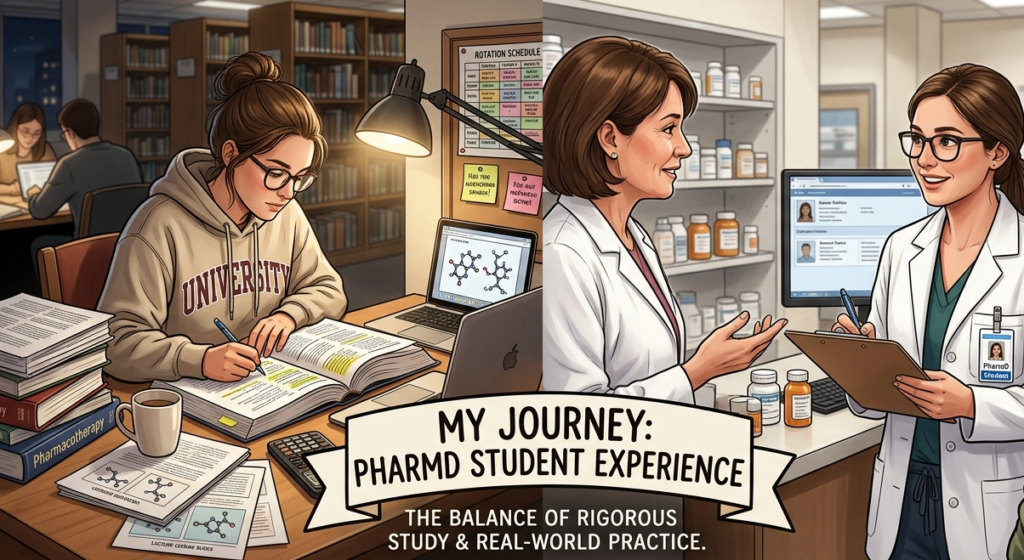
Personal Experience as a Pharm D Student
As a Pharm D student, I’ve personally seen how overwhelming PV can be. During my training, manual case processing felt like an endless loop—copying data, coding, writing narratives. It was time-consuming and mentally exhausting.
When I started exploring AI tools, everything changed. Tasks that took hours were done in minutes. But here’s the catch—I still had to review and validate everything. That’s when I realized: AI is not replacing us; it’s assisting us.
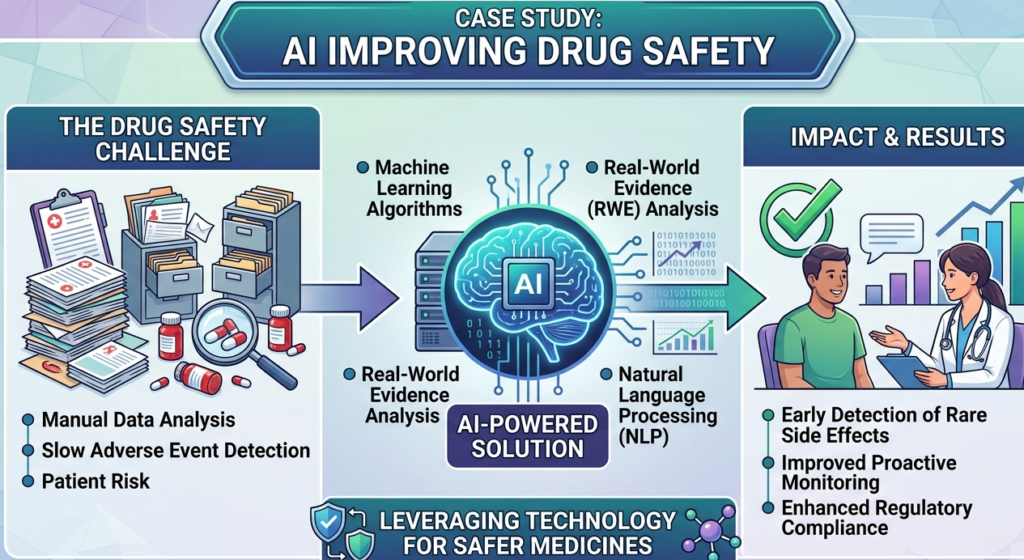
Case Study: AI Improving Drug Safety
A 2025 study demonstrated that AI-based systems reduced causality assessment time from days to hours, improving accuracy and consistency . Another example includes AI-driven signal detection models that identified previously unknown drug risks using real-world data.
This shows that AI doesn’t just improve efficiency—it enhances patient safety.
Future of AI in Pharmacovigilance
The future looks exciting. With advancements in generative AI in pharmacovigilance and agentic AI, we can expect more automation, better predictions, and smarter decision-making systems.
But human expertise will remain essential. AI will handle the “how,” while humans focus on the “why.”

Conclusion
AI in pharmacovigilance is not a job killer—it’s a job transformer. It’s shifting the industry from manual labor to intelligent decision-making. If you adapt and learn AI skills, you won’t just survive—you’ll thrive.
FAQs
1. What is AI in pharmacovigilance literature monitoring?
It involves using AI to scan and analyze scientific literature for adverse drug reactions automatically.
2. Will AI replace pharmacovigilance professionals?
No, it will automate repetitive tasks but still require human expertise for decision-making.
3. What are the benefits of AI in pharmacovigilance?
Faster processing, improved accuracy, and better safety signal detection.
4. Are there free AI pharmacovigilance courses?
Yes, several platforms offer AI in pharmacovigilance course free and certification programs.
5. What is generative AI in pharmacovigilance?
It refers to AI systems that can generate narratives, reports, and summaries from safety data.