
Table of Contents
Understanding Self-Medication Risks
What is Self-Medication?
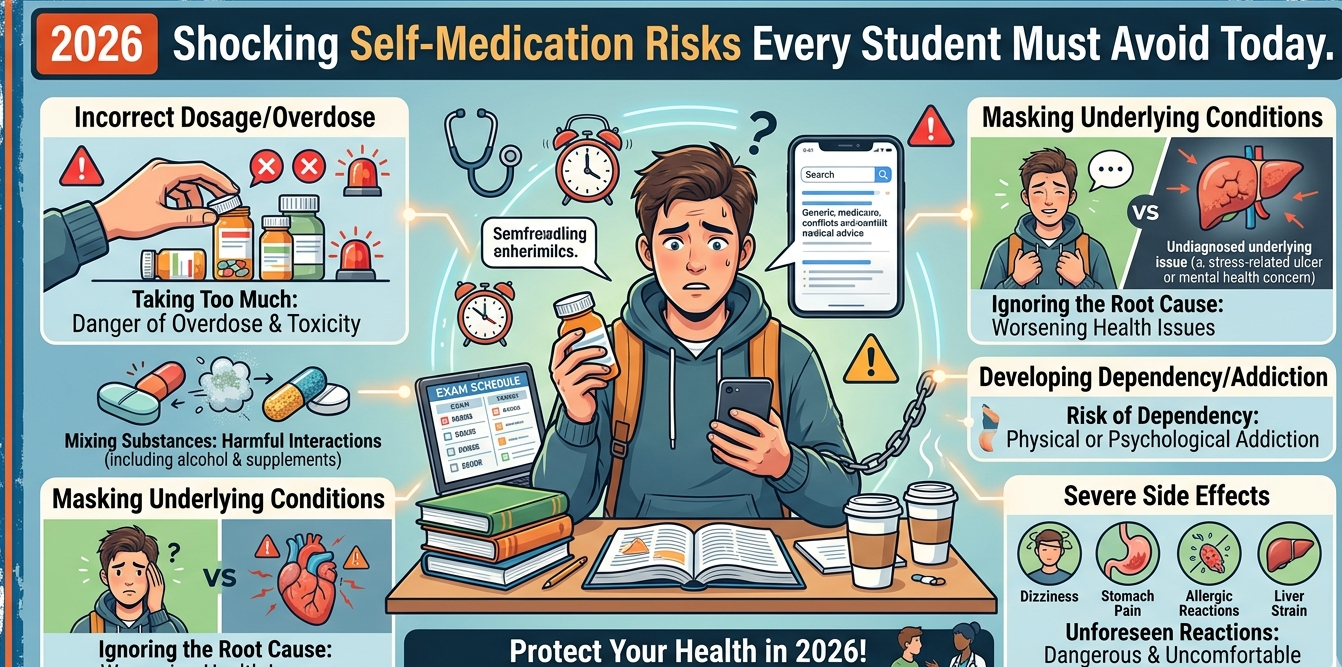
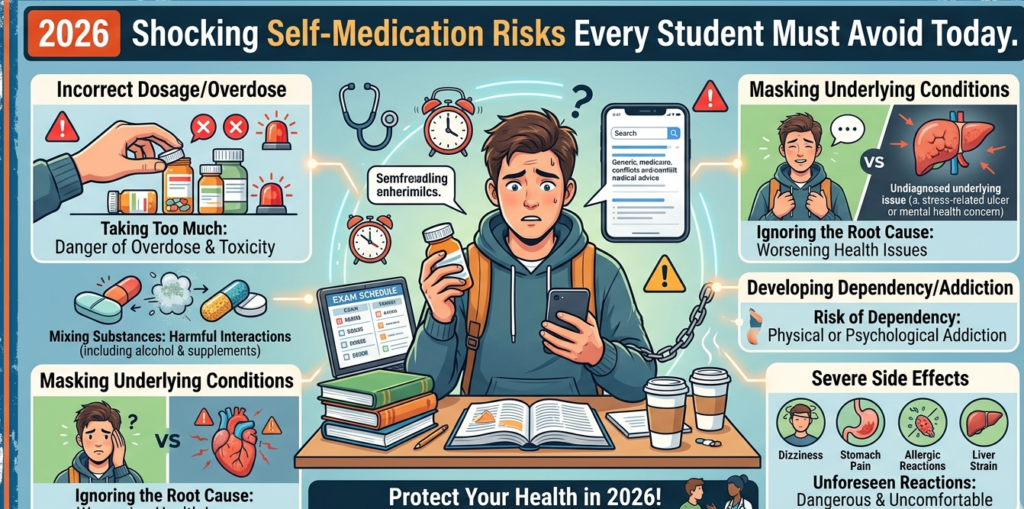
Self-medication refers to the practice of consuming medicines without consulting a qualified healthcare professional. It might sound harmless—after all, who hasn’t taken a painkiller for a headache or an antacid for acidity? But here’s the catch: not all medications are safe without proper diagnosis. Students, especially in India, often rely on previous prescriptions, Google searches, or advice from friends to treat their symptoms.
Think of it like trying to fix a complex machine without understanding its parts. You might temporarily solve the issue, but there’s a high chance you’ll damage something deeper. The same applies to your body. Many students assume that over-the-counter drugs are always safe, but even these can cause serious side effects if misused. This is where self-medication risks WHO guidance becomes crucial, emphasizing safe and informed use of medicines.
Common Examples Among Students
Students commonly self-medicate for:
- Headaches and migraines
- Cold and cough
- Fever
- Anxiety and sleep issues
- Acne and skin problems
It often begins as a convenience but can quickly turn into a habit. The problem? These symptoms might be signals of underlying conditions that go unnoticed.
Why Self-Medication is Rising in India
Easy Access to Medicines
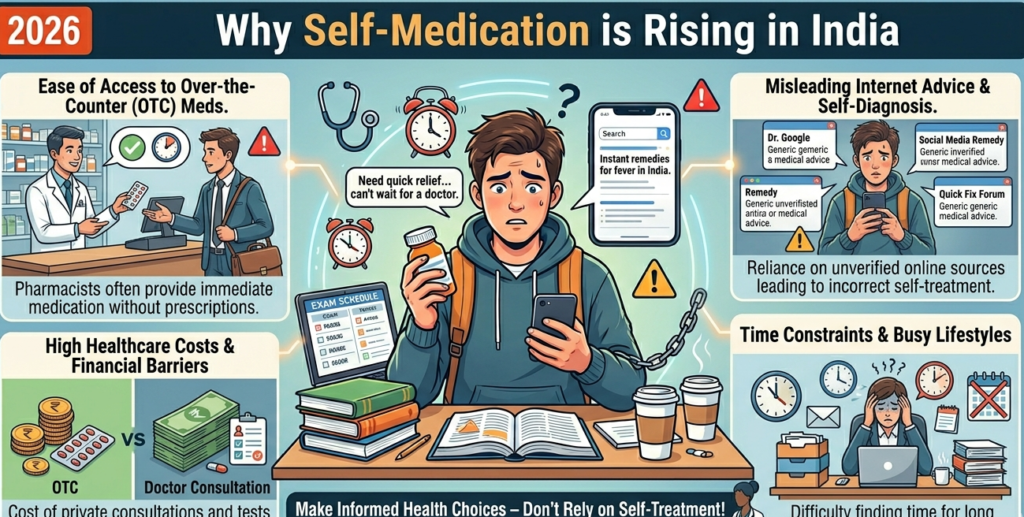
India has a vast pharmaceutical market, and many drugs are easily available without strict prescription checks. Pharmacies sometimes sell antibiotics or strong medications over the counter, making it easier for students to bypass doctors. This accessibility fuels the self-medication risks significantly.
Imagine walking into a store and picking up powerful tools without instructions—it’s convenient, but risky. The same logic applies to medications.
Influence of Internet & Social Media
Google has become the “first doctor” for many students. Social media influencers and health blogs often promote quick remedies, which may not be scientifically accurate. Students tend to trust these sources without verifying them, leading to misuse of drugs.
WHO Self-Medication Risks Guidance
Key WHO Warnings
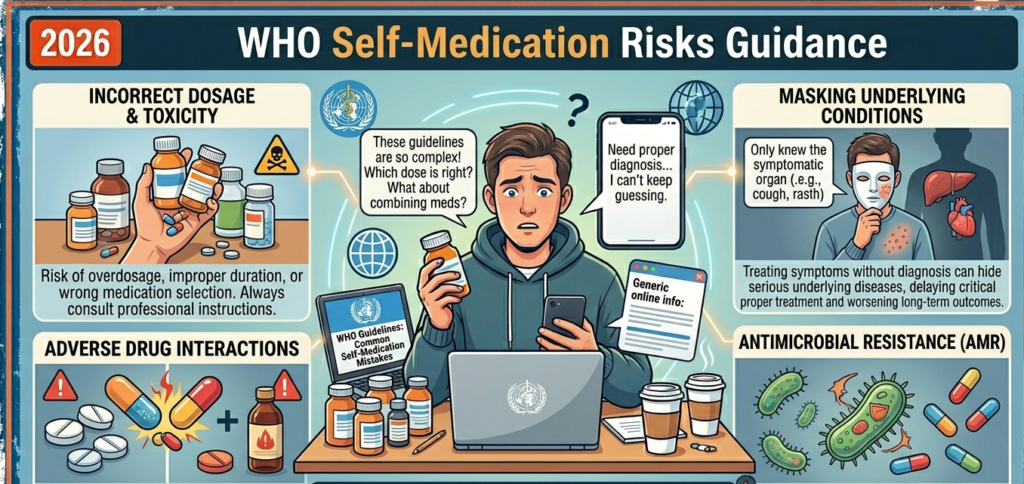
The WHO self-medication risks guidance clearly states that while responsible self-medication can reduce healthcare burden, irresponsible use can lead to serious health hazards. These include:
- Incorrect diagnosis
- Delay in seeking medical advice
- Severe adverse reactions
- Increased drug resistance
Global Statistics on Self-Medication Risks
Studies suggest that over 60–80% of people in developing countries practice self-medication, with students being a major group. This highlights the urgent need for awareness.
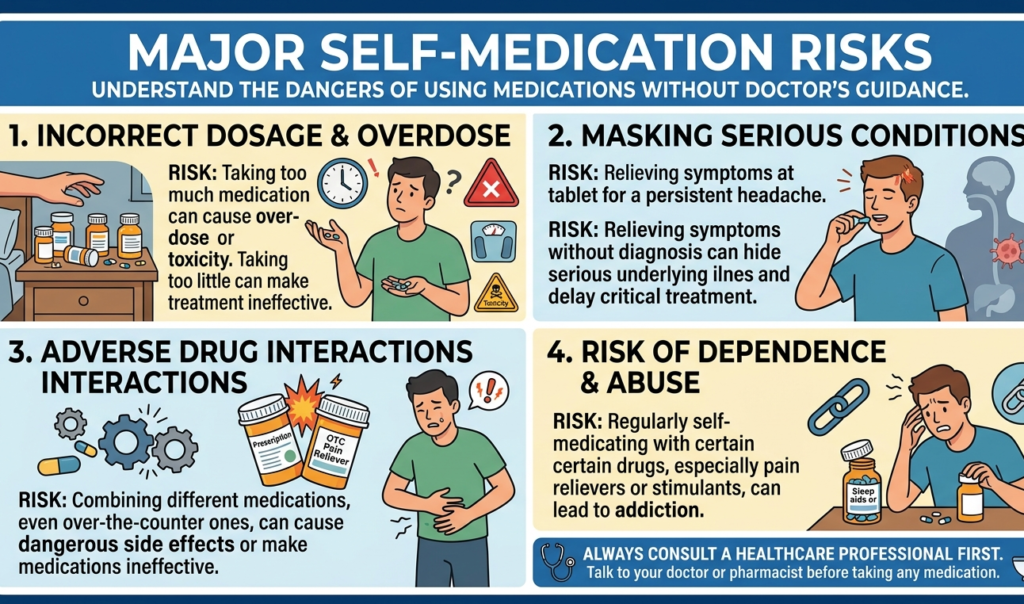
Major Self-Medication Risks
Drug Interactions
Combining multiple drugs without knowledge can lead to dangerous interactions. For example, mixing painkillers with certain antibiotics can damage the liver or kidneys. Students rarely consider these interactions, increasing health risks.
Misdiagnosis
Self-diagnosing based on symptoms can be misleading. A simple headache might be due to stress—or something more serious like hypertension. Treating symptoms without understanding the root cause delays proper treatment.
Antibiotic Resistance
One of the biggest concerns highlighted in self-medication risks WHO guidance is antibiotic resistance. When antibiotics are used incorrectly, bacteria evolve and become resistant, making infections harder to treat.
Addiction & Dependency
Overuse of medications like sleeping pills or painkillers can lead to dependency. Many students don’t realize they’re forming habits until it becomes difficult to stop.
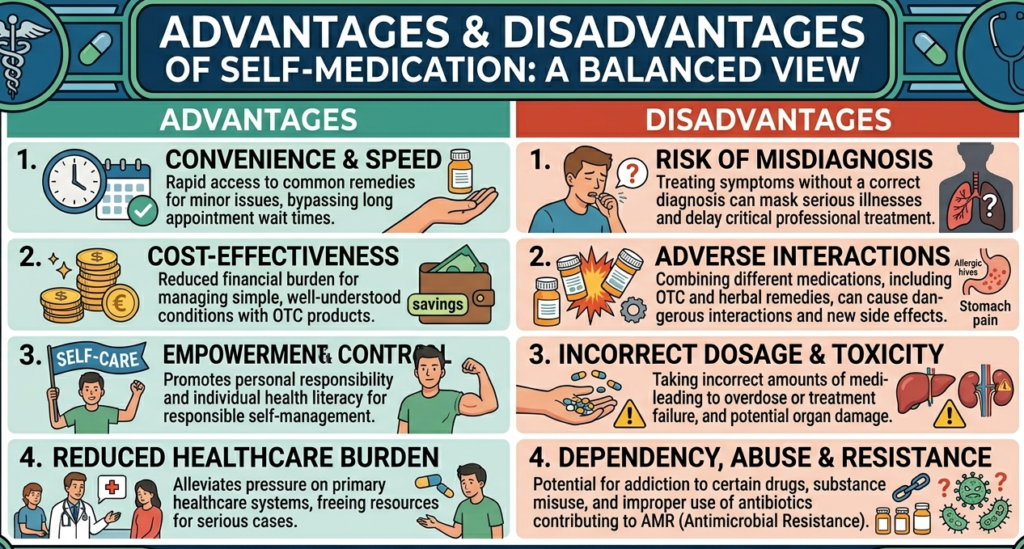
Advantages and Disadvantages of Self-Medication
| Aspect | Details |
|---|---|
| Advantages | Quick relief, saves time, reduces minor healthcare costs |
| Disadvantages | Misdiagnosis, drug reactions, dependency, delayed treatment |
Benefits (When Used Correctly)
When practiced responsibly, self-medication can be useful for minor ailments. For example, taking paracetamol for a mild fever or using ORS for dehydration is generally safe.
Serious Drawbacks
The advantages and disadvantages of self-medication clearly show that risks outweigh benefits when misuse occurs. Lack of professional guidance is the biggest issue.
Disadvantages of Self Administration Medication
The disadvantages of self administration medication include:
- Incorrect dosage
- Wrong drug selection
- Ignoring contraindications
- Increased side effects
Students often skip reading instructions or ignore warnings, which can worsen their condition instead of improving it.
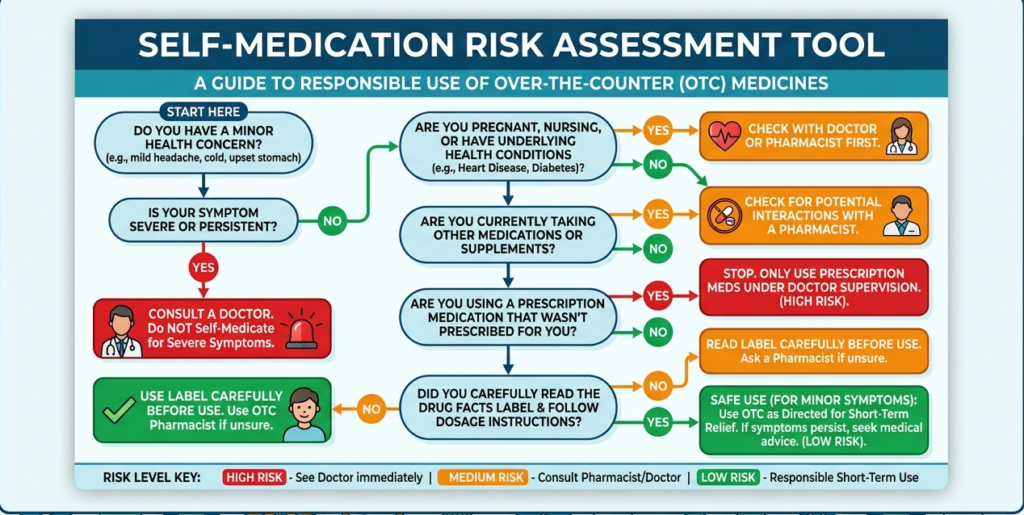
Self Medication Risks Assessment Tool
What is It?
A self medication risk assessment tool or self medication risk assessment form is designed to evaluate whether it’s safe to take a medication without professional advice. It includes questions like:
- Do you know the correct dosage?
- Are you taking other medications?
- Do you have allergies?
How Students Can Use It
Before taking any medicine, students should mentally go through such a checklist. This simple habit can reduce risks significantly.
Self-Administration of Medication Training
Certification & Free Courses
Many platforms offer medication administration training online free or medication administration training certification programs. These courses teach:
- Safe drug usage
- Dosage calculation
- Recognizing side effects
You can also explore free online medication administration training with certificate to improve your knowledge.
Learning proper medication handling through self-administration risks of medication training can be a game changer, especially for healthcare students.
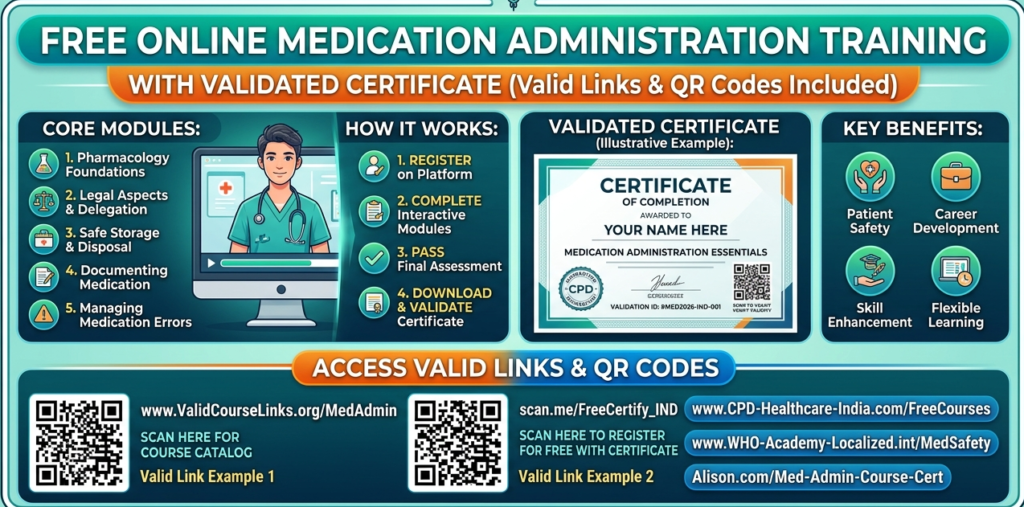
Free Online Medication Administration Training with Certificate (Valid Links)
| Course Name | Platform | Duration | Certificate |
| Medication Management and Administration | Alison | 3–4 hours | Yes (free learning, paid cert optional) |
| Control and Administration of Medication | Alison | 3–4 hours | Yes (optional paid certificate) |
| Management and Administration of Medicines | Alison | 4–6 hours | Yes |
| Understanding Medication for Caregivers | Alison | 1.5–3 hours | Yes |
| Safe Handling and Administration of Medication | Alison | 1.5–3 hours | Yes |
| Medication Safety: Handling and Administration | Alison / Nightcourses | 1.5–3 hours | Yes (CPD Accredited) |
| Medication Administration Course | Elevify | Flexible (4–360 hours) | Yes |
Important Insights (Before You Enroll)
- Most platforms like Alison allow free learning, but certificates may require a small fee.
- These courses cover dosage calculation, drug safety, administration routes, and error prevention, which are essential for healthcare students.
- Some courses are CPD-accredited, adding extra value to your CV and professional profile.
Best Recommendation for Students
If you’re a Pharm D / Nursing / Healthcare student, start with:
- Medication Management and Administration (Alison) → Best for basics
- Safe Handling and Administration of Medication → Best for safety concepts
- Control and Administration of Medication → Best for advanced understanding
Case Study Example from India on Self-Medication Risks
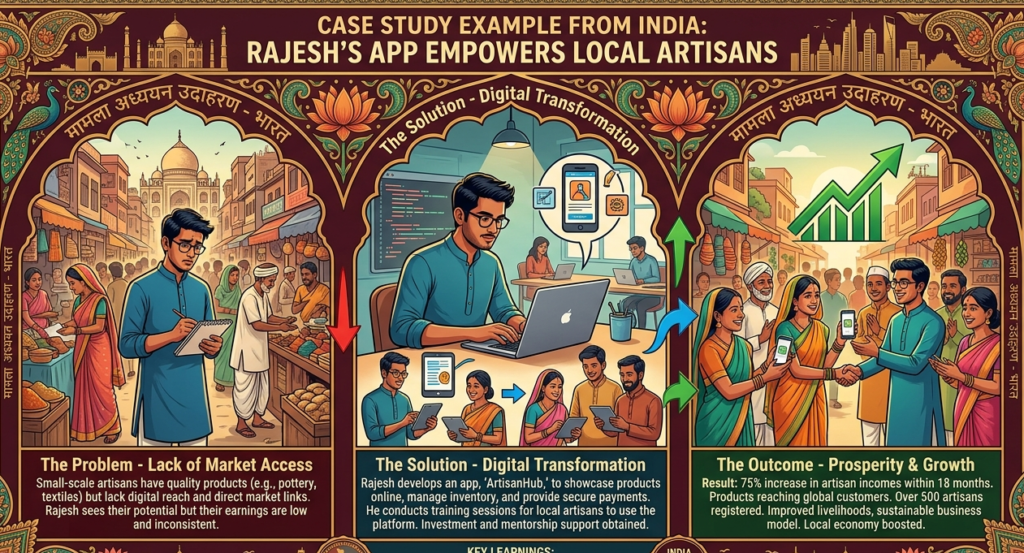
A 20-year-old college student in Delhi experienced frequent headaches during exams. Instead of consulting a doctor, he started taking painkillers daily. Initially, it worked. But after a few weeks, he began experiencing stomach pain and acidity. Eventually, he was diagnosed with gastric ulcers caused by excessive NSAID use.
This case highlights how ignoring self-medication risks who guidance can lead to severe complications. What started as a simple headache turned into a serious medical condition.
Personal Experience as a Pharm D Student on Self-Medication Risks
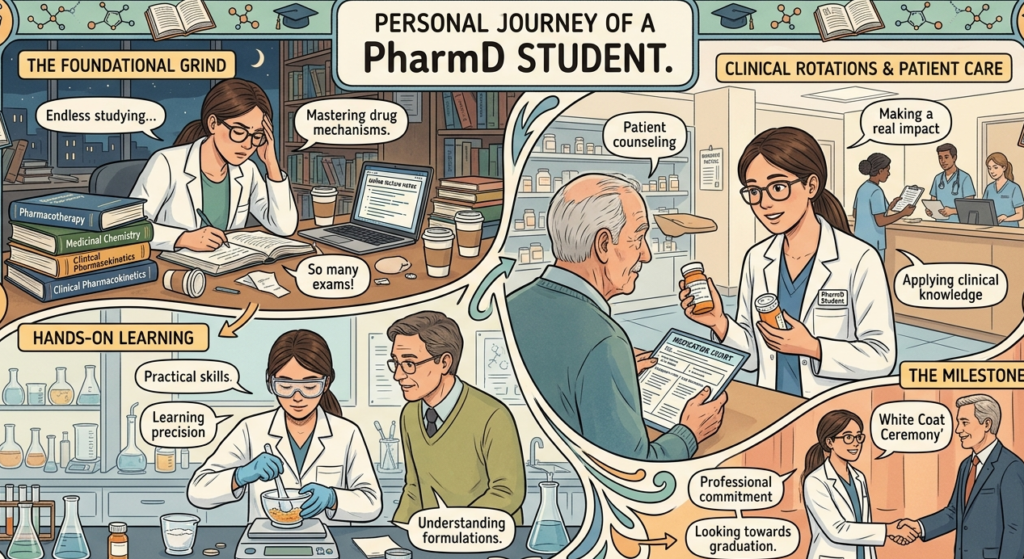
During my Pharm D training, I witnessed multiple cases where patients suffered due to self-medication. One case that stayed with me involved a young student who took antibiotics for a viral infection. Not only did it fail to treat the illness, but it also caused antibiotic resistance, making future infections harder to treat.
As a student, I used to think taking a quick pill was harmless. But clinical exposure changed my perspective completely. I realized that medications are powerful tools, not casual solutions. Even a small mistake in dosage or timing can have serious consequences.
This experience reinforced the importance of spreading awareness about self-medication risks among students.
People Also Ask
What are the risks of self-medication?
Self-medication can lead to misdiagnosis, drug interactions, addiction, and delayed treatment.
What are the risks of self administration of medication?
It includes incorrect dosage, side effects, and potential harm due to lack of medical supervision.
What are the problems with self-medication?
The main problems include antibiotic resistance, masking serious diseases, and harmful drug interactions.
Does self-medication work?
It may work for minor issues, but it is not reliable for serious or unknown conditions.
What are 5 common side effects of medications?
- Nausea
- Dizziness
- Allergic reactions
- Headache
- Stomach irritation
What is stage 3 self-medication?
Stage 3 refers to repeated and habitual use of medications without consulting a doctor, often leading to dependency.
What are 5 drugs to avoid in the elderly?
- Benzodiazepines
- NSAIDs
- Anticholinergics
- Opioids
- Certain antihistamines
What are the 4 stages of medication?
- Prescribing
- Dispensing
- Administration
- Monitoring

Conclusion
Self-medication might feel like a quick fix, especially for students juggling academics and personal life. But the reality is far more complex. The risks—ranging from mild side effects to life-threatening conditions—are often underestimated. The who self-medication risks guidance clearly emphasizes responsible usage, and it’s something every student should take seriously.
Instead of relying on guesswork, make informed decisions. Seek professional advice when needed. Learn about medications through proper training. Your health isn’t something to experiment with—it’s something to protect.
FAQs
1. Is self-medication legal in India?
Yes, for over-the-counter drugs, but misuse of prescription drugs without a doctor’s advice is not recommended.
2. Can self-medication cause long-term damage?
Yes, especially if done frequently or incorrectly.
3. Are herbal medicines safe for self-medication?
Not always. They can also cause side effects and interactions.
4. How can students avoid self-medication risks?
By consulting doctors, using risk assessment tools, and avoiding unnecessary drug use.
5. Is online medical advice reliable?
Only if it comes from verified and credible sources.
.