
Table of Contents
🧠 Antibiotic Stewardship Program in India Explained for Students
💊 What is Antibiotic Stewardship?
📌 Antimicrobial Stewardship Definition
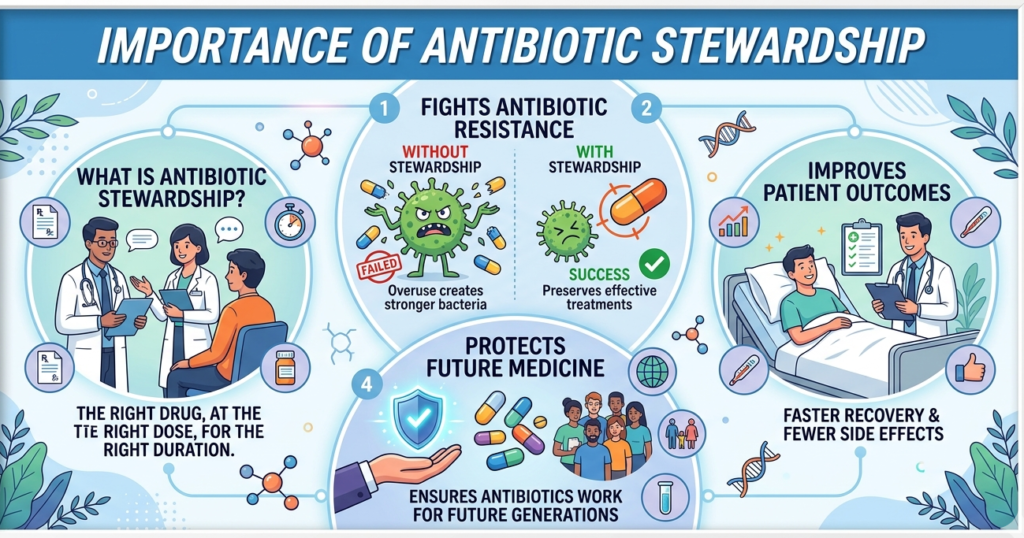
Let’s start simple—what is antimicrobial stewardship? Think of it like managing a powerful weapon. Antibiotics are life-saving, but misuse them, and they turn useless. Antimicrobial stewardship definition refers to coordinated strategies designed to improve the use of antimicrobial medications, ensuring the right drug, dose, and duration.
In practical terms, what is antibiotic stewardship? It means using antibiotics responsibly to treat infections while minimizing resistance. According to clinical frameworks, stewardship programs aim to optimize patient outcomes and reduce microbial resistance. These programs are not just theoretical—they are implemented in hospitals, clinics, and even community pharmacies.
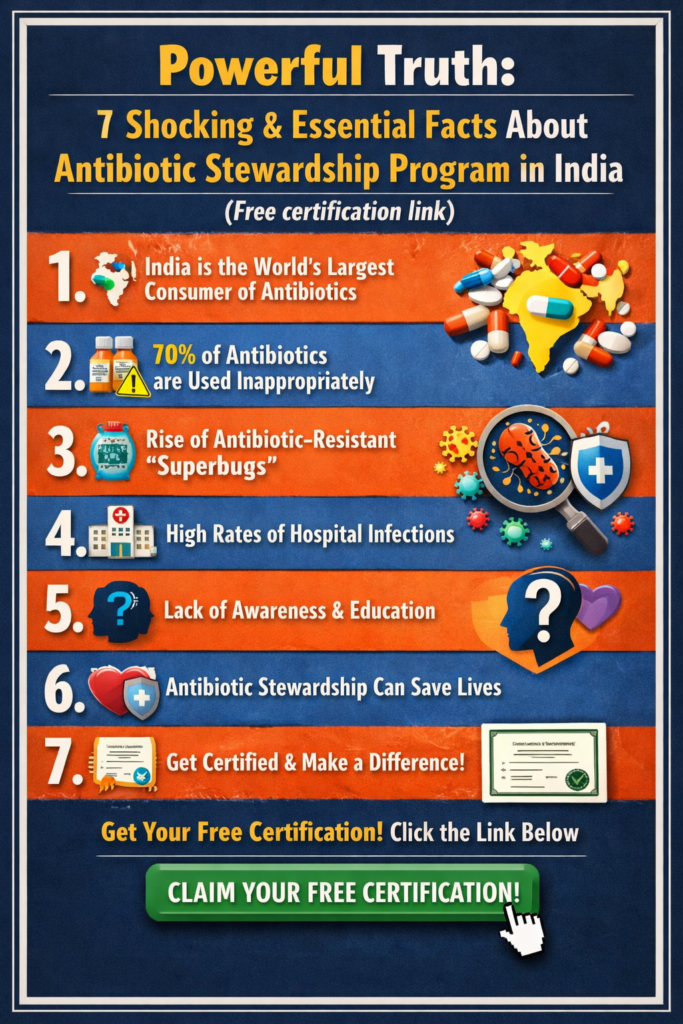
India, in particular, faces a huge challenge. Studies show that around 40% of patients in communities are on antibiotics, often unnecessarily . This highlights the urgent need for structured stewardship systems.
🎯 What is a Goal of Antibiotic Stewardship Program in India ?
If you’re asked in exams: “What is a goal of antibiotic stewardship?” — the answer is straightforward yet powerful.
The goal of antibiotic stewardship includes:
- Ensuring optimal antibiotic selection
- Reducing misuse and overuse
- Preventing antibiotic resistance
- Improving patient outcomes
Imagine giving antibiotics for viral infections—it’s like using a hammer to fix a software bug. It doesn’t work, and worse, it causes harm.
⚠️ Importance of Antibiotic Stewardship Program in India
📉 Rising Antibiotic Resistance in India
India is facing what many experts call a “silent pandemic”—antimicrobial resistance (AMR). The overuse and misuse of antibiotics have accelerated this crisis. Reports indicate widespread inappropriate antibiotic use, especially in outpatient settings .
What does this mean for you as a student?
- Common infections are becoming harder to treat
- First-line antibiotics are failing
- Treatment costs are increasing
This isn’t just a hospital problem—it’s a societal issue.
🏥 Impact on Healthcare System
The importance of antibiotic stewardship becomes even clearer when you look at healthcare systems. Without stewardship:
- Hospital stays become longer
- ICU admissions increase
- Mortality rates rise
In India, stewardship programs are not just optional—they are essential for survival in modern healthcare.
🧩 Antibiotic Stewardship Core Elements
🏛️ Leadership Commitment
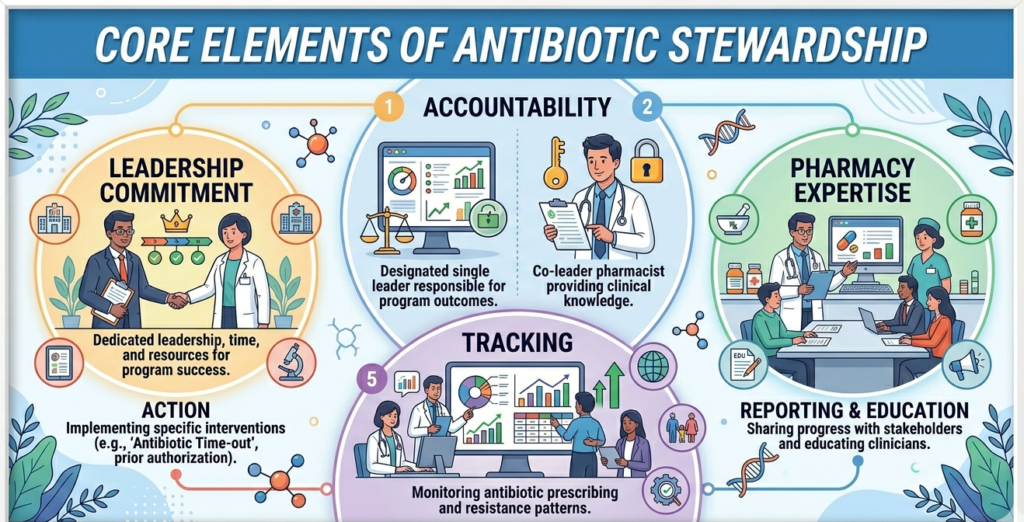
Every successful antibiotic stewardship program begins with leadership support. Hospitals must allocate resources, staff, and funding.
👨⚕️ Accountability & Drug Expertise
A proper stewardship team includes:
- Infectious disease specialists
- Clinical pharmacists
- Microbiologists
This multidisciplinary approach ensures accurate decision-making.
📊 Action & Monitoring
Key actions include:
- Audit and feedback
- Antibiotic restriction policies
- Surveillance of resistance patterns
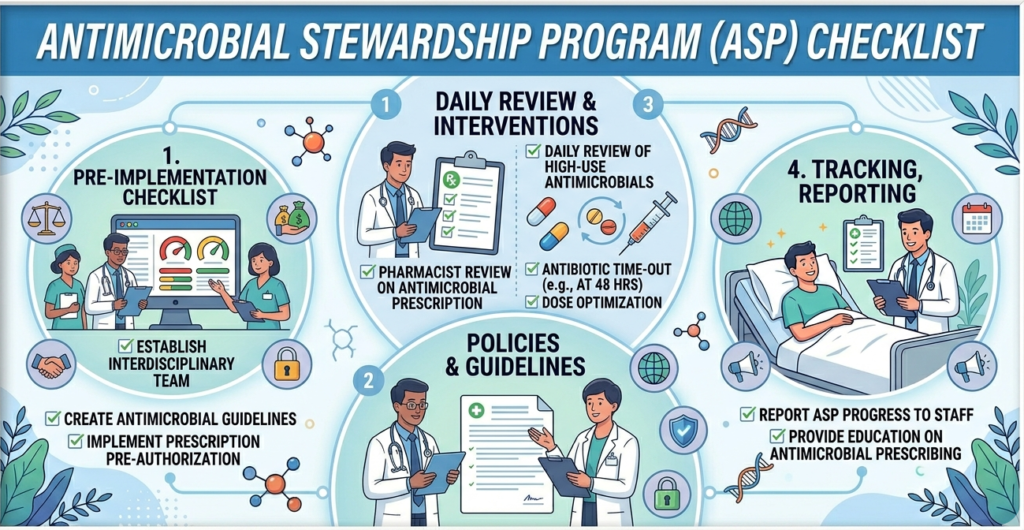
📋 Antimicrobial Stewardship Program in India Checklist
✔️ Key Components
An effective antimicrobial stewardship program checklist includes:
- Defined policies for antibiotic use
- Regular monitoring of prescriptions
- Education programs for staff
- Infection control measures
🏥 Hospital Implementation Steps
Hospitals in India follow structured steps:
- Form a stewardship committee
- Develop antibiotic guidelines
- Monitor antibiotic consumption
- Provide feedback to prescribers
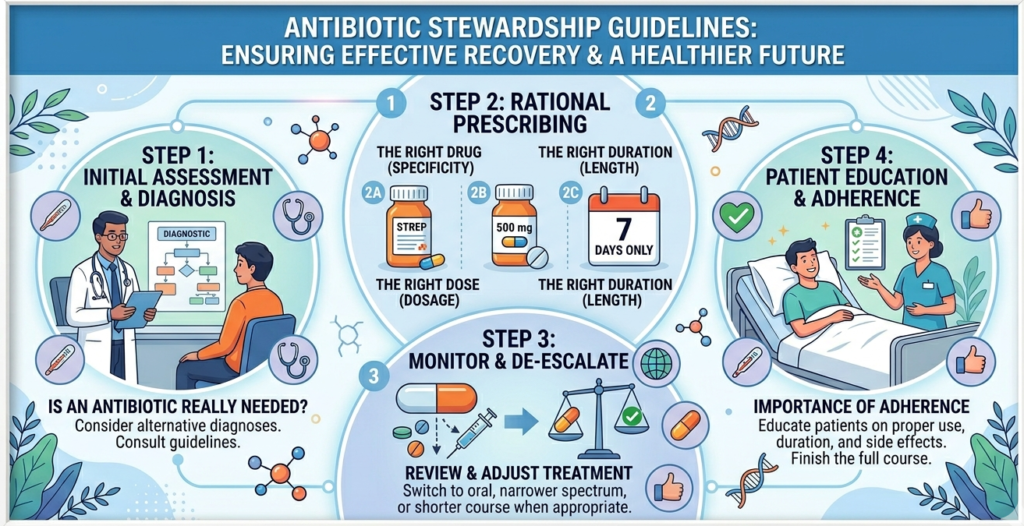
📘 Antibiotic Stewardship Guidelines
🇮🇳 ICMR Antimicrobial Stewardship Guidelines
The Indian Council of Medical Research provides national-level guidance. Their stewardship documents emphasize rational antibiotic use and surveillance systems .
🌍 WHO Antibiotic Stewardship Guidelines
The World Health Organization promotes global frameworks, including certification courses and structured training.
🇮🇳 Antibiotic Stewardship Program in India
🧪 ASPIC Program
India launched programs like ASPIC (Antibiotic Stewardship, Prevention of Infection & Control). These programs aim to:
- Reduce inappropriate prescriptions
- Improve infection control
- Promote rational drug use
👩⚕️ Role of Hospitals & Pharmacists
Pharmacists play a crucial role:
- Reviewing prescriptions
- Educating patients
- Preventing OTC misuse
🧠 The 5 R’s and 5 D’s of Antibiotics
🔑 The 5 R’s of Antibiotic Stewardship
- Right patient
- Right drug
- Right dose
- Right route
- Right duration
💡 The 5 D’s of Antibiotics
- Diagnosis
- Drug
- Dose
- Duration
- De-escalation
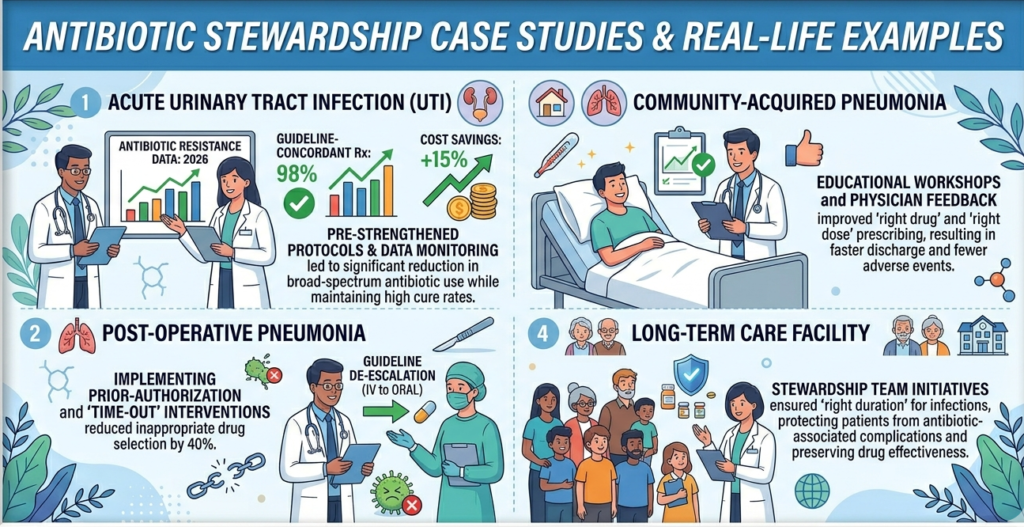
📚 Case Studies & Real-Life Examples
🏥 Hospital-Based Example
A tertiary hospital implemented stewardship protocols and reduced antibiotic misuse by 30%. This led to fewer resistant infections and improved patient outcomes.
🏘️ Community Misuse Case
A common scenario: patients taking antibiotics for viral fever. This leads to resistance without any benefit.
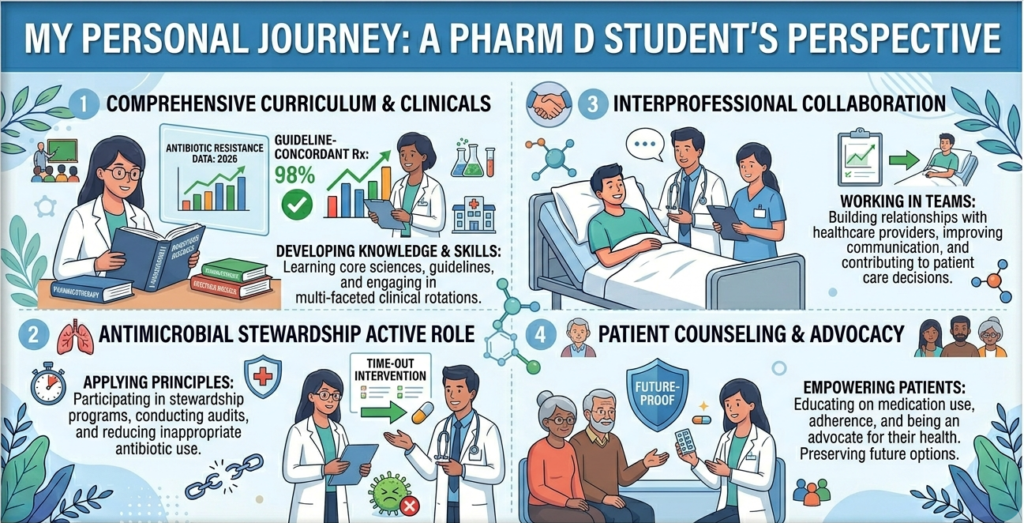
🎓 Personal Experience as a Pharm D Student for Antibiotic Stewardship Program in India
🏥 Clinical Rotations Insight
During clinical postings, I observed frequent misuse of antibiotics—especially in outpatient departments. Many patients demanded antibiotics even when not required.
📖 Learning Outcomes
This experience taught me:
- The importance of patient education
- The role of pharmacists in stewardship
- Real-world challenges in implementing guidelines
🎓 Courses & Certifications
🌍 WHO Antimicrobial Stewardship Course 2026
The WHO offers certification programs that help students understand global stewardship strategies.
💻 Free Online Courses & Certifications (With Valid Links) for Antibiotic Stewardship Program in India
| Course Name | Platform | Type |
| WHO Antimicrobial Stewardship Course | World Health Organization (OpenWHO) | Free + Certificate |
| Antimicrobial Stewardship: A Competency-Based Approach | OpenWHO | Free |
| Antimicrobial Stewardship Program | Coursera (offered by Stanford University) | Free (Audit) / Paid Certificate |
| Infection Prevention and Control (IPC) | WHO (OpenWHO) | Free + Certificate |
| Infection Control Course | FutureLearn | Free (Limited Access) |
| Antibiotic Stewardship: Managing Antibiotic Resistance | FutureLearn | Free (Limited Access) |
| Antimicrobial Resistance Course | Coursera (Technical University of Denmark) | Free (Audit) |
| WHO AMR Awareness Course | OpenWHO | Free + Certificate |

🏁 Conclusion
Antibiotic stewardship isn’t just a subject—it’s a responsibility. As future healthcare professionals, students must understand the importance of antibiotic stewardship and actively apply it. The rise of resistance in India makes it even more critical to follow antibiotic stewardship guidelines and participate in structured programs.

❓ FAQs (People Also Ask)
1. What are the 5 R’s of antibiotic stewardship?
They include right patient, drug, dose, route, and duration.
2. What is the antimicrobial stewardship Programme ICMR?
It is a national initiative to promote rational antibiotic use and reduce resistance.
3. What is the antibiotic steward program?
A structured approach to optimize antibiotic use in healthcare settings.
4. What is the 60-90 rule for antibiotics?
It refers to empirical therapy success rates (60%) vs targeted therapy (90%).
5. What are the 5 D’s of antibiotics?
Diagnosis, drug, dose, duration, and de-escalation.