
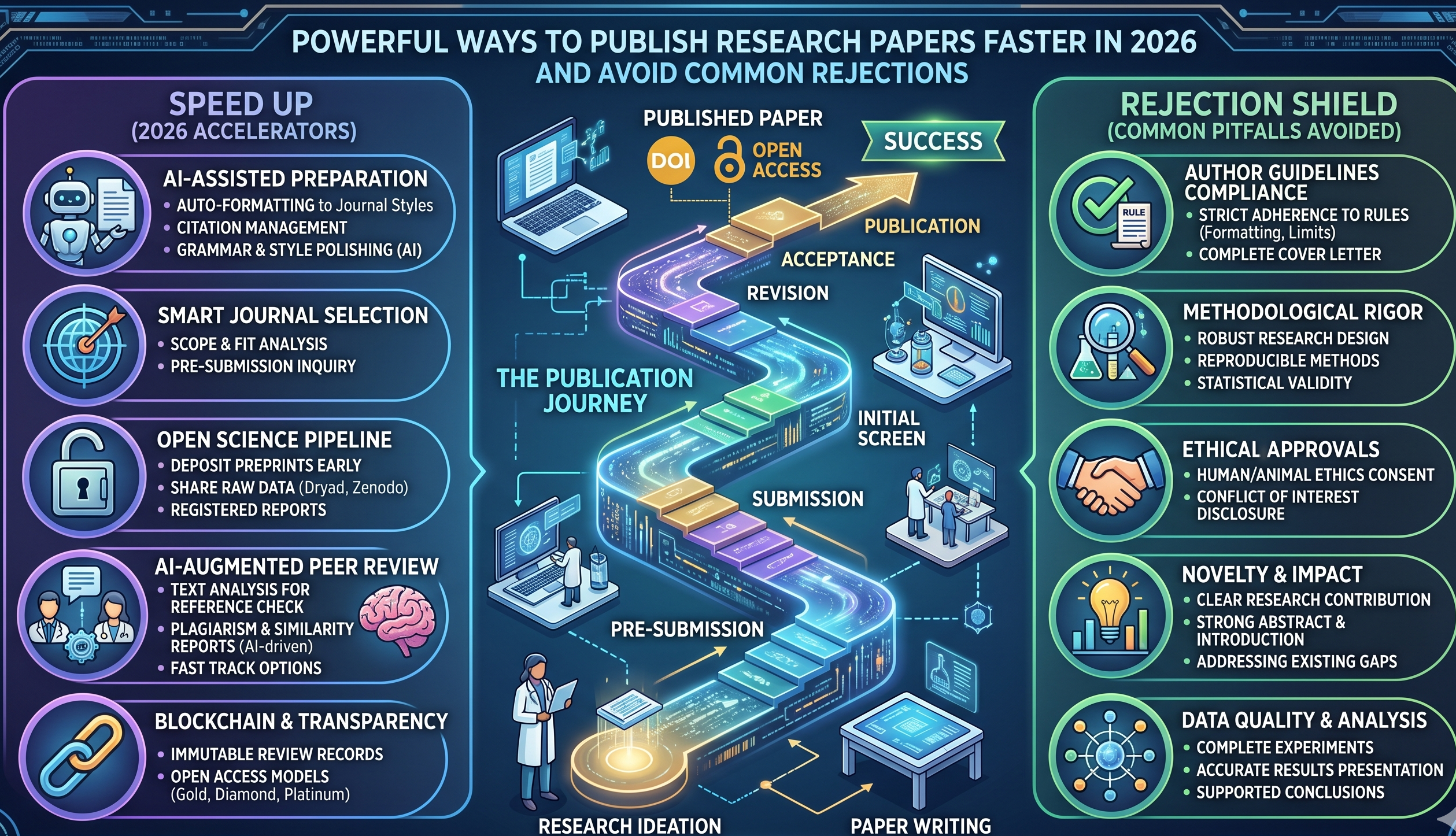
Table of Contents
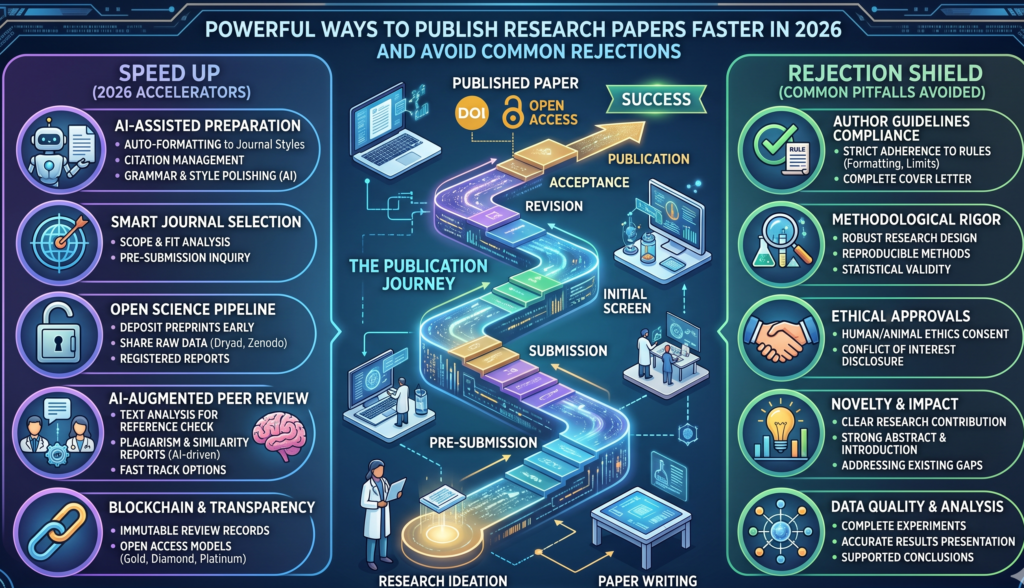
Publishing a research paper can feel like trying to enter a locked room without a key. Every student hears words like Scopus, UGC CARE, peer review, and impact factor, but very few people actually explain the process in a simple way. Whether you are a PharmD student, MBBS student, PhD scholar, engineering student, or even a high school student curious about research, this guide will help you understand how to publish research papers faster without getting trapped by fake journals or confusing academic jargon.
India is now among the top countries in global scientific publication output, with more than 228,000 science and engineering papers published annually according to recent academic publication reports. That sounds exciting, right? But here is the catch. Thousands of students still struggle with questions like where to publish research papers, whether students can publish research papers, how to publish research papers independently, and how to publish a research paper in India for free.
As a PharmD student myself, I remember staring at my first ADR case report draft thinking, “Will any journal even accept this?” My seniors spoke about rejections as if they were horror stories. One paper got rejected after four months because the formatting was wrong. Another got rejected because the journal turned out to be predatory. That is when I realized research publication is not only about writing. It is about strategy.
This guide breaks everything down step by step in a practical way. You will learn about the best journals to publish research papers, free journals to publish research papers, cheap journals to publish research papers, websites to publish research papers, and how students in India can get published faster without wasting money.
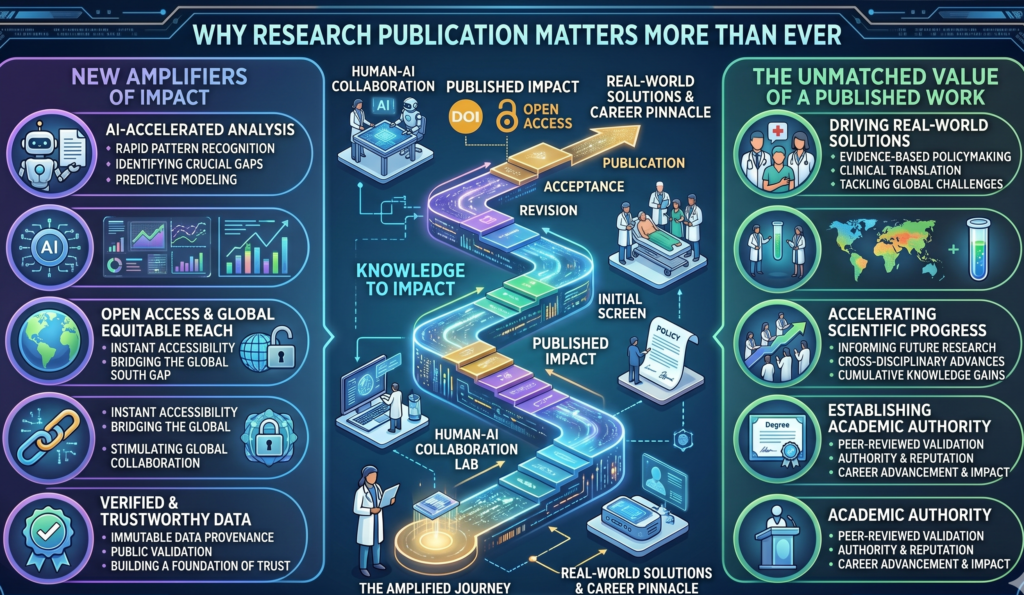
Why Research Publication Matters More Than Ever : How to Publish Research Papers?
A few years ago, publishing research papers was something mainly associated with professors and PhD scholars. Today, the landscape looks completely different. Undergraduate students, PharmD interns, engineering students, and even high school students are publishing papers to strengthen their resumes, secure scholarships, and improve admission chances for foreign universities. In India especially, research publications are becoming a major academic currency. Recent publication data shows India now ranks third globally in scientific publication output.
The pressure to publish is real. Many universities now encourage students to publish before graduation. Some postgraduate programs even require publications for thesis submission. This creates a race where students desperately search for best journals to publish research papers, cheap journals to publish research papers, and sites to publish research papers for free.
But publishing quickly does not mean publishing carelessly. Think of research publication like planting a tree. If you plant it in poor soil, it may never grow. Similarly, if you submit your paper to predatory journals, your research may lose credibility forever. That is why understanding journal quality is crucial.
For me as a PharmD student, publication started as a requirement during hospital postings. We observed adverse drug reactions, documented patient outcomes, and discussed unusual clinical cases. One of our faculty members suggested turning these observations into a case report. At first, the process looked intimidating. But after understanding journal guidelines and structuring the manuscript properly, publication became far less scary.
The truth is simple. Students who learn publication early gain a massive career advantage. Research papers improve LinkedIn profiles, increase networking opportunities, and demonstrate analytical thinking. Employers and universities view publications as evidence that you can solve problems and contribute knowledge rather than just memorize textbooks.
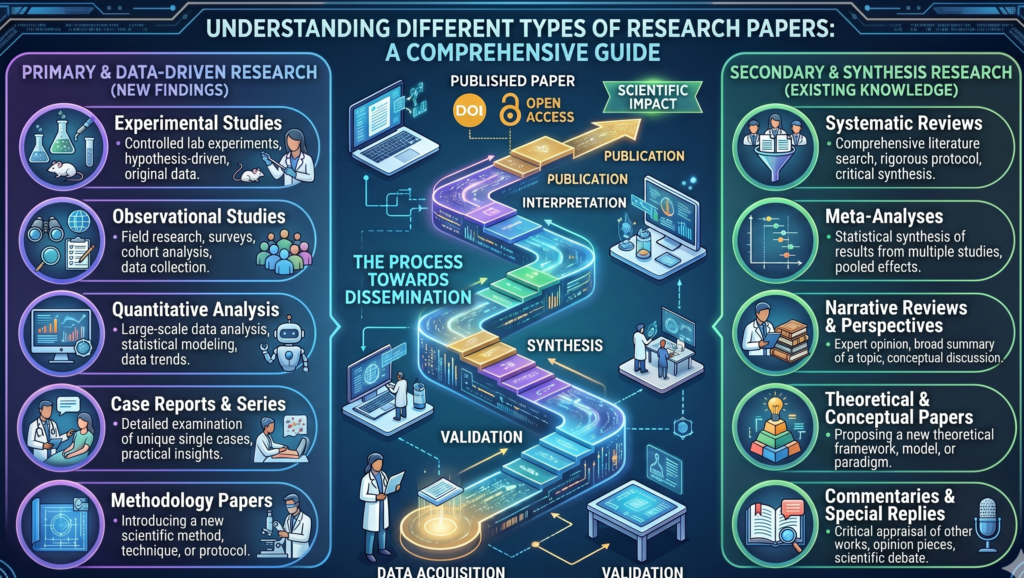
Understanding Different Types of Research Papers : How to Publish Research Papers?
Before asking where to publish research papers, you must first understand what type of paper you are writing. One major reason papers get rejected quickly is because authors submit the wrong type of manuscript to the wrong journal.
Original Research Articles
These are the most respected forms of publication. Original research involves conducting experiments, collecting data, and presenting new findings. Medical clinical studies, pharmacovigilance analyses, laboratory experiments, and engineering simulations all fall into this category. These papers usually require ethics approval and statistical analysis.
Original research papers are valued highly in Scopus indexed journals because they contribute fresh knowledge. However, they also take the longest time to publish due to extensive peer review.
Review Articles
Review articles summarize existing research on a topic. Instead of generating new data, they analyze already published studies. Students often underestimate review papers, but they are one of the fastest ways to enter academic publishing.
As a PharmD student, I noticed many juniors struggled to collect patient data for original research. A review article on “Recent Advances in Pharmacovigilance in India” became a practical alternative. Since the data already existed in published studies, writing became faster.
Case Reports
Case reports are especially popular in medicine and pharmacy. These describe unusual patient cases, rare drug reactions, or unique treatment outcomes. For beginners, case reports are often the easiest entry point into publication.
A friend of mine documented a rare antibiotic-induced skin reaction during clinical rotations. After proper literature review and patient consent, the paper was accepted in an indexed medical journal within three months. That experience showed me how simple clinical observations can become publishable research.
Short Communications
These are concise papers focusing on small but important findings. Journals often process them faster because they are shorter. If your data is limited but valuable, short communications can save months of waiting.
Understanding your paper category helps target the right journals and improves acceptance probability dramatically.
How to Choose a Research Topic Faster : How to Publish Research Papers?
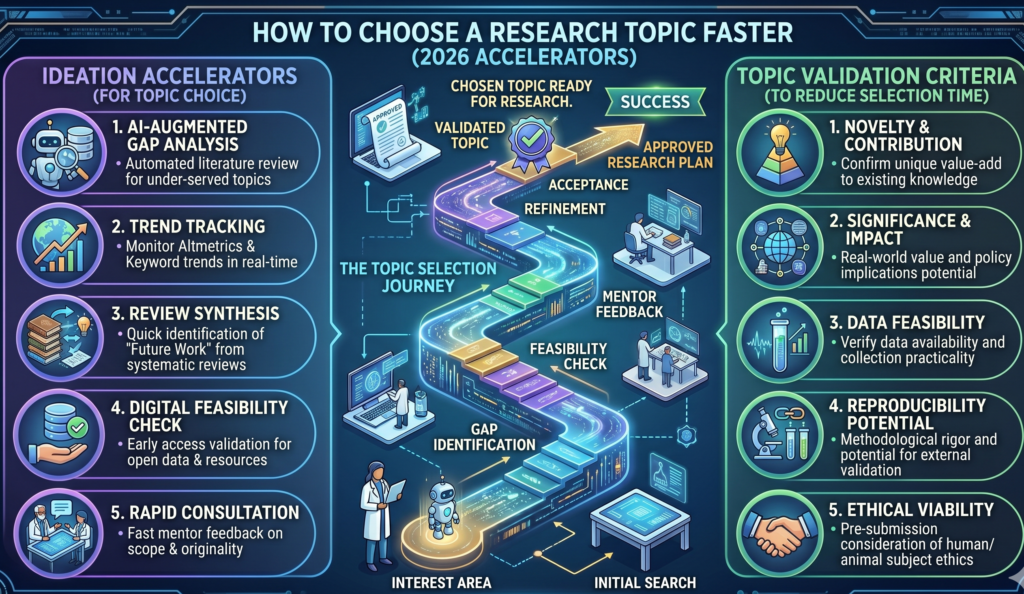
Choosing a research topic feels overwhelming for many students. Some spend months thinking instead of writing. The easiest way to speed up publication is to stop chasing “perfect” ideas and focus on practical, relevant topics.
The first strategy is identifying trending research areas. Search engines, Google Scholar, PubMed, and recent conference topics reveal what researchers are currently discussing. Areas like artificial intelligence in healthcare, pharmacovigilance, personalized medicine, antimicrobial resistance, and telemedicine are growing rapidly.
Another effective approach is using daily observations. During my hospital training, I realized students overlook valuable clinical experiences. Every ward round presents research possibilities. Drug interactions, adverse reactions, patient counseling outcomes, medication adherence issues — all these can become research topics.
A powerful trick is choosing topics with easily available data. Many students delay publication because they select projects requiring expensive equipment or large patient populations. Instead, retrospective studies and review articles provide quicker pathways.
For example, one PharmD batchmate conducted a study on medication errors using already available hospital records. Since the data collection process was simpler, manuscript preparation finished quickly.
You should also consider publication feasibility. Some highly advanced topics require sophisticated statistical expertise. Beginners should prioritize manageable projects. A well-executed simple study often gets published faster than an overly ambitious complicated one.
Research publication is not about sounding genius. It is about solving a clear problem systematically.
Step-by-Step Process to Publish Research Papers : How to Publish Research Papers?
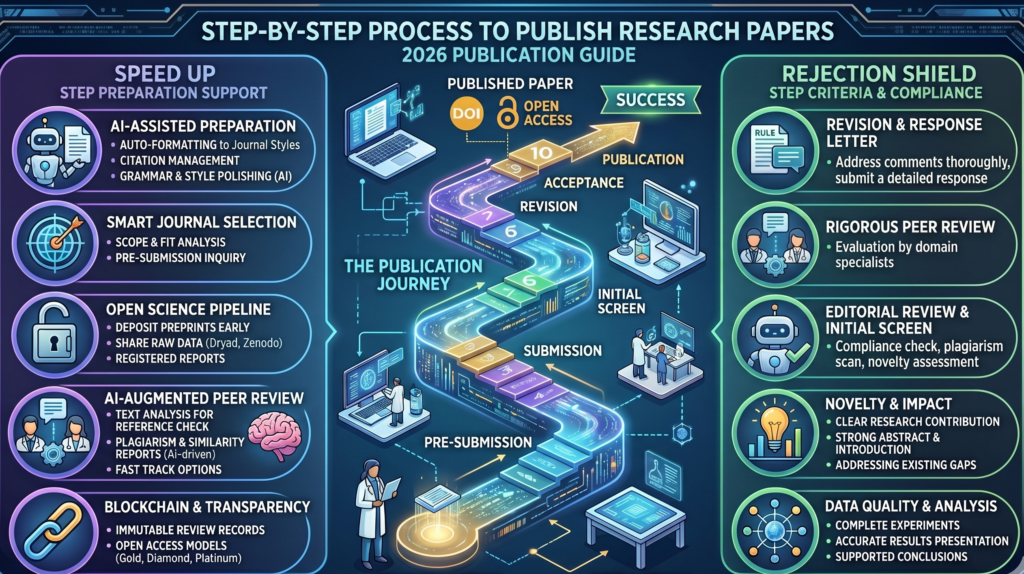
The publication process becomes much easier once broken into steps. Most students panic because they see publication as one giant mountain instead of smaller manageable tasks.
Literature Review
This stage involves understanding what other researchers have already published. Databases like PubMed, Google Scholar, and Scopus are useful here. The goal is identifying research gaps.
When I wrote my first review article, I downloaded nearly fifty papers and organized them into categories. At first it looked chaotic, but gradually patterns emerged. Certain adverse drug reactions were poorly documented in Indian populations. That gap became our research angle.
Writing the Manuscript
Scientific writing is different from regular essay writing. Journals follow structures like IMRAD:
| Section | Purpose |
|---|---|
| Introduction | Explains the problem |
| Methods | Describes methodology |
| Results | Presents findings |
| Discussion | Interprets findings |
The biggest mistake students make is overcomplicating language. Scientific writing should be clear, not dramatic. Think of it like explaining your findings to a colleague during coffee break.
Journal Selection
Selecting the wrong journal wastes enormous time. Always check:
- Scope of the journal
- Publication charges
- Indexing status
- Average review timeline
- Acceptance rate
Students often search for best journals to publish research papers but forget subject relevance matters more than prestige.
Submission Process
Most journals use online submission systems. You upload the manuscript, cover letter, figures, ethics approvals, and plagiarism reports.
Patience becomes essential here. Peer review can take weeks or months. Fast publication usually depends on manuscript quality and proper formatting rather than luck.
Best Journals to Publish Research Papers : How to Publish Research Papers?
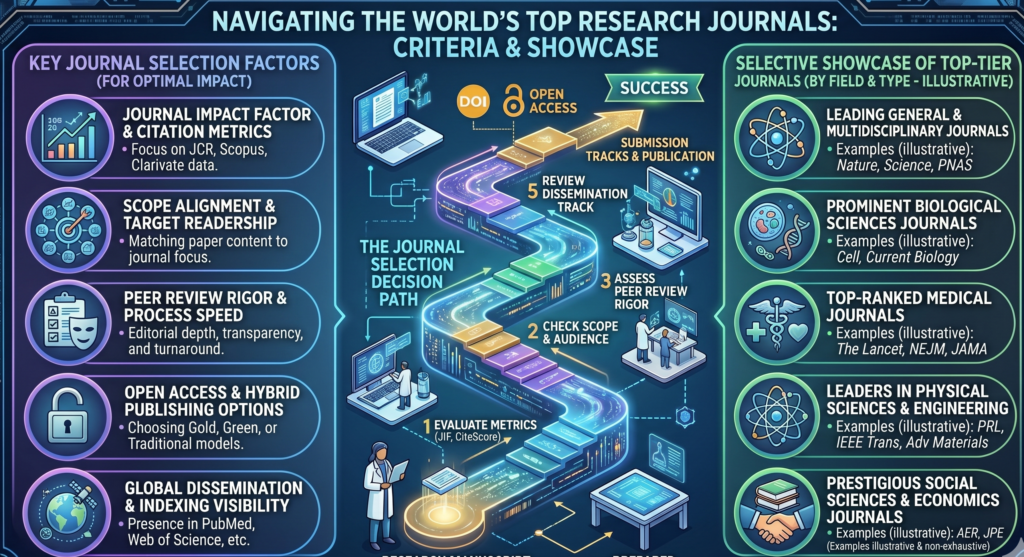
Students constantly ask about the best journals to publish research papers. The answer depends on your discipline, budget, and goals.
Scopus Indexed Journals
Scopus indexed journals are globally respected. They improve academic visibility significantly. Examples include:
| Journal | Field | Approximate Cost |
|---|---|---|
| PLOS ONE | Multidisciplinary | Paid |
| Cureus | Medical | Free/Paid optional |
| BMC Journals | Biomedical | Paid |
| Heliyon | Science | Paid |
Scopus journals provide strong credibility but usually involve stricter peer review.
UGC CARE Journals
Indian students frequently target UGC CARE journals for academic requirements. UGC CARE helps identify trusted journals and reduce predatory publishing risks.
Popular UGC CARE journals include:
- Journal of Clinical and Diagnostic Research
- Indian Journal of Pharmaceutical Education and Research
- Indian Journal of Medical Research
Free Journals to Publish Research Papers
Many students worry about publication costs. Fortunately, several journals publish papers free of cost.
Examples include:
- Cureus
- Journal of Young Pharmacists
- Some university journals
- Government-funded open access journals
Always verify indexing claims carefully before submission.
Websites and Platforms to Publish Research Papers : How to Publish Research Papers?
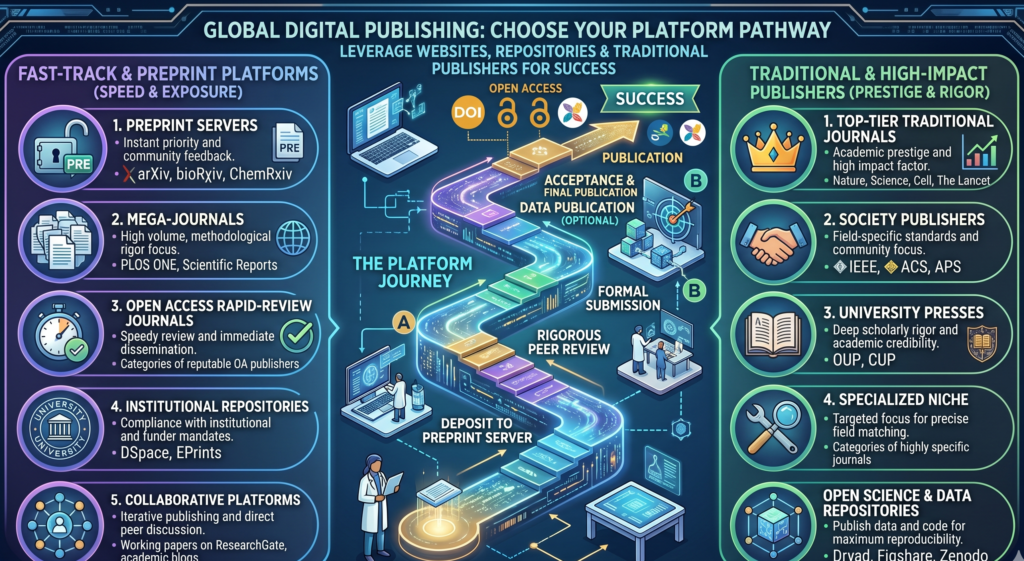
Apart from journals, researchers also use platforms to share preprints and academic work.
ResearchGate
ResearchGate allows researchers to upload papers, connect with scholars, and increase visibility.
SSRN
SSRN is popular for preprints and early dissemination of research.
Academia.edu
Academia.edu helps researchers showcase publications and network academically.
These platforms do not replace journals but improve visibility.
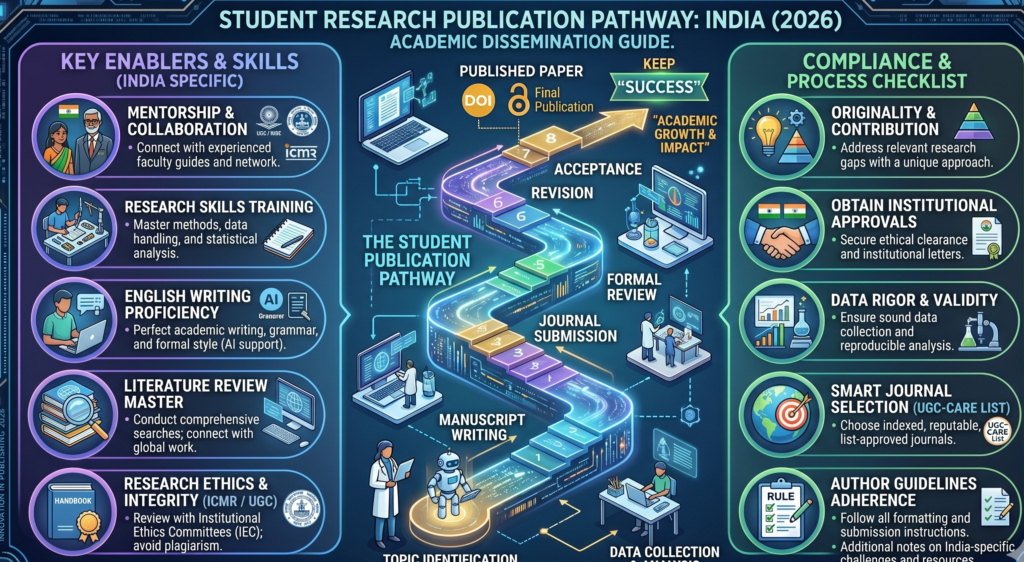
How Students in India Can Publish Research Papers
One common myth says students cannot publish without professors. That is completely false. Students absolutely can publish independently.
In India, students often hesitate because they think research is reserved for PhD scholars. But many journals accept student submissions if the work is scientifically sound.
PharmD Student Experience
My first publication journey started during ward rounds. A patient developed a rare adverse drug reaction after antibiotic therapy. Instead of simply documenting it for internal records, we discussed converting it into a case report.
The process taught me several lessons:
- Proper documentation matters
- Faculty mentorship speeds publication
- Journal formatting is critical
- Rejection is normal
Our first submission got rejected because references were incorrectly formatted. At the time, it felt devastating. But after revisions and journal resubmission, acceptance finally arrived.
That experience changed my perspective completely. Publication stopped feeling impossible.
How High School Students Can Publish Research Papers
Yes, even high school students can publish papers.
The easiest routes include:
- Literature reviews
- Survey studies
- Science fair projects
- AI-assisted data analysis projects
Students in India can collaborate with college professors or participate in online research mentorship programs.
A high school student does not need a laboratory worth crores. Curiosity matters more than expensive equipment.
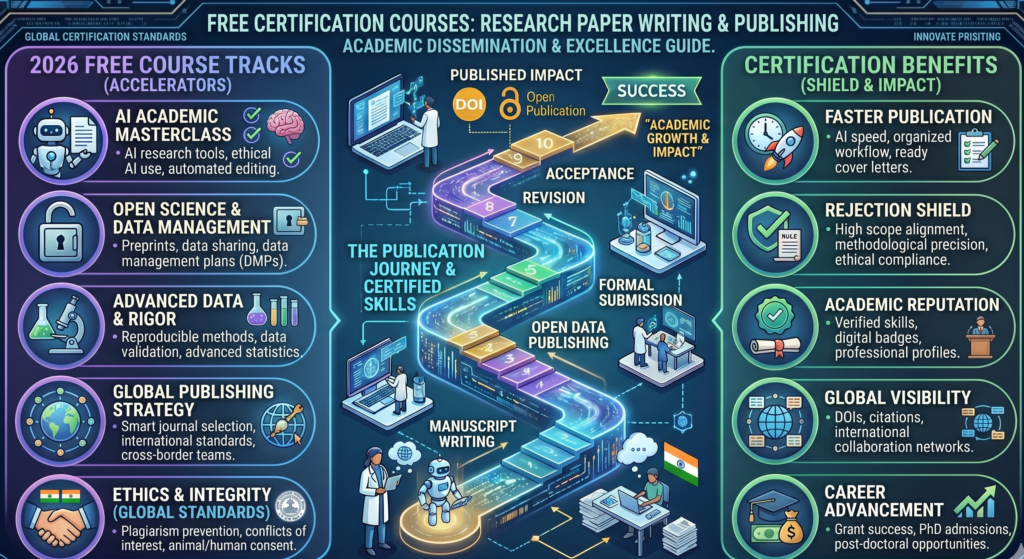
Free Certification Courses for Research Paper Writing & Publishing in 2026: How to Publish Research Papers ?
| Platform | Course Name | What You’ll Learn | Certificate | Link |
|---|---|---|---|---|
| Alison | Mastering Academic Desk Research Paper | Research paper structure, literature review, thesis writing, editing, referencing | Free/Paid Certificate Option | Alison Research Paper Course |
| SWAYAM / NPTEL | Research Writing | Academic writing, literature review, research methodology, publication basics | Free Certificate (conditions apply) | SWAYAM Research Writing Course |
| Coursera | Introduction to Academic Writing | Academic paper structure, evidence-based arguments, dissertation writing | Free Audit + Shareable Certificate | Coursera Academic Writing |
| Elevify | Research Paper Writing Course | Topic selection, methodology, journal-ready manuscript writing | Free Certificate | Elevify Research Paper Writing Course |
| Elevify | Research Writing Course | Academic structure, journal submissions, citation management | Free Certificate | Elevify Research Writing Course |
| LearnTable | Academic & Technical Writing | Literature review, plagiarism avoidance, technical formatting | Free Certificate | LearnTable Academic Writing Course |
| IOP Publishing | Open Data Excellence Training | Research data sharing, reproducibility, publication ethics | Free Certificate & Badge | IOP Open Data Excellence Course |
| LearnCafe | Research Paper Writing Course | Writing introduction, methods, results, discussion, abstract | Free Digital Certificate | LearnCafe Research Paper Writing Course |
| NanoSchool NSTC | Autonomous Researcher Workshop | AI-assisted academic publishing workflows & peer-review preparation | Certificate Included | NanoSchool Autonomous Researcher Workshop |
| Nature Masterclasses | Nature Research Publishing Courses | Scientific publishing, peer review, science communication | Certificate Available | Nature Masterclasses |
Best Free Courses for Different Needs : How to Publish Research Papers?
| Goal | Recommended Course |
|---|---|
| Beginner student learning research writing | Alison + Coursera |
| PharmD / Medical students | SWAYAM Research Writing |
| Scopus journal publication preparation | Nature Masterclasses |
| AI-assisted research workflows | NanoSchool NSTC |
| Free certificate with practical writing | Elevify |
| Learning publication ethics & data sharing | IOP Publishing |
These platforms currently offer active or accessible research-writing related learning resources and certification opportunities in 2026.
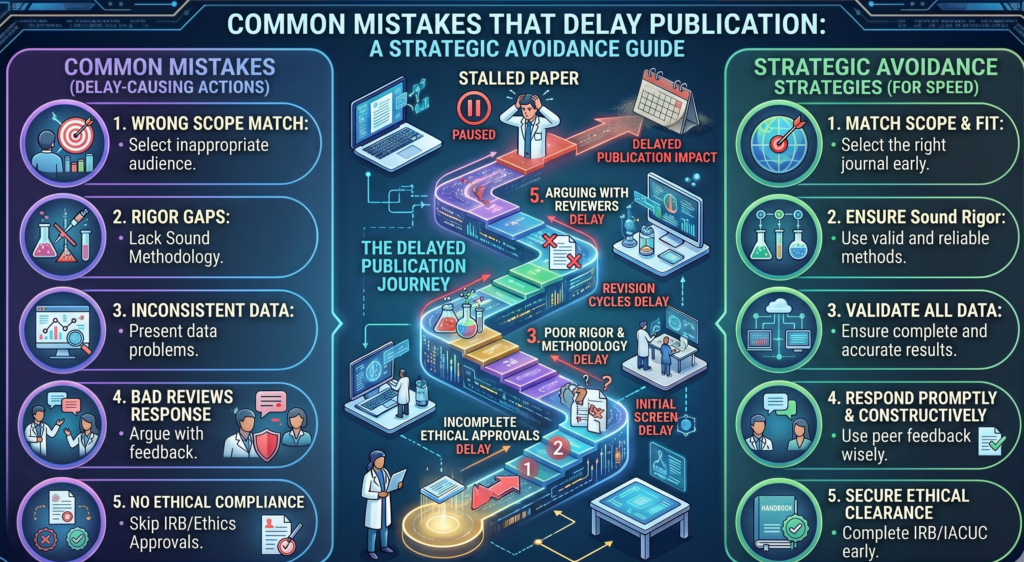
Common Mistakes That Delay Publication : How to Publish Research Papers?
Many students unknowingly sabotage their own publication journey.
The first mistake is choosing fake journals. Predatory publishers promise instant publication but damage academic credibility permanently.
The second mistake is ignoring journal guidelines. Formatting errors alone can trigger desk rejection.
Third, students often submit incomplete manuscripts. Weak introductions, missing references, and poor grammar reduce acceptance chances dramatically.
Another huge problem is plagiarism. Journals now use advanced plagiarism detection software. Even accidental copying creates trouble.
Students also underestimate reviewer comments. Peer review criticism is not personal. Think of reviewers like gym trainers pushing you harder so the final paper becomes stronger.
One Reddit discussion highlighted how unrealistic expectations about one-week publication acceptance create unnecessary stress among students. Genuine publication requires peer review and quality assessment.
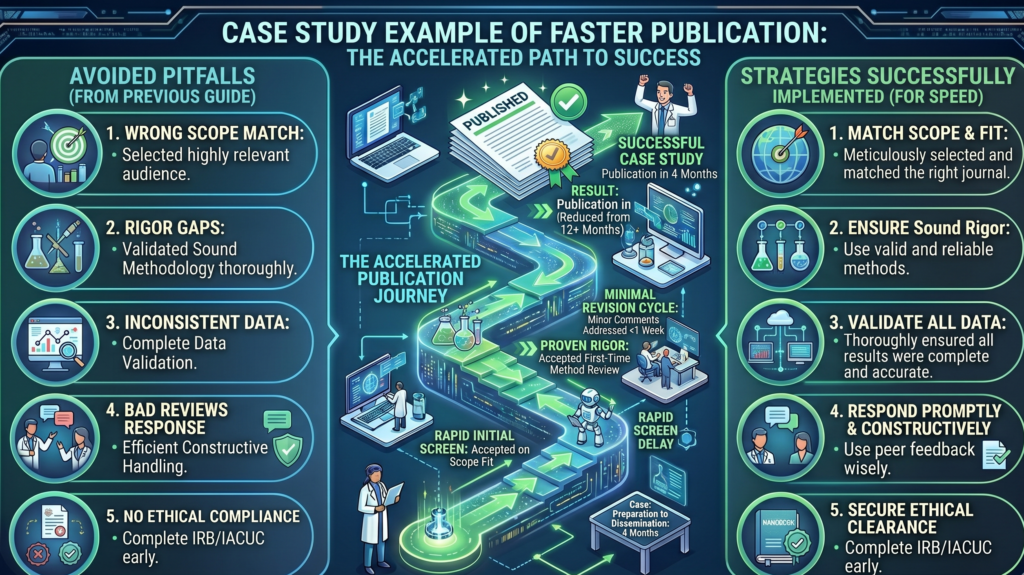
Case Study Example of Faster Publication : How to Publish Research Papers?
A PharmD intern in Hyderabad wanted publication experience before applying abroad. Instead of waiting for a massive clinical trial, she focused on a practical case report involving antibiotic resistance patterns.
Steps Followed
| Step | Action |
|---|---|
| Topic Selection | Chose hospital-observed resistant infection |
| Literature Review | Used PubMed and Google Scholar |
| Writing | Structured IMRAD format |
| Journal Selection | Mid-tier indexed medical journal |
| Submission | Included plagiarism report |
Timeline
| Activity | Time Taken |
|---|---|
| Data Collection | 2 weeks |
| Manuscript Writing | 3 weeks |
| Revision | 2 weeks |
| Peer Review | 6 weeks |
| Acceptance | 3 months total |
This example proves faster publication is possible with strategic planning.
People Also Ask
Can we individually publish a research paper?
Yes. Independent publication is completely possible. Many researchers publish without institutional affiliations.
How to get an independent research paper published?
Choose a suitable journal, prepare the manuscript properly, follow guidelines carefully, and submit directly through the journal portal.
Can I publish a paper without a PhD?
Absolutely. Journals evaluate manuscript quality, not degree status.
Is it free to publish a research paper?
Some journals are free, while others charge article processing fees.
Which is better, UGC or Scopus?
Scopus generally carries greater international recognition, while UGC CARE is important within Indian academia.
Is Google Scholar better than Scopus?
Google Scholar is broader, while Scopus offers stricter indexing and quality control.
Which UGC journals are low cost?
Several Indian journals charge minimal publication fees, especially university-associated journals.
Am I an author if I self-publish?
Yes. Self-publishing still makes you an author, though peer-reviewed publication carries stronger academic credibility.
Conclusion
Publishing research papers faster is not about shortcuts. It is about strategy, consistency, and understanding the academic system properly. Students often think publication belongs only to elite researchers sitting inside famous laboratories. The reality is very different. Many successful publications begin with simple observations, practical ideas, and curiosity.
For Indian students especially, How to Publish Research Papersr, publishing is becoming increasingly valuable. From PharmD interns documenting adverse drug reactions to engineering students exploring AI models, opportunities are expanding rapidly. India’s rise in global research output reflects this growing academic momentum.
The biggest lesson from my own PharmD publication journey was realizing rejection is not failure. Every reviewer comment improves your paper. Every revision sharpens your skills. Publication is less like a sprint and more like climbing stairs one step at a time.
If you focus on selecting practical topics, writing clearly, choosing authentic journals, and responding professionally to reviewer feedback, publication becomes achievable much faster than most students imagine.

FAQs
1. Can students publish research papers without faculty support?
Yes. Faculty mentorship helps, but independent publication is possible if the research quality is strong.
2. How long does publication usually take?
Publication timelines vary from one month to over a year depending on journal review speed.
3. Are paid journals always predatory?
No. Many legitimate open-access journals charge publication fees for processing and hosting articles.
4. What is the easiest type of research paper for beginners?
Case reports and review articles are usually the easiest starting points.
5. How can I check if a journal is fake?
Verify indexing status through official Scopus, PubMed, or UGC CARE databases.