
Table of Contents
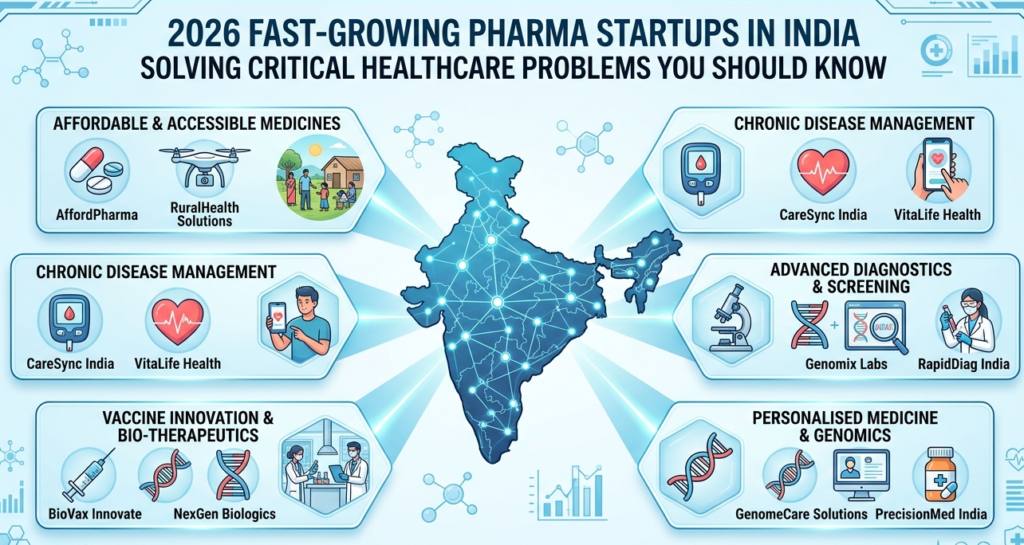
Pharma Startups in India’s healthcare and pharmaceutical ecosystem is changing faster than ever before. A few years ago, most people associated pharma only with big manufacturing companies and generic medicines. Today, things look completely different. AI-driven diagnostics, virtual healthcare integrations, pharmacovigilance platforms, online pharmacies, digital therapeutics, genomics, and remote patient monitoring startups are reshaping the industry from the ground up.
According to recent startup ecosystem reports, India now has over 13,000+ active healthtech companies, with funding crossing billions of dollars over the last decade. The rise of pharma startups in India is no longer just a trend — it is becoming the backbone of the future healthcare economy.
As a Pharm D student, I personally witnessed this transformation during clinical postings and internships. Earlier, patient documentation was mostly paper-based, adverse drug reaction reporting was slow, and many rural patients struggled to access specialists. Today, startups are solving these exact problems using AI, cloud platforms, and telemedicine integrations. It honestly feels like healthcare has entered its “smartphone revolution” era.
Why Pharma Startups in India Are Booming
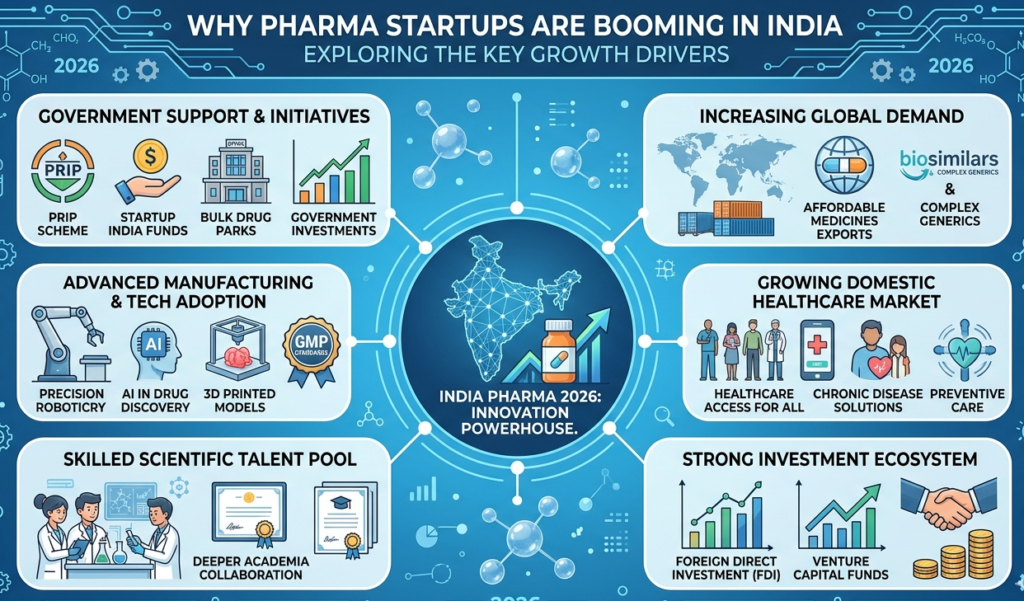
The Indian pharmaceutical and healthcare market is going through a massive digital transformation. Earlier, healthcare startups focused mainly on medicine delivery and appointment booking. Now, they are entering areas like AI-assisted diagnosis, genomics, digital therapeutics, pharmacovigilance automation, and hospital data analytics.
One major reason behind this growth is government support. Programs linked with digital healthcare infrastructure and startup incubation are helping founders build scalable solutions faster. India also has a strong talent pool of pharmacists, doctors, engineers, and biotech researchers who are now collaborating to create innovative healthcare platforms.
Another important factor is patient behavior. Patients today want healthcare that is fast, affordable, digital, and personalized. Nobody wants to stand in long queues anymore when teleconsultation apps can connect them to doctors instantly. Online pharmacies and virtual care platforms have become a necessity rather than a luxury.
Reports suggest that India’s healthtech ecosystem has attracted billions in investments, with AI diagnostics and telemedicine emerging as leading sectors.
From my own academic exposure as a Pharm D student, I noticed how quickly hospitals are adopting digital systems. During ward rounds, doctors increasingly relied on electronic records and AI-supported reporting systems. The healthcare industry is slowly moving from reactive treatment to predictive and preventive care.
Government Support and Digital Healthcare : Pharma Startups in India
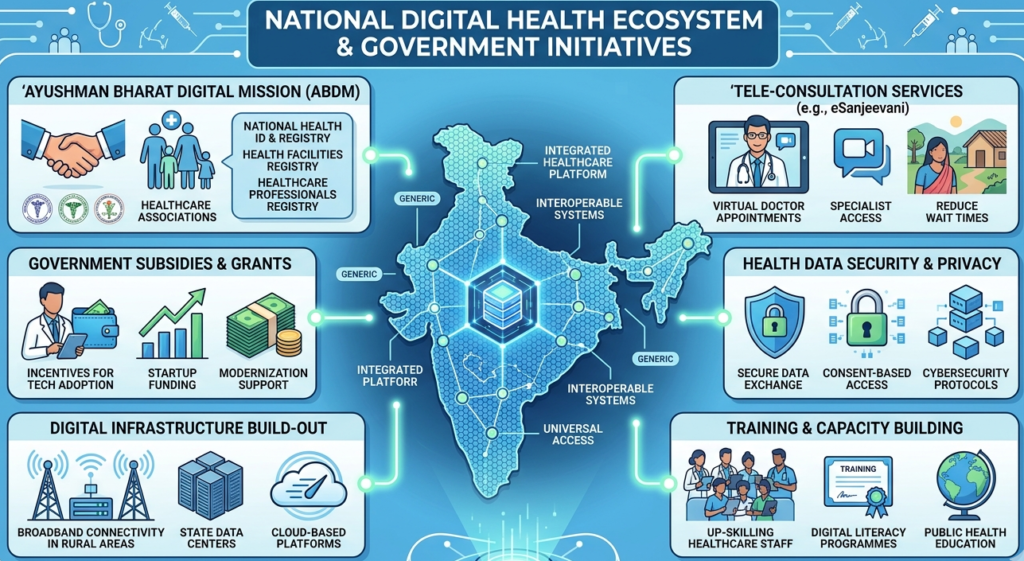
India’s healthcare startup ecosystem is growing because of multiple policy-level changes. Telemedicine regulations, digital health missions, startup incubation programs, and AI-driven healthcare initiatives are pushing innovation forward.
The Ayushman Bharat Digital Mission has played a crucial role in creating digital healthcare infrastructure. Startups are now integrating electronic health records, teleconsultation systems, and patient monitoring tools more efficiently.
Healthcare startups are also receiving support through biotech incubators and funding programs. Reports mention that India has dozens of biotechnology parks and bio-incubators supporting health innovation.
This support matters because healthcare innovation is expensive. Building a pharmaceutical or diagnostic startup requires regulatory approvals, research validation, clinical testing, and infrastructure investment. Government-backed incubators reduce some of this burden and allow founders to focus on innovation.
For students like me, this is exciting because career opportunities are expanding rapidly. Earlier, Pharm D graduates mainly looked for hospital pharmacy roles. Today, they can work in:
- Pharmacovigilance startups
- Clinical research organizations
- AI healthcare platforms
- Medical writing startups
- Drug safety analytics companies
- Telemedicine companies
Healthcare careers are becoming more interdisciplinary than ever before.
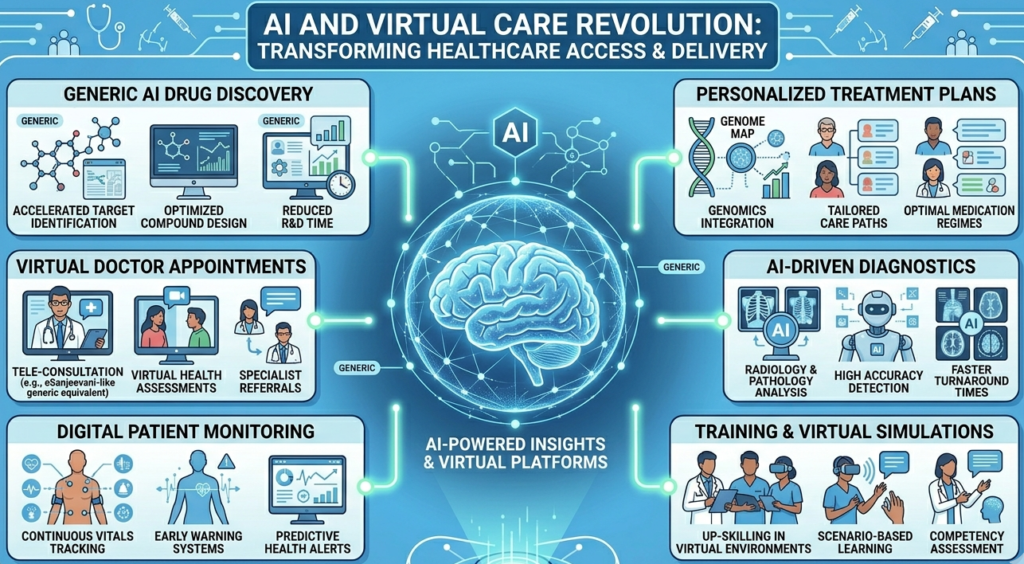
AI and Virtual Care Revolution : Pharma Startups in India
Artificial intelligence is now the heartbeat of many new healthcare startups in India. AI is helping companies improve diagnostics, automate pharmacovigilance reporting, predict disease progression, and personalize treatment plans.
For example, startups like Qure.ai use AI-powered imaging systems to detect diseases such as tuberculosis and lung cancer faster. Reuters recently reported that Qure.ai plans major expansion and IPO ambitions due to strong growth in AI diagnostics.
Virtual care integrations are another game changer. Many startups now combine:
- Telemedicine
- AI symptom checkers
- E-prescriptions
- Lab integrations
- Online pharmacy delivery
- Remote monitoring devices
This creates a seamless digital healthcare ecosystem.
Think about it like the “Amazon effect” in healthcare. Patients now expect healthcare services to be available instantly on their phones. Whether it is booking a doctor consultation, ordering medicines, or monitoring blood pressure remotely, Pharma Startups in India are building healthcare convenience into everyday life.
From my perspective as a student, AI will not replace healthcare professionals completely. Instead, it will reduce repetitive administrative tasks and improve clinical decision-making. Pharmacists and clinicians who understand technology will become highly valuable.
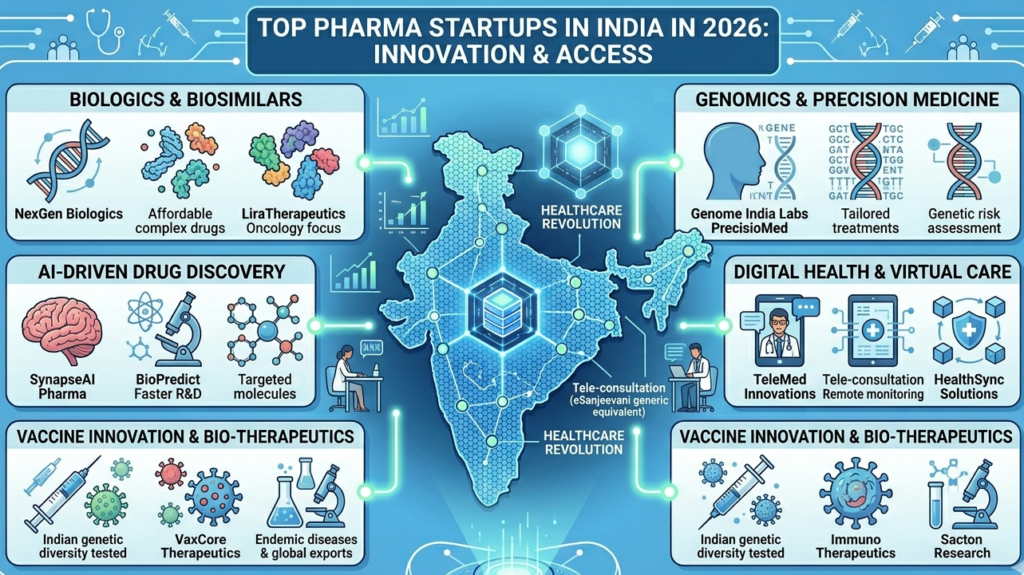
Top Pharma Startups in India in 2026
Tata 1mg
Tata 1mg is one of the most recognized healthcare startups in India or Pharma Startups in India today. What started as an online medicine platform has evolved into a complete digital healthcare ecosystem.
The company offers:
- Online pharmacy services
- Teleconsultation
- Diagnostic test booking
- Healthcare content
- Preventive health packages
Reports indicate that Tata 1mg continues expanding aggressively into offline and omnichannel healthcare services.
One reason for its success is trust. Healthcare consumers want reliability, especially when medicines and diagnostics are involved. Backing from the Tata Group strengthened customer confidence significantly.
As a Pharm D student, I personally used the platform to compare medicine brands and access drug-related information quickly during assignments and case discussions.
PharmEasy
PharmEasy remains one of the largest online pharmacy startups in India and Pharma Startups in India. Despite funding fluctuations, the company still dominates online medicine delivery and diagnostics.
Its growth highlights how online pharmacy startups in India transformed patient behavior. Patients no longer need to travel physically for routine medicines. Chronic disease patients especially benefit from scheduled delivery systems.
PharmEasy also helped normalize digital prescriptions and online medicine management. This has improved medication adherence for many patients.
What makes the company important is not just convenience but scalability. E-pharmacy models are helping bridge healthcare access gaps in smaller cities and rural regions.
Practo
Practo is often considered one of the pioneers of virtual healthcare integration and Pharma Startups in India .
The platform connects:
- Doctors
- Patients
- Clinics
- Hospitals
- Diagnostic services
Reports suggest Practo has expanded internationally while strengthening its digital consultation ecosystem.
During COVID-era digital adoption, platforms like Practo completely changed public perception of telemedicine. Even elderly patients who were initially uncomfortable with online consultations gradually adapted.
Today, virtual consultations are becoming part of routine healthcare behavior.
Qure.ai
Qure.ai represents the future of AI-driven diagnostics in India and Pharma Startups in India.
The startup specializes in:
- Chest X-ray AI analysis
- Tuberculosis detection
- Stroke identification
- Lung cancer screening
Recent reports mention collaborations involving AI-powered screening initiatives in Indian hospitals.
This startup fascinates me personally because it combines clinical medicine with data science. As someone from a pharmacy background, it is inspiring to see how AI can improve early diagnosis and save lives.
AI will likely become an essential support tool for clinicians rather than a replacement.
Dozee
Dozee focuses on contactless patient monitoring systems and is a promising Pharma Startups in India.
The company’s technology enables hospitals to monitor:
- Heart rate
- Respiratory rate
- Sleep patterns
- Patient deterioration signals
This kind of remote monitoring became extremely important after the pandemic. Hospitals realized that scalable monitoring solutions can reduce ICU burden and improve patient management.
Remote healthcare monitoring also supports home-care models, which are expected to grow significantly in the next decade.
MedGenome
MedGenome is one of India’s leading genomics and precision medicine startups.
The company focuses on:
- Genetic testing
- Oncology diagnostics
- Rare disease analysis
- Personalized medicine
Reports mention that MedGenome built one of the largest South Asian genetic databases.
Genomics is likely to redefine healthcare in the future. Instead of “one-size-fits-all” treatment, medicine will increasingly become personalized based on genetic profiles.
For pharmacy and clinical research students, this opens exciting opportunities in precision medicine and pharmacogenomics.
Niramai
Niramai uses AI-based thermal imaging technology for breast cancer screening.
What makes this startup unique is accessibility. Traditional screening procedures can be expensive and uncomfortable. AI-supported thermal imaging creates a non-invasive alternative.
This is exactly the kind of innovation Pharma Startups in India needs — affordable, scalable, and patient-friendly healthcare technology.
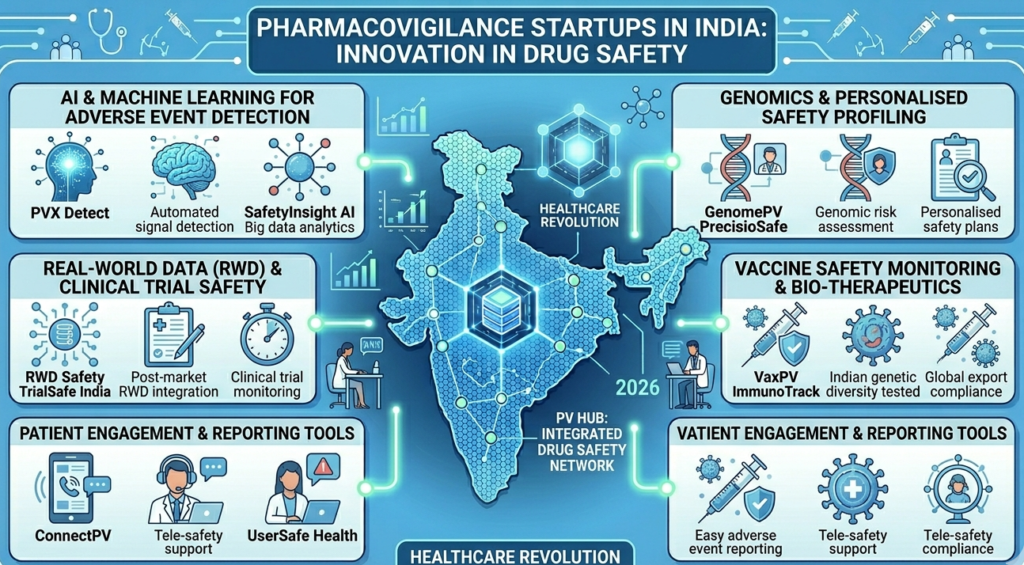
Pharmacovigilance Startups in India : Pharma Startups in India
Pharmacovigilance is becoming one of the hottest healthcare sectors in India. Drug safety monitoring is no longer limited to spreadsheets and manual case processing. AI and automation are rapidly changing the field.
Pharmacovigilance startups and Pharma Startups in India now focus on:
- Automated adverse event detection
- AI-powered signal detection
- Literature monitoring
- Safety database management
- Real-time analytics
Industry experts increasingly discuss how AI can strengthen drug safety systems and improve risk management.
As a Pharm D student, pharmacovigilance was one of the subjects that genuinely felt futuristic. Detecting adverse drug reactions is like being a healthcare detective. Every patient reaction tells a story, and pharmacovigilance professionals piece those stories together to improve patient safety.
India’s growing clinical research ecosystem is also increasing demand for pharmacovigilance professionals.
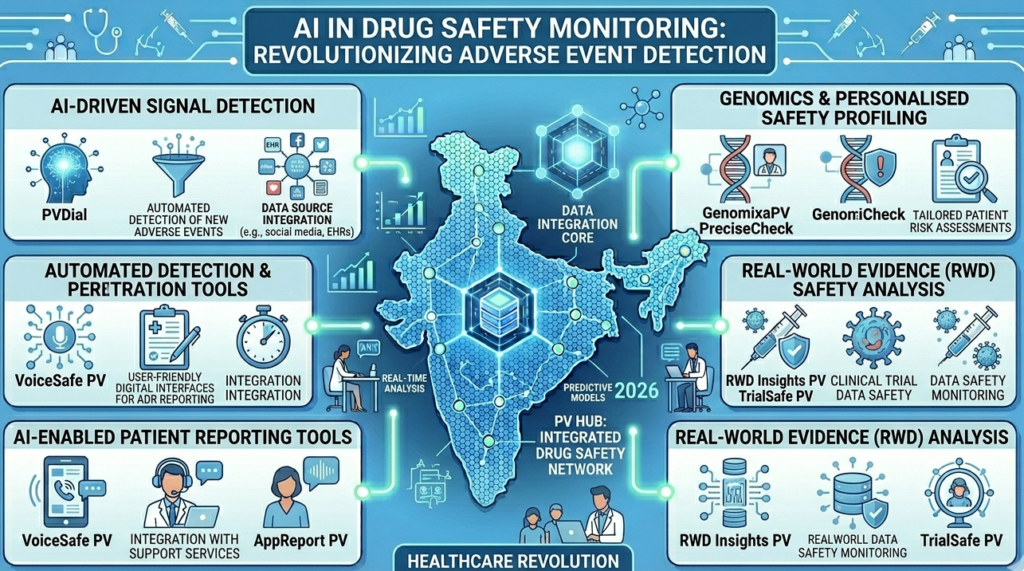
AI in Drug Safety Monitoring
AI can process enormous amounts of safety data much faster than humans. This helps identify hidden drug safety patterns earlier.
For example:
- AI can scan medical literature automatically
- Natural language processing can detect adverse event signals
- Machine learning can identify risk trends
But does this mean humans become irrelevant? Not at all.
Human expertise is still necessary for:
- Clinical judgment
- Causality assessment
- Regulatory interpretation
- Ethical decision-making
AI is more like a highly efficient assistant rather than a replacement.
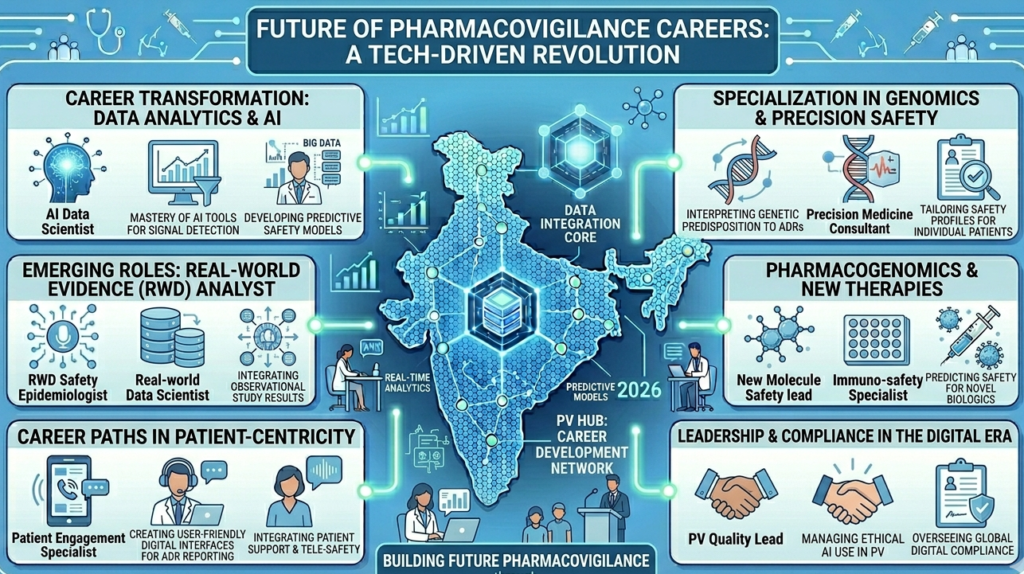
Future of Pharmacovigilance Careers
Healthcare reports suggest strong hiring growth across digital health and pharmaceutical sectors.
This means students entering pharmacovigilance today may work in:
- AI pharmacovigilance startups
- Signal detection teams
- Medical review departments
- Regulatory intelligence
- Safety analytics
- Drug safety automation companies
One thing I realized during my academic journey is that communication skills matter just as much as technical knowledge. Startups especially value professionals who can combine science with technology and business understanding.
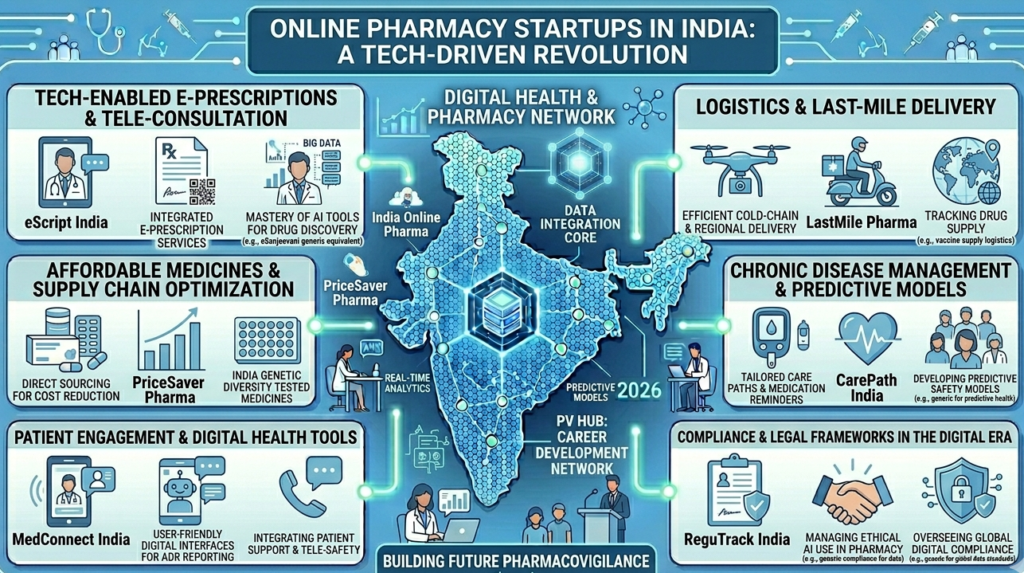
Online Pharmacy Startups in India
Online pharmacy startups changed healthcare accessibility in India dramatically.
Earlier, patients often struggled with:
- Medicine stock shortages
- Long pharmacy queues
- Limited medicine availability
- High travel costs
E-pharmacy companies solved many of these problems through logistics networks and digital platforms.
Popular online pharmacy startups or Pharma Startups in India include:
- Tata 1mg
- PharmEasy
- Apollo 24/7
These companies are evolving beyond medicine delivery into integrated healthcare ecosystems.
The rise of digital prescriptions and app-based medicine management also improved medication adherence for chronic disease patients.
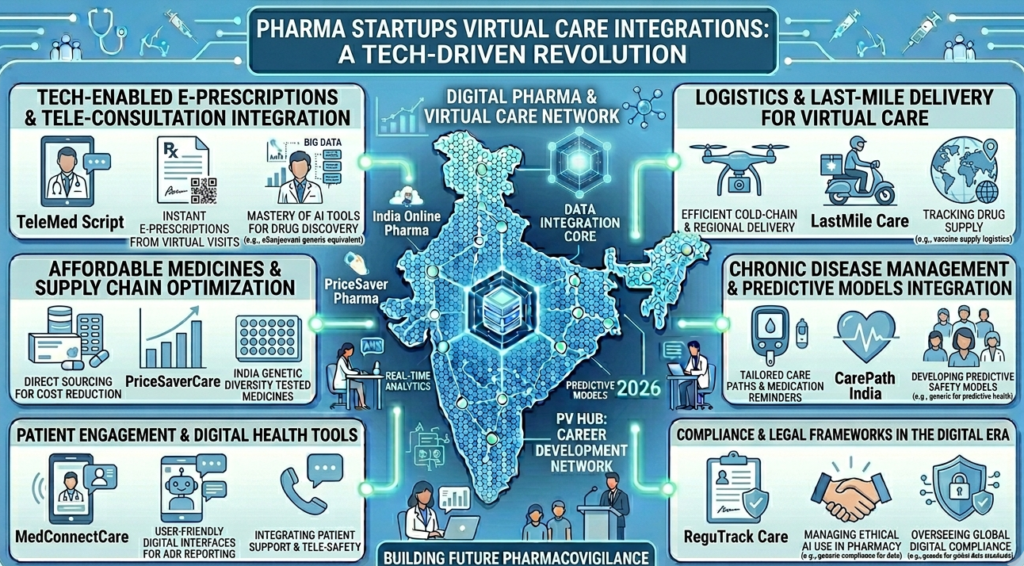
Pharma Startups in India Virtual Care Integrations
Virtual care integration is one of the biggest healthcare trends of 2026.
Modern healthtech startups now combine:
- Telemedicine
- AI diagnostics
- Remote monitoring
- Electronic prescriptions
- Online pharmacy systems
This integrated approach improves continuity of care.
Imagine a diabetic patient:
- Uses a wearable glucose monitor
- Data syncs with a mobile app
- AI detects abnormal patterns
- Doctor consultation happens instantly
- Medicines are delivered online
That entire healthcare journey can now happen digitally.
This is why pharma startups virtual care integrations and Pharma Startups in India are attracting major investor attention.
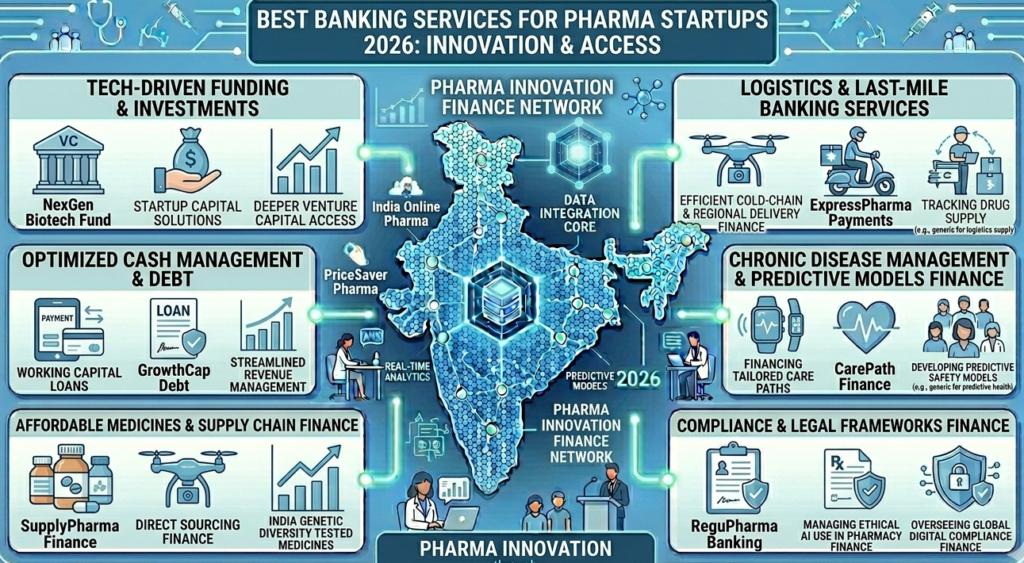
Best Banking Services for Pharma Startups in India 2026
Choosing the right banking partner is critical for healthcare startups.
Best Banks for Pharma Startups in India
Some commonly preferred banks and financial platforms for Indian startups include:
- HDFC Bank
- ICICI Bank
- Axis Bank
- Kotak Mahindra Bank
These banks provide:
- Startup current accounts
- Digital banking
- Payroll solutions
- Venture debt support
- International transaction support
Healthcare startups especially need banks that understand:
- Regulatory compliance
- International payments
- Research funding structures
- Investor management
Who Provides the Best Banking for Pharma Startups?
There is no single perfect answer because startup needs vary.
A biotech startup may prioritize:
- Investor-friendly banking
- Forex services
- R&D financing
An e-pharmacy startup may prioritize:
- Payment gateway integration
- High-volume transaction handling
- Digital scalability
From a practical standpoint, startups should look for:
- Low transaction friction
- Strong online banking
- Startup-focused support teams
- API integrations
- Funding ecosystem access
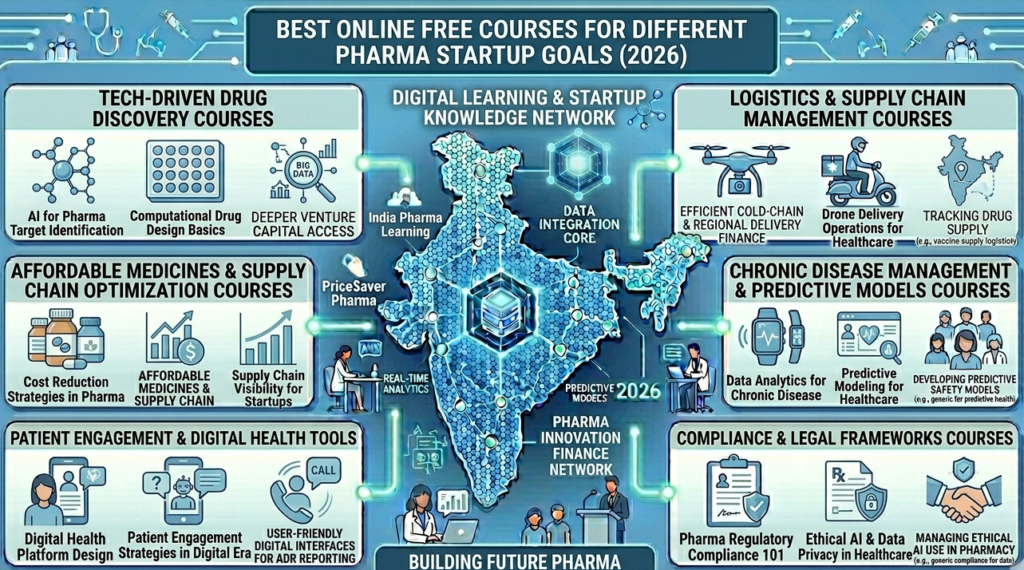
Best Free Online Courses for Different Pharma Startup in India Goals
| Course Name | Platform | What You’ll Learn | Free Access Link |
|---|---|---|---|
| Pharmaceutical Product Development and Marketing | Alison | Pharma product development, marketing strategies, regulatory basics | Alison Pharma Product Development Course |
| Molecule to Medicine | Pharma Lesson | Drug discovery, clinical trials, pharmacogenomics, regulatory affairs | Pharma Lesson Molecule to Medicine |
| Entrepreneurship Management | SWAYAM | Startup management, business planning, market analysis | SWAYAM Entrepreneurship Management Course |
| Entrepreneurship | IIT Madras via SWAYAM | Startup ecosystem, innovation, funding, business growth | IIT Madras Entrepreneurship Course |
| Entrepreneurship Development | SWAYAM | Startup development, business feasibility, entrepreneurial skills | SWAYAM Entrepreneurship Development Course |
| Entrepreneur Skills | Gujarat University via SWAYAM | Business skills, startup planning, entrepreneurship competencies | Entrepreneur Skills Course |
| Free Pharma Courses & Resources | ClinPath | Pharmacovigilance, clinical research, SAS, regulatory affairs, medical writing | ClinPath Free Pharma Courses |
| Pharma AI Pulse Certification | Multiplier AI | AI in pharma startups, AI clinical trials, regulatory AI applications | Pharma AI Pulse Free Certification |
| Entrepreneurship and IP Strategies | Alison | Startup IP protection, patents, trademarks, innovation management | Alison Entrepreneurship and IP Strategies |
| Industrial Pharmacy-I | SWAYAM | Pharmaceutical manufacturing, industrial pharmacy basics | Industrial Pharmacy Course |
| L2Pro India – Protecting Your Innovations | Qualcomm Academy | Intellectual property, startup innovation protection, patents | L2Pro India Innovation Course |
| GDP Training | PharmaLessons | Good documentation practices, pharma compliance, industry basics | GDP Training Course |
| Goal | Recommended Course |
|---|---|
| Start a Pharma Startup | Entrepreneurship Management |
| Learn Pharma Business Basics | Pharmaceutical Product Development and Marketing |
| Enter Clinical Research Startups | ClinPath Free Pharma Courses |
| Build AI Healthcare Startup Skills | Pharma AI Pulse |
| Learn Drug Development | Molecule to Medicine |
| Understand Pharma Manufacturing | Industrial Pharmacy-I |
| Learn Startup IP & Patents | Entrepreneurship and IP Strategies |
These courses are useful for Pharma Startups in India for :
- Pharm D students
- Pharmacy graduates
- Clinical research aspirants
- Pharmacovigilance professionals
- Healthcare startup founders
- Medical writers
- Digital health entrepreneurs
Case Study Example: Qure.ai and AI-Powered Diagnostics
One of the best examples of healthcare innovation in India is Qure.ai.
The startup developed AI systems capable of analyzing radiology scans rapidly. In regions where radiologists are limited, this technology helps identify diseases like tuberculosis earlier.
Reports show that Qure.ai expanded globally and partnered with hospitals and healthcare organizations for AI-driven screening initiatives.
Why This Case Study Matters
This startup solved three major healthcare problems simultaneously:
- Shortage of specialists
- Delayed diagnosis
- High patient load
Instead of replacing doctors, AI improved healthcare efficiency.
As a pharmacy student, this taught me an important lesson:
Healthcare innovation is not always about inventing a new drug. Sometimes, improving diagnosis speed itself can save thousands of lives.
My Personal Experience as a Pharm D Student : Pharma Startups in India
During my clinical postings, I noticed something surprising. Patients often remembered the healthcare app they used more than the actual hospital system behind it.
That realization changed how I viewed healthcare.
Technology is becoming the “front door” of medicine.
I remember helping in adverse drug reaction documentation where manual paperwork consumed a lot of time. At the same time, I saw startups developing automated systems capable of streamlining safety reporting and patient management.
Many students still think healthcare careers are limited to hospitals or retail pharmacy. That mindset is outdated.
Today, Pharm D graduates can explore:
- Clinical data science
- Pharmacovigilance startups
- Medical writing
- AI healthcare analytics
- Digital therapeutics
- Healthcare consulting
The future belongs to professionals who combine healthcare knowledge with digital adaptability.
Future Trends in Healthcare Startups : Pharma Startups in India
The next decade will completely reshape healthcare.
Biggest Healthcare Trends of the Next 10 Years
1. AI-Powered Personalized Medicine
Treatment plans will increasingly use patient-specific data.
2. Remote Monitoring Ecosystems
Wearables and home-care devices will reduce hospital dependency.
3. Virtual Healthcare Platforms
Hybrid care models combining physical and digital healthcare will dominate.
4. Pharmacovigilance Automation
Drug safety systems will become AI-assisted and predictive.
5. Genomics and Precision Medicine
Personalized therapies will become more accessible.
6. Digital Mental Health Platforms
Mental healthcare startups are expected to grow rapidly.
7. Preventive Healthcare
Healthcare will shift from treatment to prevention-focused models.
Reports already indicate rapid hiring growth across digital health and AI-integrated healthcare sectors.

People Also Ask
Which type of healthcare startups are most popular in India?
The most popular healthcare startups in India or Pharma Startups in India currently include:
- Online pharmacy startups
- Telemedicine platforms
- AI diagnostics startups
- Remote patient monitoring companies
- Digital therapeutics platforms
What is the latest development in India’s healthcare sector?
Recent developments include:
- AI-powered diagnostics
- Digital health record integration
- Telemedicine expansion
- Virtual care ecosystems
- AI-assisted pharmacovigilance
How many health tech startups are there in India?
Reports suggest India has over 13,000 active healthtech startups across various healthcare segments.
What are the top 3 trends in the healthcare industry?
The top trends are:
- Artificial intelligence
- Virtual healthcare
- Personalized medicine
What are the 4 P’s in healthcare?
The 4 P’s in healthcare generally refer to:
- Predictive
- Preventive
- Personalized
- Participatory
What are the health trends in 2026?
Key healthcare trends in 2026 include:
- AI diagnostics
- Digital therapeutics
- Telemedicine growth
- Remote patient monitoring
- Precision medicine
What are the biggest healthcare trends of the next 10 years?
The biggest trends include:
- AI-powered healthcare
- Robotics
- Genomics
- Virtual hospitals
- Pharmacovigilance automation
- Smart wearable ecosystems
Which company is best for pharmacovigilance in India?
Several companies are known for pharmacovigilance services in India, including:
- IQVIA
- Accenture
- Cognizant
Many startups are also entering AI-driven drug safety monitoring.
Will AI replace pharmacovigilance jobs?
AI may automate repetitive tasks but will not completely replace pharmacovigilance professionals. Human clinical judgment remains essential.
What is the rule of 3 in pharmacovigilance?
The “Rule of 3” is a statistical concept used in safety evaluation when estimating rare adverse event occurrence probabilities in small populations.
Who started pharmacovigilance in India?
India’s formal pharmacovigilance initiatives were strengthened under the Pharmacovigilance Programme of India (PvPI) coordinated through national regulatory systems.
Which is the main pharmacovigilance Centre in India?
The Indian Pharmacopoeia Commission (IPC) serves as the National Coordination Centre for PvPI.

Conclusion
The rise of top pharma startups in India reflects a deeper transformation happening across the healthcare industry. India is no longer just a pharmaceutical manufacturing hub — it is becoming a global innovation center for AI healthcare, digital therapeutics, genomics, pharmacovigilance automation, and virtual care integrations.
For students, healthcare professionals, and entrepreneurs, this creates enormous opportunities. The future healthcare workforce will not only require scientific knowledge but also digital fluency and adaptability.
As someone pursuing Pharm D, I genuinely believe this is one of the most exciting times to enter healthcare. The combination of medicine, technology, AI, and entrepreneurship is opening career paths that barely existed a decade ago.
Healthcare in India is no longer confined to hospital walls. It now lives in smartphones, AI systems, cloud platforms, wearable devices, and startup ecosystems that are redefining patient care every single day.

FAQs
1. Which are the top pharma startups in India in 2026?
Some of the leading pharma and healthtech startups include Tata 1mg, PharmEasy, Practo, Qure.ai, Dozee, MedGenome, and Niramai.
2. Are healthcare startups in India good career options?
Yes. Healthcare startups offer opportunities in pharmacovigilance, AI healthcare, clinical research, medical writing, analytics, and telemedicine.
3. What is the future of online pharmacy startups in India?
Online pharmacy startups are expected to grow significantly due to increasing digital adoption, telemedicine integration, and patient convenience.
4. Is pharmacovigilance a good career in India?
Yes. Pharmacovigilance is expanding rapidly because of increasing drug safety regulations and AI-assisted safety monitoring systems.
5. How is AI changing healthcare startups?
AI is improving diagnostics, drug safety monitoring, patient management, predictive analytics, and personalized treatment planning.