
Table of Contents
Mental Health Awareness Among Students
Understanding Mental Health Awareness Among Students
What is Mental Health Awareness?
Mental health awareness is not just a trending topic—it’s a movement that is quietly transforming lives. At its core, it means understanding emotional, psychological, and social well-being while actively reducing stigma around mental health issues. When we talk about mental health awareness among students, we are addressing how young minds cope with stress, anxiety, and the pressures of modern education systems.
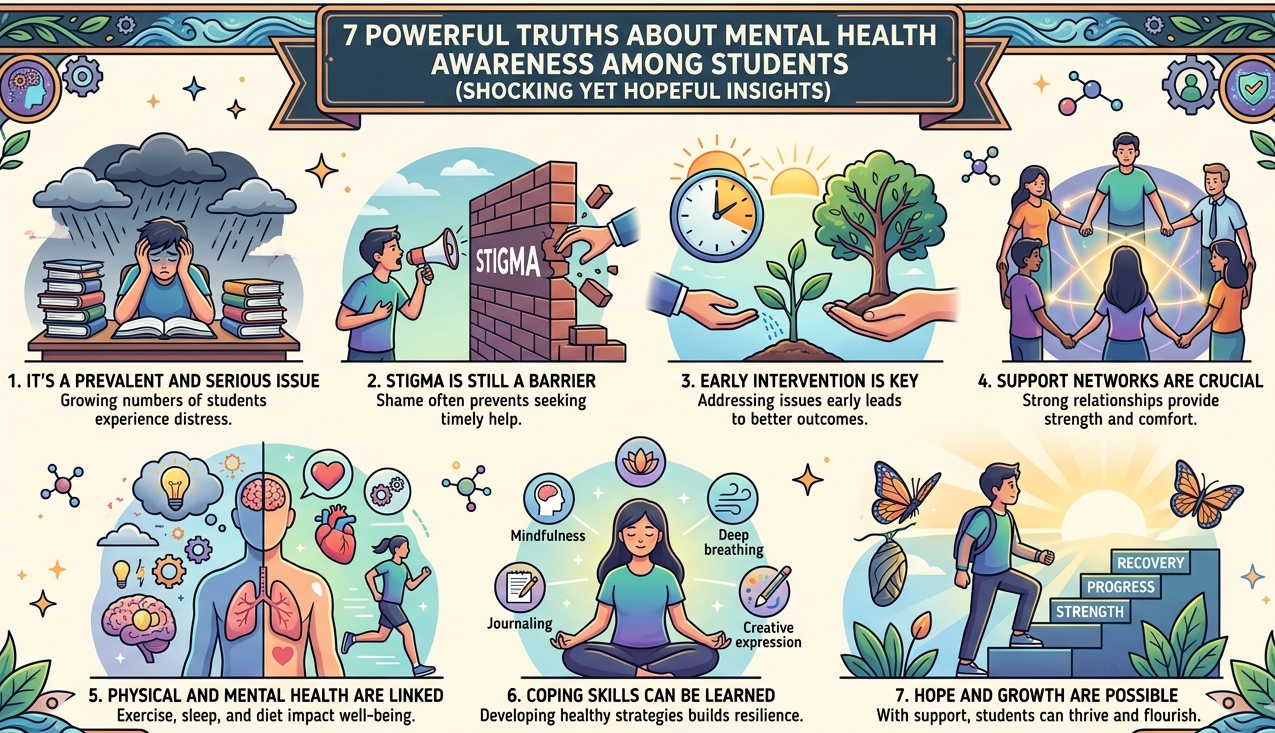
Think of mental health like physical health. If you ignore a fever, it can turn into something serious. Similarly, ignoring stress, burnout, or anxiety can spiral into major mental health conditions. Awareness is the first step toward prevention and healing. It encourages students to speak openly, seek help, and understand that struggling doesn’t mean failing.
Today’s students are juggling academics, social expectations, digital overload, and career uncertainty. Without proper awareness, many don’t even realize they are experiencing symptoms of anxiety or depression. That’s why conversations around mental health awareness are becoming more important than ever, especially in competitive academic environments.
Importance of Mental Health Awareness Among Students
Mental health directly impacts how students think, feel, and act. It influences concentration, decision-making, relationships, and overall academic performance. A student struggling with mental health issues may find it difficult to focus on studies, participate in activities, or even maintain daily routines.
Imagine trying to study for exams while your mind is constantly racing with anxiety—that’s the reality for many students today. Poor mental health doesn’t just affect grades; it affects self-confidence, sleep patterns, and even physical health.
In contrast, good mental health helps students build resilience, handle stress effectively, and maintain a positive outlook. It’s like having a strong foundation—everything else becomes easier to manage. Schools and colleges that prioritize mental health awareness often see improved student engagement, better academic results, and healthier campus environments.
Mental Health Awareness Symbols & Meaning
Mental Health Awareness Color
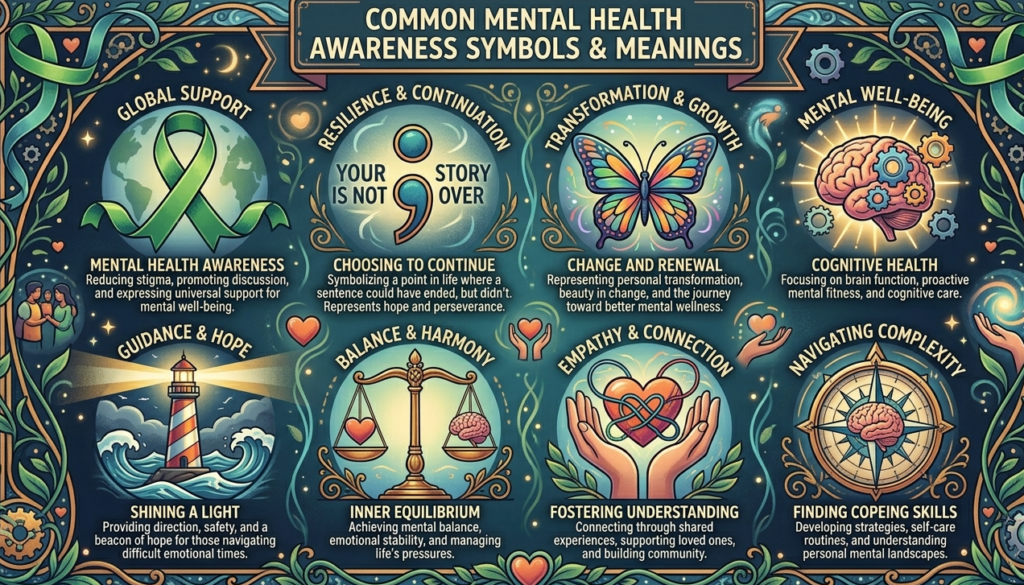
The mental health awareness color is green. This color symbolizes growth, harmony, and hope—qualities that are deeply connected to mental well-being. Green also represents renewal, which aligns with the idea that recovery and healing are always possible.
When you see green ribbons, posters, or campaigns, they are often promoting mental health awareness. The color serves as a visual reminder that mental health matters just as much as physical health. It encourages people to start conversations, support one another, and break the silence around mental health struggles.
In schools and colleges, using green in campaigns, events, and mental health awareness posters can create a powerful visual impact. It’s simple but effective in spreading awareness and promoting positivity among students.
Mental Health Awareness Ribbon Significance
The mental health awareness ribbon is typically green and acts as a universal symbol of support and solidarity. Wearing this ribbon shows that you care about mental health issues and stand with those who are struggling.
Symbols like ribbons may seem small, but they carry a strong message. They normalize discussions about mental health and make people feel less alone. For students, seeing peers or teachers wearing the ribbon can be comforting—it signals that the environment is supportive and open.
In awareness campaigns, ribbons are often combined with events, workshops, and social media movements. These efforts help create a culture where mental health is openly discussed rather than hidden.
When is Mental Health Awareness Month?
Global Observance and Importance
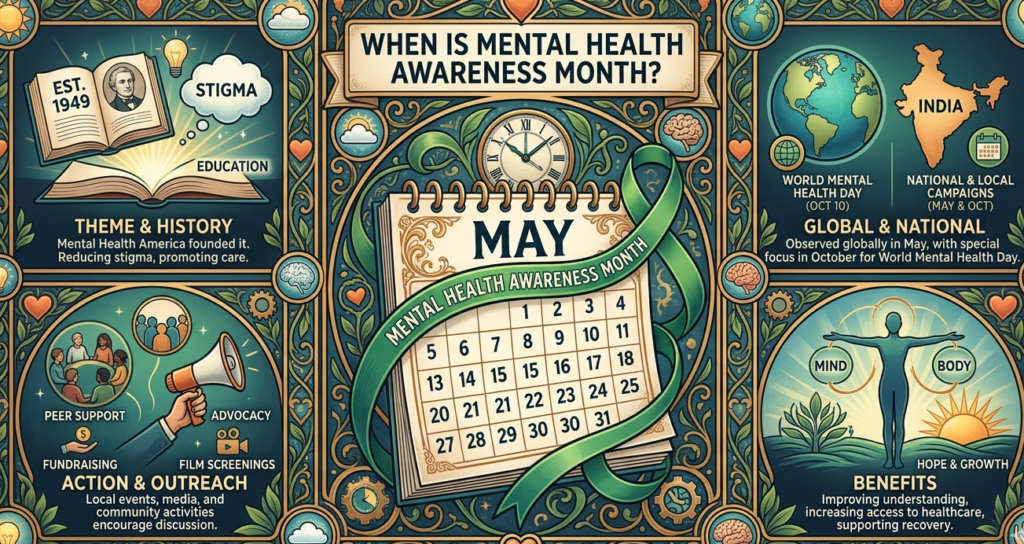
If you’ve ever wondered, what month is mental health awareness month, the answer is May. Every year, Mental Health Awareness Month is observed globally to educate people about mental health conditions and promote early intervention.
During this month, schools, colleges, and organizations conduct awareness programs, workshops, and campaigns. It’s a time when conversations about mental health become louder and more visible.
But awareness shouldn’t be limited to just one month. The real goal is to integrate mental health awareness into everyday life. Students should feel comfortable discussing their mental health anytime—not just during campaigns.
Mental Health Awareness Month acts as a starting point, a reminder that mental health deserves attention all year round.
Mental Health Among Students in India
Current Statistics and Trends
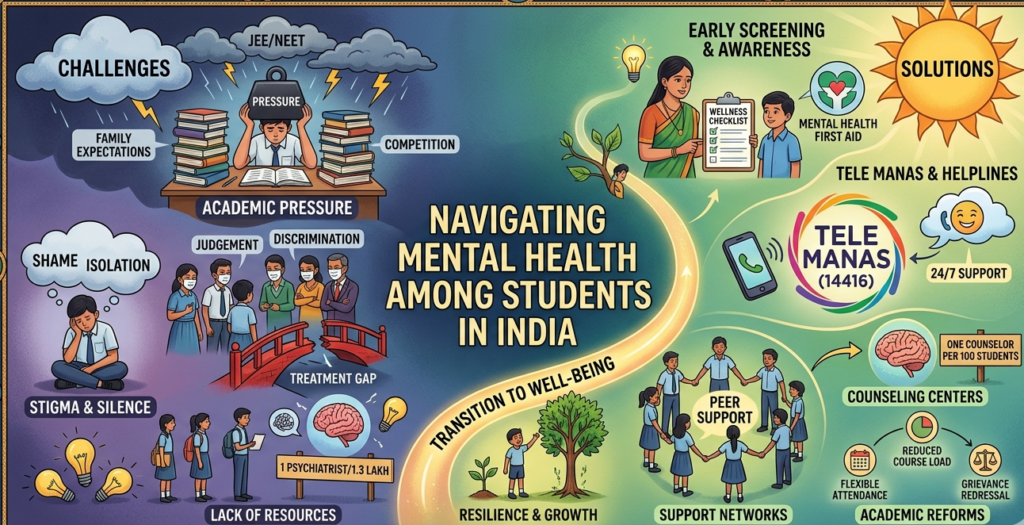
The situation of mental health among students in India is becoming increasingly concerning. Studies suggest that a significant percentage of students experience stress, anxiety, or depression at some point during their academic journey.
Competitive exams, societal expectations, and career pressure are major contributing factors. Many students feel trapped in a cycle of expectations where failure is not an option. This constant pressure can lead to burnout, emotional exhaustion, and even severe mental health conditions.
Another challenge is the lack of awareness and stigma. Many students hesitate to seek help due to fear of judgment. Mental health is still considered a taboo topic in many parts of India, which makes it harder for students to open up.
Mental Health Awareness Among Students : Challenges Faced by Indian Students
Indian students face unique challenges that impact their mental health. These include academic competition, parental expectations, financial stress, and limited access to mental health resources.
For example, students preparing for exams like NEET or GPAT often spend long hours studying, sacrificing sleep and social life. Over time, this imbalance can take a toll on mental health.
Urban students may have access to counseling services, but awareness is still low. In rural areas, the situation is even more challenging due to limited resources and social stigma.
Addressing these challenges requires a combined effort from families, educational institutions, and policymakers.
What Causes Mental Health Issues in College Students?
Academic Pressure
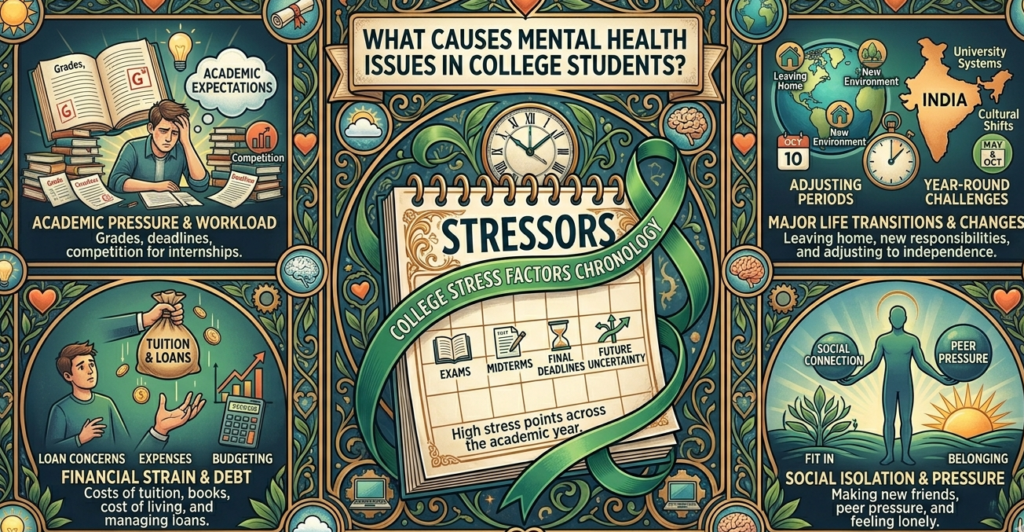
One of the biggest answers to what causes mental health issues in college students is academic pressure. Deadlines, exams, assignments, and competition create a high-stress environment.
Students often feel the need to constantly perform and prove themselves. This pressure can lead to anxiety, burnout, and self-doubt. When expectations are too high, even small setbacks can feel overwhelming.
It’s like running a marathon without a break—eventually, exhaustion catches up.
Social and Financial Stress
Apart from academics, students deal with social challenges like peer pressure, relationships, and identity issues. Social media adds another layer of stress by creating unrealistic comparisons.
Financial stress is also a major factor. Tuition fees, living expenses, and uncertainty about future careers can create anxiety. Many students juggle part-time jobs along with studies, which adds to the pressure.
All these factors combined can significantly impact mental health if not managed properly.
Mental Health Awareness Among Pharmacy Students
Unique Stress Factors in Pharm D
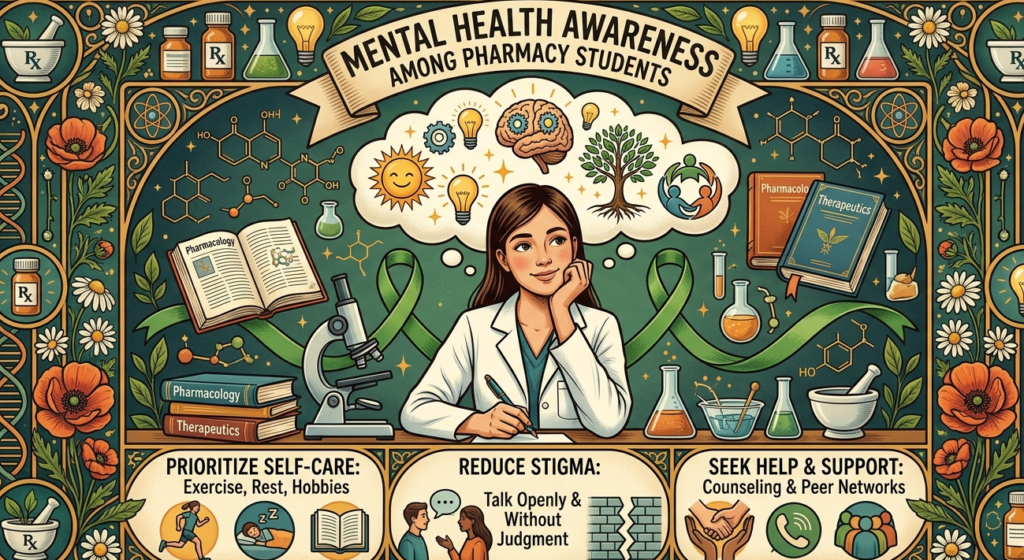
Mental health awareness among pharmacy students is crucial because their academic journey is particularly demanding. Pharm D students undergo intense coursework, clinical rotations, and practical training.
Unlike many other courses, pharmacy education requires a deep understanding of both theory and real-world application. Students are often expected to handle patient care responsibilities during internships, which can be stressful.
The pressure to maintain accuracy and avoid mistakes adds another layer of anxiety.
Clinical Pressure and Burnout
Clinical exposure is valuable but also challenging. Dealing with patients, managing case studies, and understanding complex medical conditions can be overwhelming.
Many students experience burnout due to long hours and emotional stress. Without proper mental health support, this burnout can affect both academic performance and personal well-being.
Creating awareness and providing support systems can make a significant difference in the lives of pharmacy students.
Personal Experience as a Pharm D Student : Mental Health Awareness Among Students
Real-Life Struggles and Coping
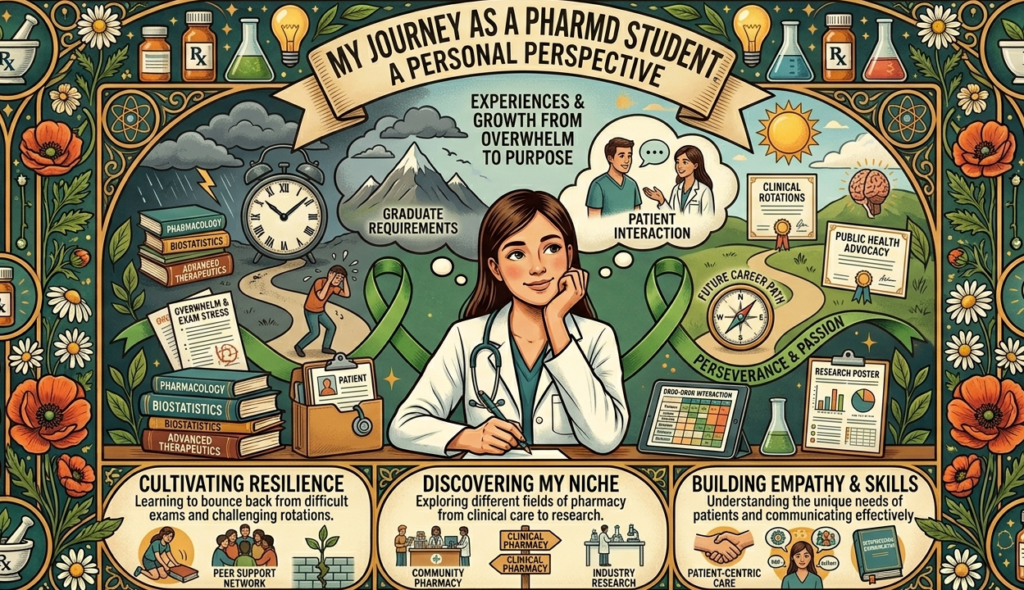
As a Pharm D student, I’ve personally experienced the ups and downs of academic pressure. There were days when managing assignments, clinical postings, and exams felt impossible. The constant fear of making mistakes during patient interactions added to the stress.
I remember staying up late nights trying to balance everything, only to feel exhausted the next day. It felt like being stuck in a loop with no pause button. But over time, I realized the importance of taking care of my mental health.
Simple habits like taking breaks, talking to friends, and maintaining a routine made a big difference. Seeking support is not a sign of weakness—it’s a step toward strength.
This experience taught me that mental health awareness is not just a concept; it’s a necessity.
Case Study Example of Mental Health Awareness Among Students
Case Analysis and Lessons
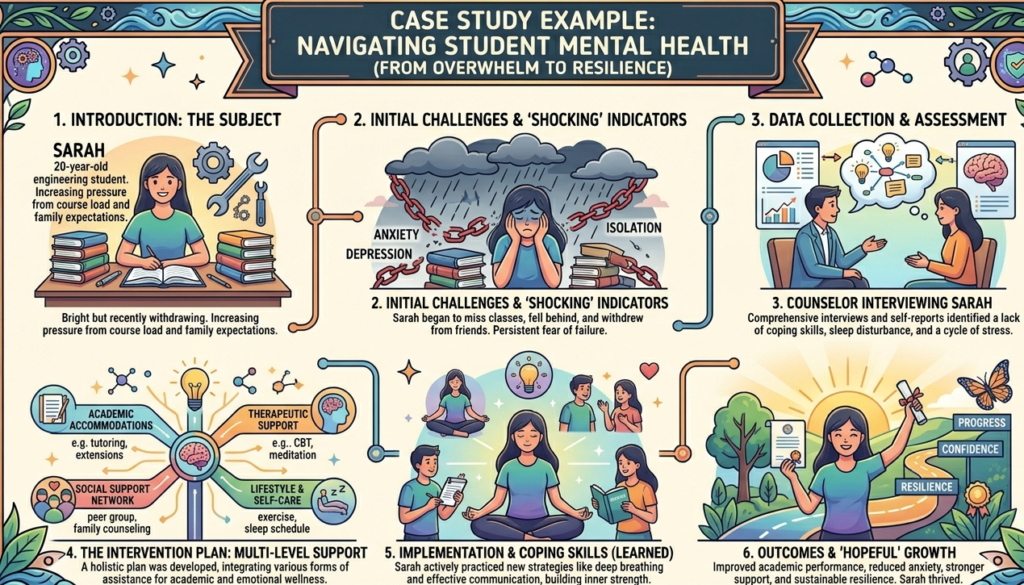
Consider a case study of a pharmacy student named Rahul. He was academically strong but started experiencing anxiety during clinical rotations. The fear of making mistakes led to sleepless nights and constant stress.
Over time, his performance declined, and he began isolating himself. With proper counseling and support from faculty, Rahul gradually regained confidence. He learned coping strategies and improved his mental health.
This case highlights the importance of early intervention and support systems. Mental health issues can affect anyone, regardless of academic performance.
Mental Health Awareness Poster & Illustration
Importance of Visual Communication
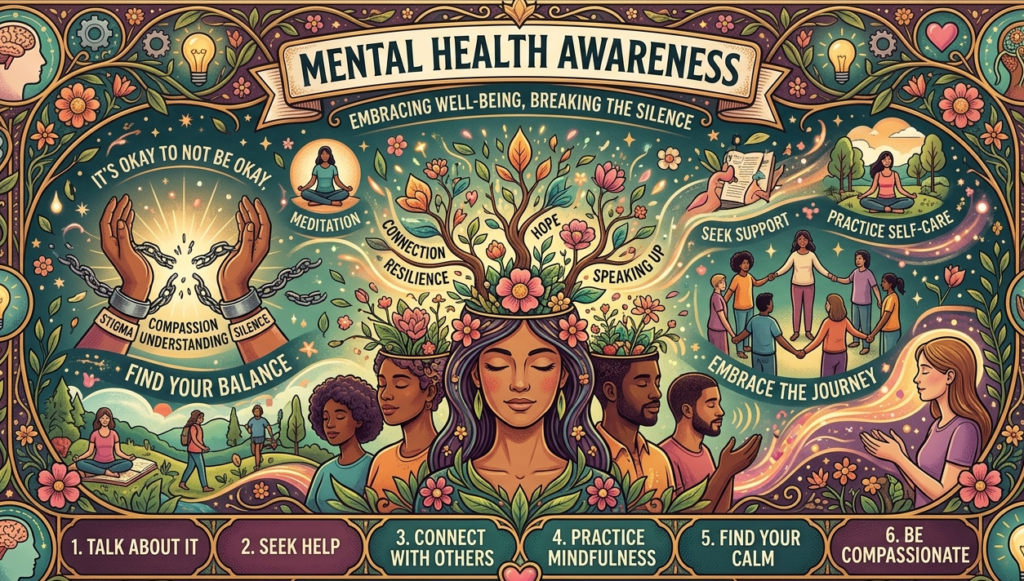
A well-designed mental health awareness poster or mental health awareness students illustration can communicate powerful messages. Visuals often resonate more than words, especially among students.
Posters can include motivational quotes, helpline numbers, and simple messages like “It’s okay to not be okay.” These visuals create awareness and encourage students to seek help.
In colleges, posters and illustrations can be used during awareness campaigns, workshops, and events to spread positivity.
Mental Health Awareness Quotes for Students
Motivation and Emotional Support
Here are some impactful mental health awareness quotes:
- “Your mental health is a priority, not a luxury.”
- “Healing is not linear, and that’s okay.”
- “You are stronger than your struggles.”
- “It’s okay to ask for help.”
Quotes like these act as reminders that students are not alone. They provide comfort and encouragement during difficult times.
How to Improve Mental Health Awareness Among Students
Practical Strategies
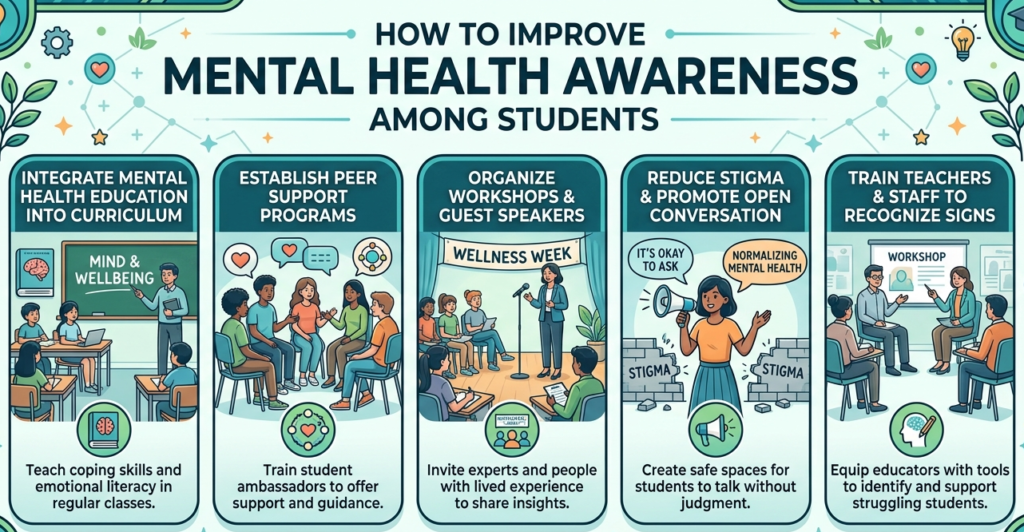
Improving awareness requires consistent efforts. Some effective strategies include:
- Conducting workshops and seminars
- Providing counseling services
- Encouraging open discussions
- Promoting self-care practices
Creating a supportive environment is key. When students feel safe to express themselves, mental health awareness naturally improves.
Role of Colleges and Institutions in Mental Health Awareness Among Students
Policies and Support Systems
Educational institutions play a crucial role in promoting mental health awareness. They can implement policies that support student well-being, such as flexible schedules, counseling services, and stress management programs.
Teachers and faculty should also be trained to पहचान signs of mental health issues. Early detection can prevent serious problems.
A supportive campus environment can make a huge difference in students’ lives.
Free Mental Health Awareness Among Students Courses (With Valid Links)
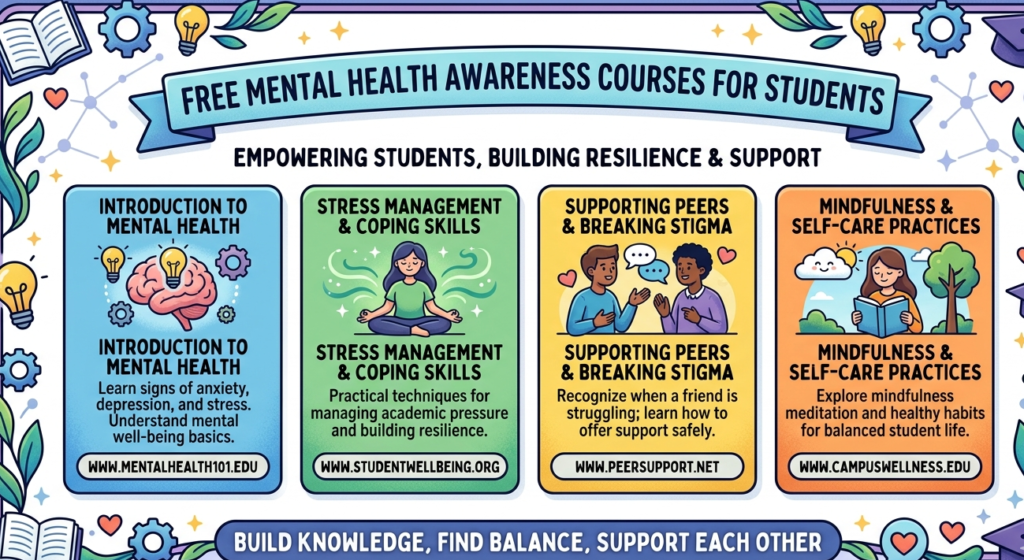
| Course Name | Platform | Duration | Certificate |
| Diploma in Mental Health | Alison | 10–15 Hours | Free (Paid optional certificate) |
| Mental Health Certifications (Various Topics) | Alison | 2–4 Hours | Free (Paid optional certificate) |
| The Science of Well-Being | Coursera (Yale University) | 4 Weeks | Free (Paid certificate optional) |
| #TalkMentalIllness | Coursera | 2–3 Weeks | Free (Paid certificate optional) |
| Life 101: Mental & Physical Self-Care | Coursera | 3–4 Weeks | Free (Paid certificate optional) |
| Youth Mental Health & Wellbeing Courses | FutureLearn | 2–6 Weeks | Free (Paid upgrade optional) |
What You’ll Learn in These Courses
These courses are highly relevant for mental health awareness among students and typically cover:
- Understanding stress, anxiety, and depression
- Identifying early signs of mental health issues
- Coping strategies and emotional resilience
- Student-specific challenges like academic pressure and burnout
- Communication skills to support peers
Many platforms like Alison and FutureLearn offer self-paced learning, allowing students to complete courses anytime.
Important Insight for Mental Health Awareness Among Students
- Around 1 in 4 people experience mental health issues at some point, highlighting the importance of awareness and education.
- Free courses provide a strong foundation for students, especially those in healthcare fields like pharmacy, nursing, and medicine.
Best Course Recommendation
If you’re just starting, go for:
- Beginner Level: Diploma in Mental Health (Alison)
- Student-Focused: Youth Mental Health (FutureLearn)
- Science-Based: Science of Well-Being (Coursera – Yale)
These are easy to follow and highly relevant for college and pharmacy students.
Important Note About Certificates
- Most platforms offer free course access, but certificates may require a small fee.
- Some learners confirm that auditing courses is free, while certificates are optional.
Pro Tip for Mental Health Awareness Among Students
If you’re a Pharm D or healthcare student, these courses can:
- Strengthen your CV/resume
- Help in clinical communication
- Improve patient counseling skills
- Build awareness for mental health case studies

Conclusion
Mental health awareness among students is no longer optional—it’s essential. From understanding the mental health awareness color to recognizing the causes of stress, every step toward awareness matters.
Students, especially in demanding fields like pharmacy, face unique challenges that require attention and support. Personal experiences and case studies show that mental health struggles are real but manageable with the right approach.
By promoting awareness, reducing stigma, and providing support, we can create a healthier and more supportive academic environment for everyone.
FAQs
1. What is the color of mental health awareness?
Green is the official color representing mental health awareness, symbolizing hope and growth.
2. What month is mental health awareness month?
Mental Health Awareness Month is observed in May every year.
3. What causes mental health issues in college students?
Academic pressure, financial stress, social challenges, and lack of support are major causes.
4. Why is mental health important for students?
It affects academic performance, relationships, and overall well-being.
5. How can students improve their mental health?
By maintaining a routine, seeking support, practicing self-care, and staying connected with others.