
Table of Contents
Introduction to Clinical Case Studies
What is a Clinical Case Study?
A clinical case study is a detailed report that focuses on the symptoms, diagnosis, treatment, and follow-up of an individual patient. Think of it as a real-life medical story where each decision matters. Instead of theoretical learning, these case studies bring practical scenarios to life, helping students connect pharmacological knowledge with real-world patient care. Whether you are reviewing clinical case study examples or exploring medical case studies examples, the aim is always the same—to improve clinical reasoning.
A good case study doesn’t just present facts; it tells a story of clinical judgment. It involves patient history, lab findings, therapeutic interventions, and outcomes. These are often published in clinical case studies journals or platforms like journal of clinical case studies, making them valuable resources for continuous learning.
For PharmD students, these case studies act like a bridge between textbooks and hospital wards. They challenge you to think critically—why was this drug chosen? What could have gone wrong? Could there have been a better alternative?
Importance for PharmD Students
If you’re pursuing PharmD, ignoring clinical case studies would be like learning to swim without ever touching water. These studies help you develop decision-making skills, identify drug-related problems, and understand patient variability.
Clinical exposure through drugs in use clinical case studies for pharmacists sharpens your ability to:
- Evaluate prescriptions
- Detect adverse drug reactions
- Prevent medication errors
In reality, no two patients are the same. A drug that works perfectly for one patient might fail in another due to comorbidities or interactions. This is where case studies step in, preparing you for uncertainty. They also enhance communication skills, as pharmacists must collaborate with doctors and nurses.
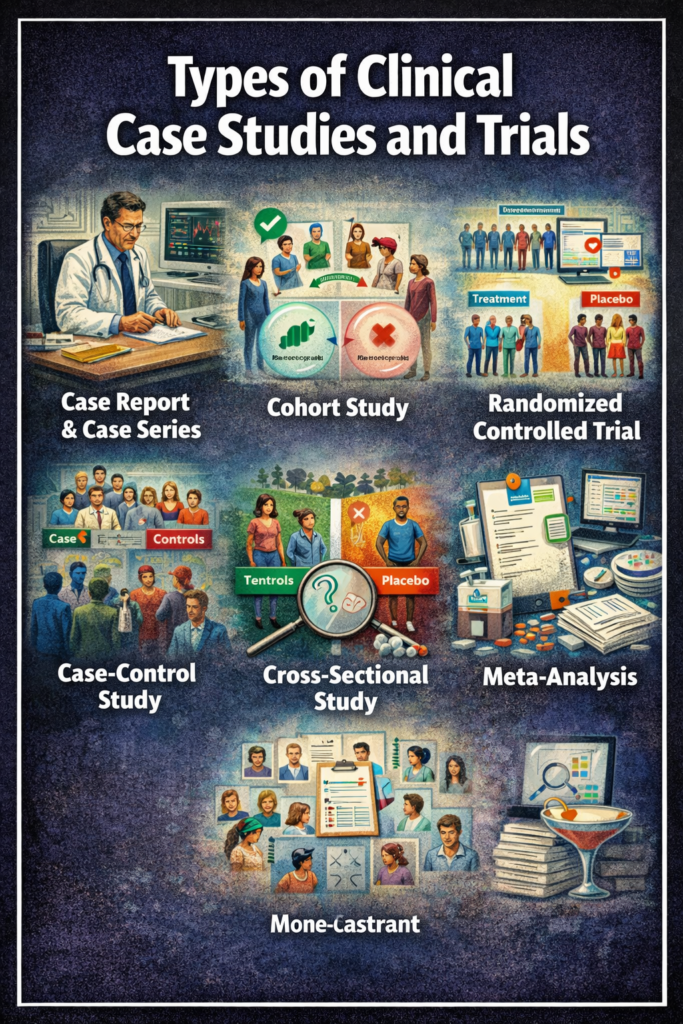
Types of Clinical Case Studies and Trials
What are the 5 Types of Clinical Trials?
Clinical trials are the backbone of evidence-based medicine. The five major types include:
| Type | Purpose |
|---|---|
| Treatment Trials | Test new drugs or therapies |
| Prevention Trials | Prevent diseases |
| Diagnostic Trials | Improve diagnosis |
| Screening Trials | Early disease detection |
| Quality of Life Trials | Improve patient comfort |
Each type contributes to clinical case studies and review reports, offering valuable insights into patient care.
What are the 7 Major Types of Research?
Understanding research types helps in interpreting clinical case study journal articles effectively. These include:
- Experimental research
- Observational research
- Descriptive research
- Analytical research
- Applied research
- Basic research
- Qualitative research
These research forms often combine to create robust clinical case studies for medical students and pharmacy learners.
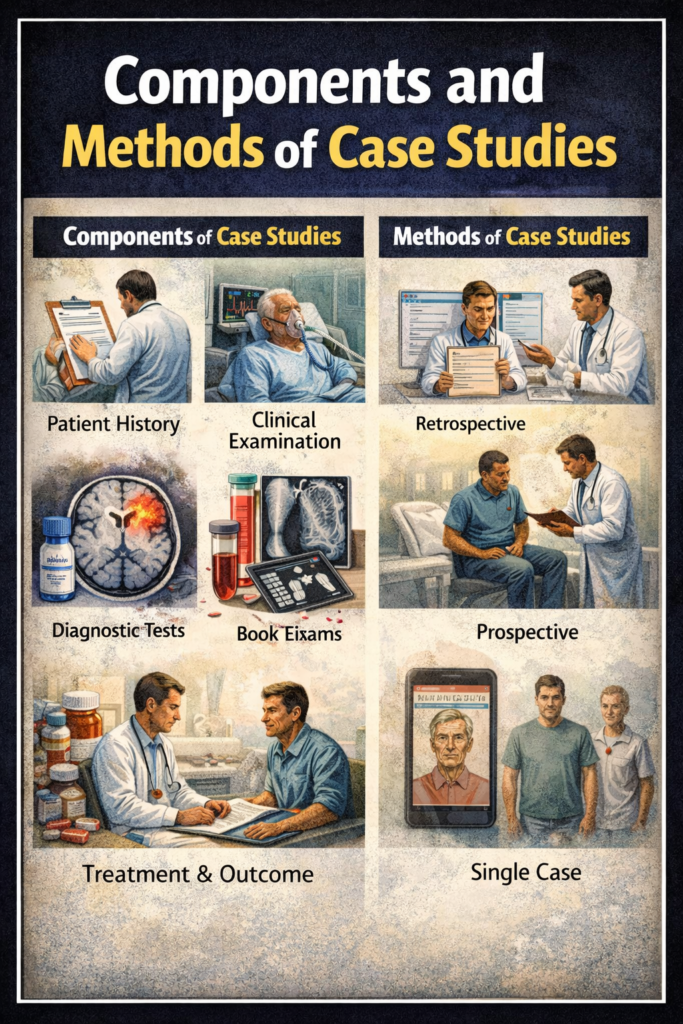
Components and Methods of Case Studies
What are the 5 Components of a Case Study?
Every strong case study includes:
- Patient Information
- Clinical Findings
- Diagnosis
- Treatment Plan
- Outcome and Follow-up
These components ensure that simple medical case study examples are structured and informative.
What are the Three Methods of Case Study?
There are three primary methods:
- Exploratory
- Descriptive
- Explanatory
Each method helps analyze patient cases from different perspectives, enhancing clinical understanding.
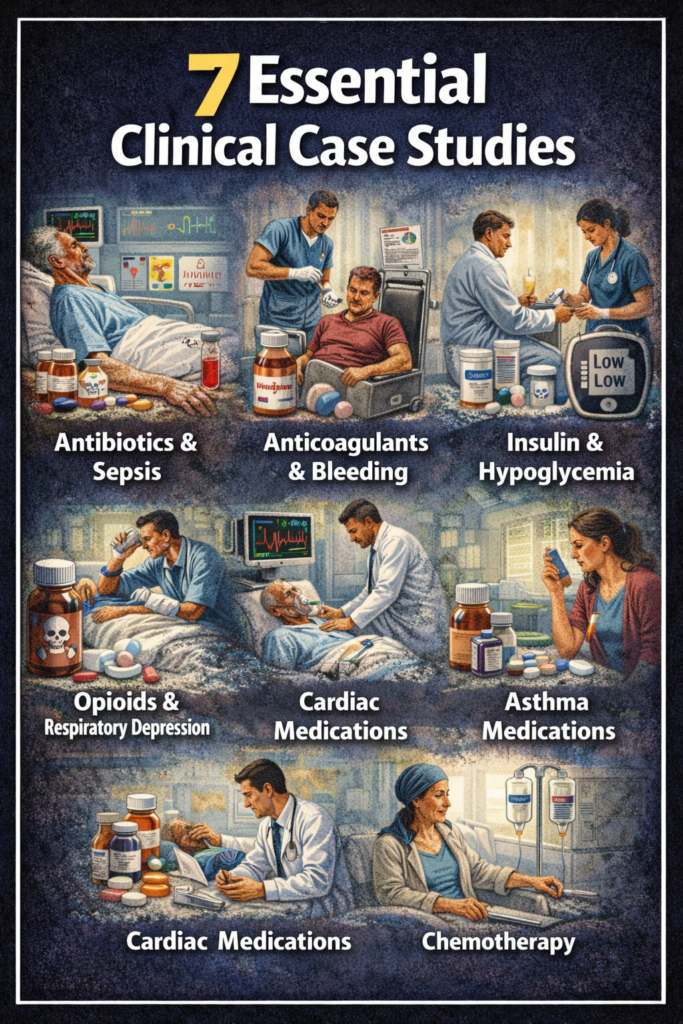
7 Essential Clinical Case Studies
Case Study 1: Hypertension Management
A 55-year-old male presents with consistently elevated blood pressure readings. He has a sedentary lifestyle and a history of smoking. The physician prescribes an ACE inhibitor, but the patient develops a persistent cough. This scenario highlights a classic dilemma in clinical case studies—balancing efficacy and tolerability.
As a PharmD student, you would recommend switching to an ARB. This case teaches therapeutic substitution and patient counseling. It also emphasizes monitoring and follow-up, which are critical in chronic disease management.
Case Study 2: Diabetes Mellitus Type 2
A middle-aged woman with uncontrolled blood glucose levels despite metformin therapy is introduced to insulin. However, she fears injections and shows poor adherence.
This case is common in clinical case study examples, showing that treatment success isn’t just about drugs—it’s about patient behavior. Counseling, lifestyle modification, and patient education play vital roles.
Case Study 3: Antibiotic Stewardship
A patient with a viral infection is unnecessarily prescribed antibiotics. This leads to resistance over time. This case represents a major global issue often highlighted in clinical case studies journal publications.
Pharmacists must intervene to prevent misuse, ensuring antibiotics are prescribed only when necessary.
Case Study 4: Adverse Drug Reaction (ADR)
A patient develops a severe rash after taking an antibiotic. Identifying the offending drug and reporting it is crucial. This is one of the most important medical cases examples every PharmD student must understand.
Case Study 5: Polypharmacy in Elderly
An elderly patient is on multiple medications, leading to confusion and dizziness. This increases fall risk. Reviewing prescriptions and deprescribing unnecessary drugs is essential.
Case Study 6: Drug-Drug Interaction
A patient taking warfarin starts a new medication, resulting in bleeding complications. This highlights the importance of checking interactions—something pharmacists must do routinely.
Case Study 7: Emergency Toxicology Case
A poisoning case arrives in the emergency department. Quick identification and antidote administration save the patient’s life. This case tests your clinical knowledge under pressure.
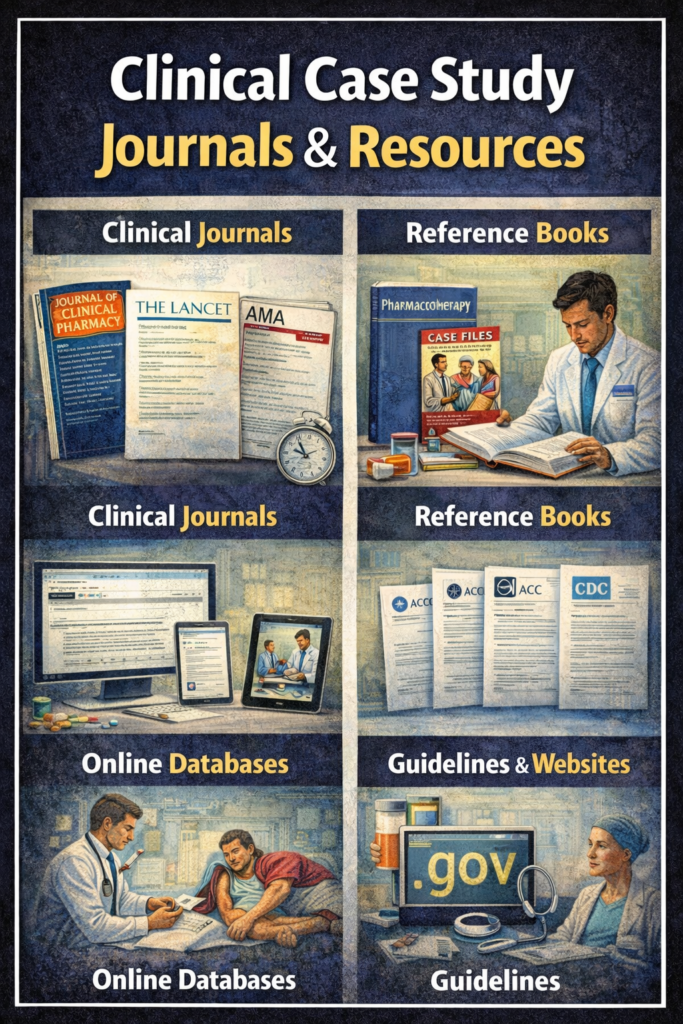
Clinical Case Study Journals & Resources
Best Clinical Case Studies Journals
To stay updated, PharmD students should explore:
- Journal of Clinical Case Studies
- BMJ Case Reports
- Clinical Case Reports Journal
These platforms publish real-world clinical case studies and review reports, offering valuable insights into evolving medical practices.
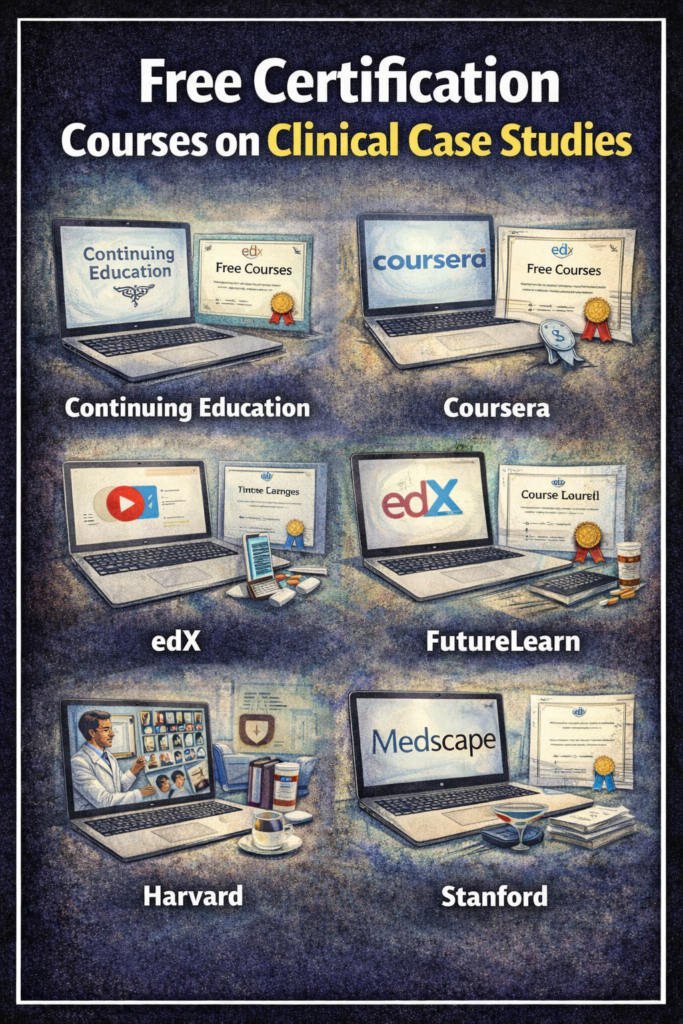
Free Certification Courses on Clinical Case Studies
| Course Name | Platform | Duration | Certification | Key Topics Covered |
| Case Studies in Personalized Medicine | Coursera (Vanderbilt University) | ~2 weeks | Free (audit) + paid certificate | Pharmacogenomics, real clinical case studies, precision medicine |
| Clinical Epidemiology | Coursera (Utrecht University) | ~1–4 weeks | Free (audit) + paid certificate | Clinical research, case-based problem solving, diagnosis & treatment |
| Case-Based Introduction to Biostatistics | Coursera (Johns Hopkins University) | ~5 weeks | Free + certificate available | Data analysis using clinical case studies, interpretation of medical data |
| Introduction to Good Clinical Practice (GCP) | Coursera (Novartis) | 1–4 weeks | Free (audit) + certificate | Clinical trials, patient safety, ethical case scenarios |
| Clinical Trials Operations | Coursera (Johns Hopkins University) | 3–6 months | Free (audit) + certificate | Case-based clinical trials, data management, regulatory practices |
| BMJ Clinical Case-Based Webinars | BMJ Learning | Short sessions | Free certificate | Real-world clinical case discussions, decision-making skills |
| Clinical Terminology for Healthcare | Coursera (University of Pittsburgh) | 1–3 months | Free + certificate | Patient cases, medical documentation, hospital case scenarios |
Personal Experience as a PharmD Student
During my clinical rotations, I encountered a patient with uncontrolled diabetes who was skipping insulin doses due to fear. Initially, I thought the issue was therapeutic failure, but it turned out to be psychological. That moment changed my perspective completely.
I realized that pharmacy isn’t just about drugs—it’s about people. Clinical case discussions with mentors helped me understand how small interventions can create significant impact. Reviewing clinical case studies for medical students made me more confident in identifying problems and suggesting solutions.
One case that stayed with me involved a severe drug interaction that could have been fatal. Catching it early felt like preventing a disaster. These experiences shape your clinical instincts in ways textbooks never can.
Conclusion
Clinical case studies are more than academic exercises—they are the foundation of real-world pharmacy practice. They sharpen your analytical thinking, improve patient care, and prepare you for unpredictable clinical scenarios. Whether you’re studying simple medical case study examples or complex hospital cases, each one adds a layer to your professional growth.
FAQs
1. What is an example of a clinical study?
A study testing a new drug for hypertension on a group of patients to evaluate its safety and effectiveness.
2. What are the five types of case studies?
Exploratory, descriptive, explanatory, intrinsic, and instrumental case studies.
3. What are famous case study examples?
Cases like penicillin discovery impact, thalidomide tragedy, and HIV treatment breakthroughs.
4. What are the 7 major types of research?
Experimental, observational, descriptive, analytical, applied, basic, and qualitative research.
5. What are the 5 components of a case study?
Patient details, clinical findings, diagnosis, treatment, and outcome.