
Table of Contents
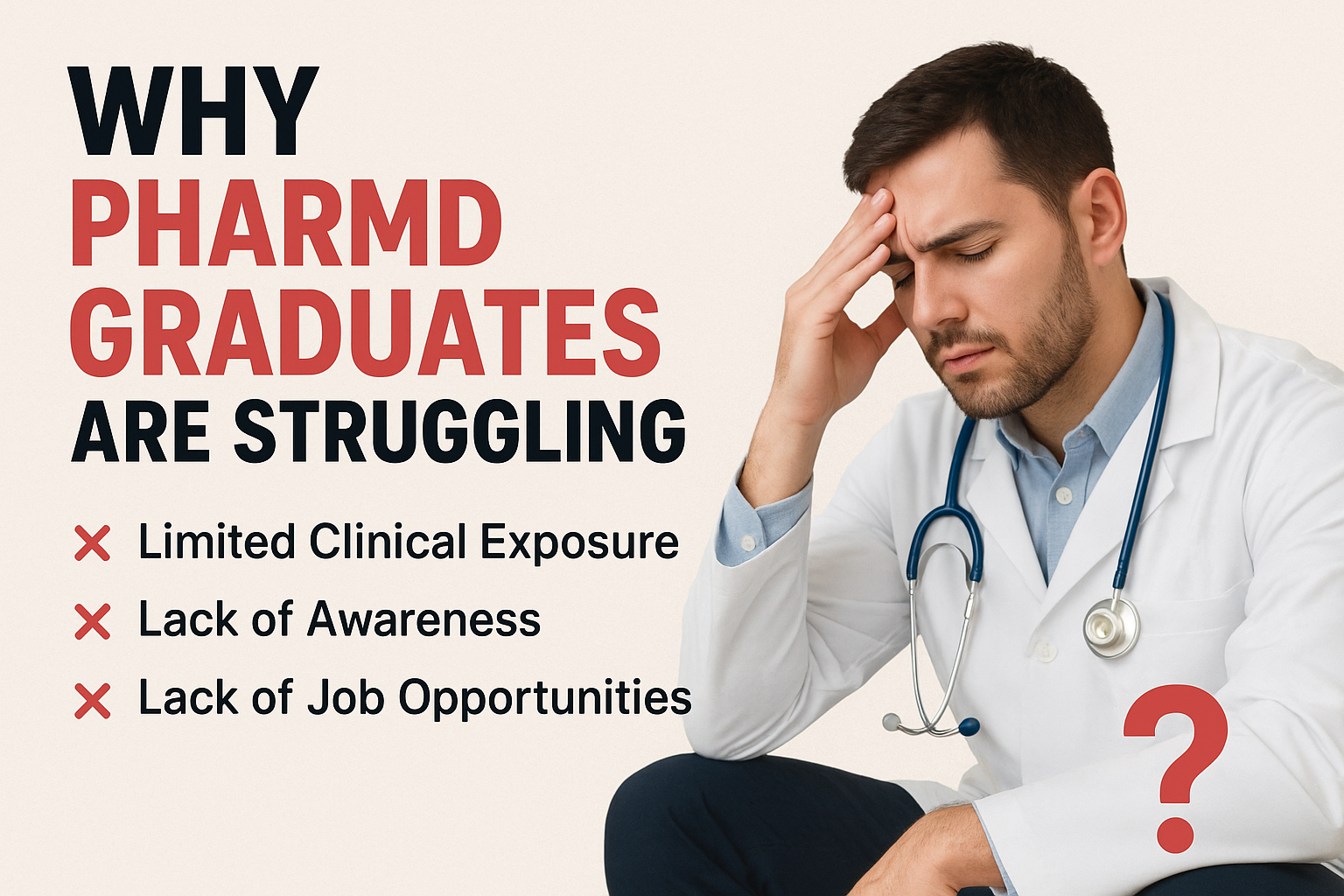
Over the past decade, the PharmD degree has gained popularity across India and globally. Students enter the program expecting strong clinical exposure, hospital-based careers, and opportunities in research, pharmacovigilance, and healthcare industries.
Yet many PharmD graduates today feel underprepared, undervalued, and unsure of their career direction.
This gap between expectations and reality has led to growing frustration within the PharmD community.
Let’s break down why PharmD graduates are struggling—and more importantly, what can be done to solve it.
1. Limited Clinical Exposure During Training
Although PharmD is designed to be a clinical, patient-focused program, most colleges lack:
- Affiliated hospitals for rotations
- Experienced clinical preceptors
- Structured ward rounds
- Real-world patient case discussions
- Access to modern hospital systems (EMR, HIS, LIS)
The Result:
Graduates enter the job market with limited clinical confidence compared to programs in countries like the US or Australia.
Solution
- Choose internships at multi-specialty hospitals instead of college-assigned sites.
- Attend clinical pharmacy workshops, case presentations, and CME programs.
- Build clinical skills through platforms like Medscape, UpToDate, BMJ Learning, and Coursera.
2. Lack of Awareness Among Healthcare Professionals
Many doctors, administrators, and hospital HR teams still misunderstand the PharmD role.
Common misconceptions include:
- “PharmD is similar to B.Pharm.”
- “Pharmacy students are not needed in clinical care.”
- “Pharmacists only dispense medicines.”
The Result:
Hospitals fail to create structured roles for PharmD graduates such as:
- Clinical pharmacist
- Medication safety officer
- Antimicrobial stewardship (AMS) pharmacist
- Pharmacovigilance specialist
- Clinical research coordinator
Solution
- PharmD associations must actively engage hospitals with clear documentation of job roles.
- Students can build awareness through case studies, medication reviews, and participation in hospital committees.
- Use LinkedIn to showcase real PharmD skills and projects.
3. Lack of Standardized Job Roles
Unlike nursing or physiotherapy, pharmacy lacks uniform, government-defined roles across hospitals.
Some hospitals hire PharmDs as:
- Dispensing pharmacists
- Billing staff
- Medical representatives
- Interns with no growth path
The Result:
Skills go underutilized, and career progression stalls.
Solution
- Advocate for national-level guidelines for PharmD roles (clinical pharmacy, AMS, pharmacovigilance).
- Encourage hospitals to adopt the clinical pharmacist model used internationally.
- Build specialized skills to stand out (pharmacoeconomics, drug information, patient counseling, oncology pharmacy, etc.).
4. Communication Gaps and Soft Skills
PharmD graduates often have strong theoretical knowledge but struggle with:
- Presenting cases
- Communicating with doctors
- Documenting interventions
- Writing research papers
- Participating in clinical discussions
The Result:
They appear underprepared for professional workplaces.
Solution
- Practice SOAP notes, DUE reports, ADR reports, and clinical documentation.
- Improve medical writing and presentation skills.
- Join journal clubs and case discussion groups.
5. Excessive Dependence on the Degree Alone
Many students assume that a PharmD automatically guarantees a clinical job.
But employers look for skills, not only degrees.
Solution
Build additional certifications in:
- Pharmacovigilance (ICSR, Signal Detection)
- Clinical Research (ICH-GCP, CRA/CRC programs)
- Regulatory Affairs
- Medical Writing
- Clinical Data Management
- AMS certifications
- Health informatics / EMR systems
Skilled PharmDs easily outperform degree-dependent candidates.
6. Growing Competition
Every year, a large number of PharmD and M.Pharm graduates compete for limited hospital roles.
Meanwhile, careers in PV, regulatory, and clinical research are also attracting graduates from:
- Life sciences
- Nursing
- Biotechnology
- Microbiology
- Chemistry
Solution
- Build a niche (oncology pharmacy, cardiology pharmacy, AMS, geriatrics, pharmacoeconomics).
- Gain experience through internships, part-time roles, freelancing (medical writing, research assistance).
- Work on building a strong LinkedIn and portfolio presence.
The Way Forward: How PharmD Graduates Can Thrive
Despite the challenges, PharmD remains one of the most powerful degrees in the healthcare system—if it is used correctly.
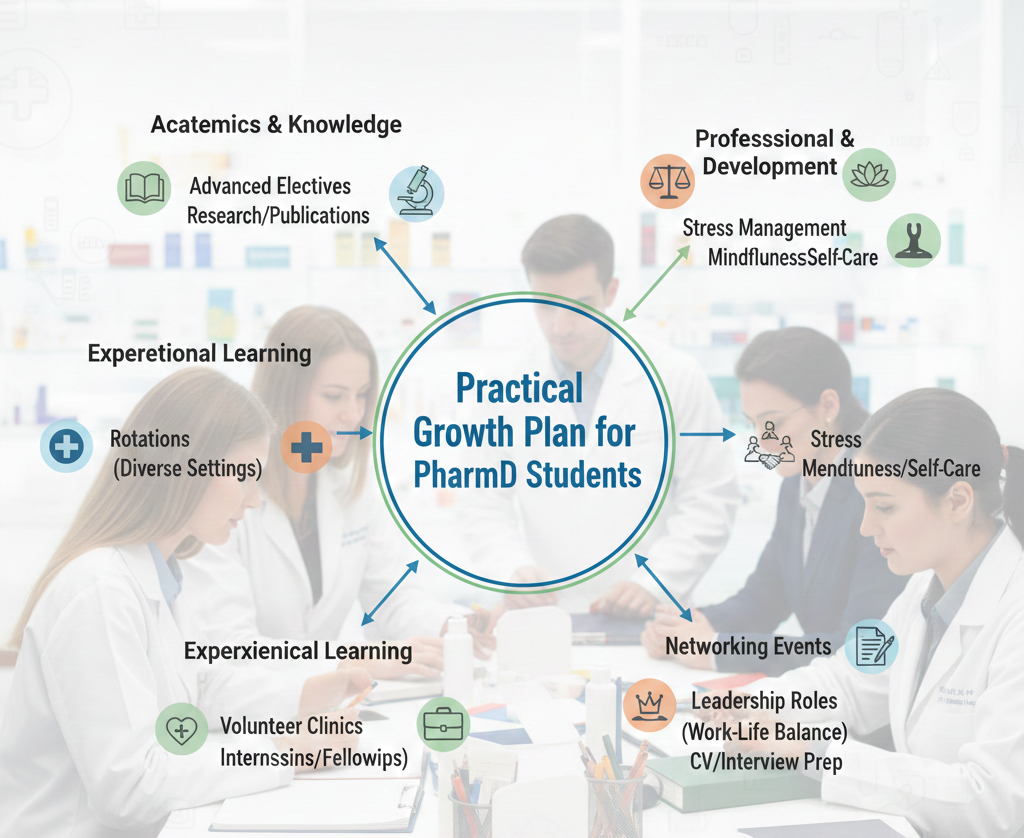
Practical Growth Plan for PharmD Students
✔ Choose real hospital exposure
✔ Build specialized skills
✔ Create a strong portfolio (case reports, research papers, interventions)
✔ Improve communication and clinical documentation
✔ Network with doctors, pharmacists, and researchers
✔ Learn industry-focused skills (PV, CR, RA)
✔ Stay updated with latest guidelines (NCCN, IDSA, FDA, GOLD, etc.)
PharmD has tremendous potential.
The key is skill-building, visibility, and smart career positioning, not just depending on the degree.
1 thought on “Why PharmD Graduates Are Struggling Hard in India (2025) — Real Reasons & Practical Solutions”