
Table of Contents
1. Introduction: Understanding Antibiotic Resistance
You’ve probably heard “antibiotic resistance”(AR) on the news or in health advice—but what does it really mean? Why is everyone suddenly worried about it? Let’s break it down in simple terms so anyone can understand this global health challenge that affects everyone. Antibiotic resistance is not just a medical term; it’s a real process happening in bacteria right now.
2. Definition of Antibiotic Resistance
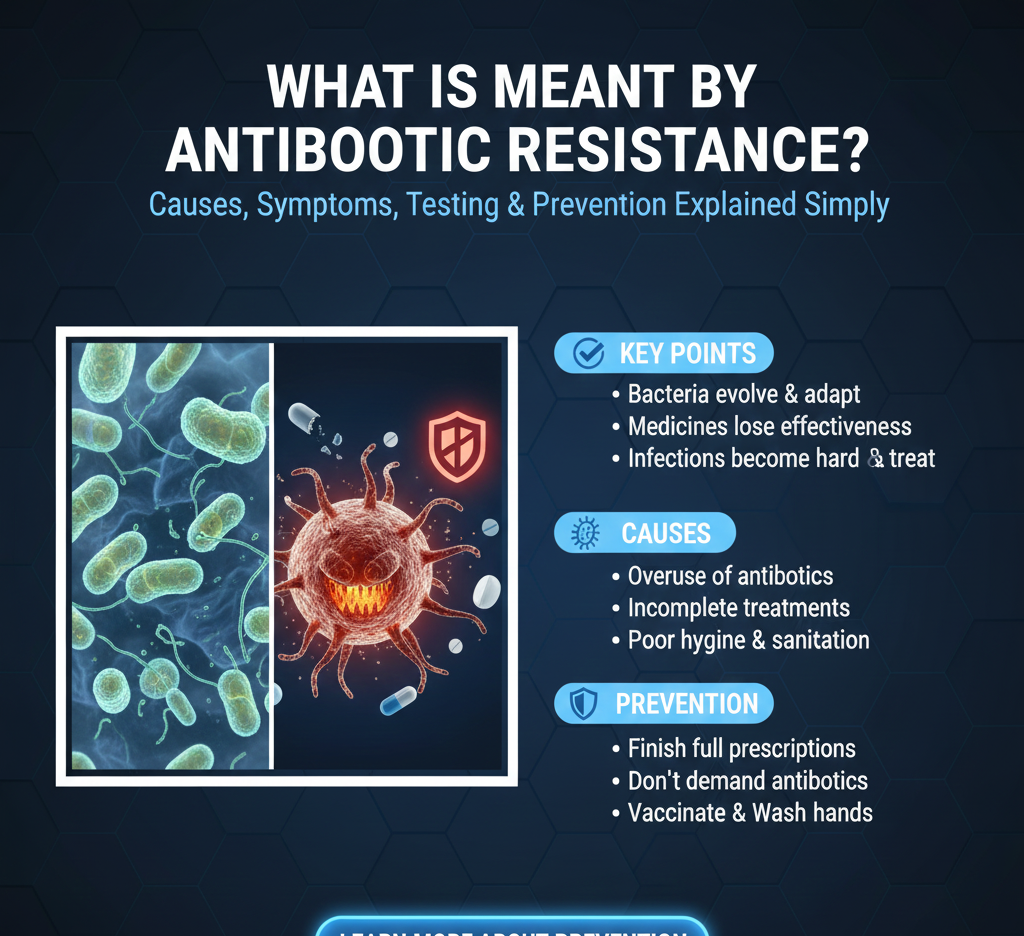
AR refers to bacteria changing in ways that allow them to survive the drugs designed to kill them. Instead of dying when exposed to an antibiotic, resistant bacteria keep growing and spreading because the drug no longer works.
This concept falls under the broader umbrella of antimicrobial resistance (AMR)—a process where microbes (bacteria, viruses, fungi, and parasites) evolve to withstand drugs used to treat infections. World Health Organization
3. What is Meant by Antibiotic Resistance Gene
An antibiotic resistance gene is a segment of DNA in bacteria that gives them the ability to resist the effects of an antibiotic. These genes often code for proteins that can destroy the drug, pump it out, or change the bacteria so the antibiotic can’t bind properly.
4. Antibiotic Resistance Meaning in Everyday Language
In everyday terms, AR means the medicine that used to cure you won’t work anymore. This often leads to longer illnesses, more complicated treatments, and sometimes even infections that are nearly impossible to cure.
5. How Antibiotic Resistance Happens
Mechanism of Antibiotic Resistance
Bacteria become resistant through mechanisms such as:
- Altering the drug target so the antibiotic can’t bind.
- Producing enzymes that destroy the antibiotic.
- Efflux pumps that actively remove the drug.
Natural Selection and Mutation
Random mutations in bacterial DNA can make some bacteria resistant. When antibiotics kill off the sensitive ones, the resistant bacteria survive and reproduce—spreading resistance.
Horizontal Gene Transfer
Bacteria can also share resistance genes with each other through processes like conjugation, transformation, and transduction. This means a resistant bacterium can pass its resistance to different bacterial species.
6. Antibiotic Resistance Genes Examples
Examples of resistance genes include:
- NDM-1 – makes bacteria resistant to powerful carbapenem antibiotics.
- Genes encoding beta-lactamases, enzymes that break down penicillin-type drugs.
7. Real-World Examples of Resistant Bacteria
Common antibiotic-resistant bacteria include:
- MRSA (Methicillin-Resistant Staphylococcus aureus)
- Drug-resistant E. coli
- Carbapenem-resistant Klebsiella
These organisms cause infections that are harder to treat and may require stronger, more toxic drugs.
8. Causes of Antibiotic Resistance
Overuse in Human Medicine
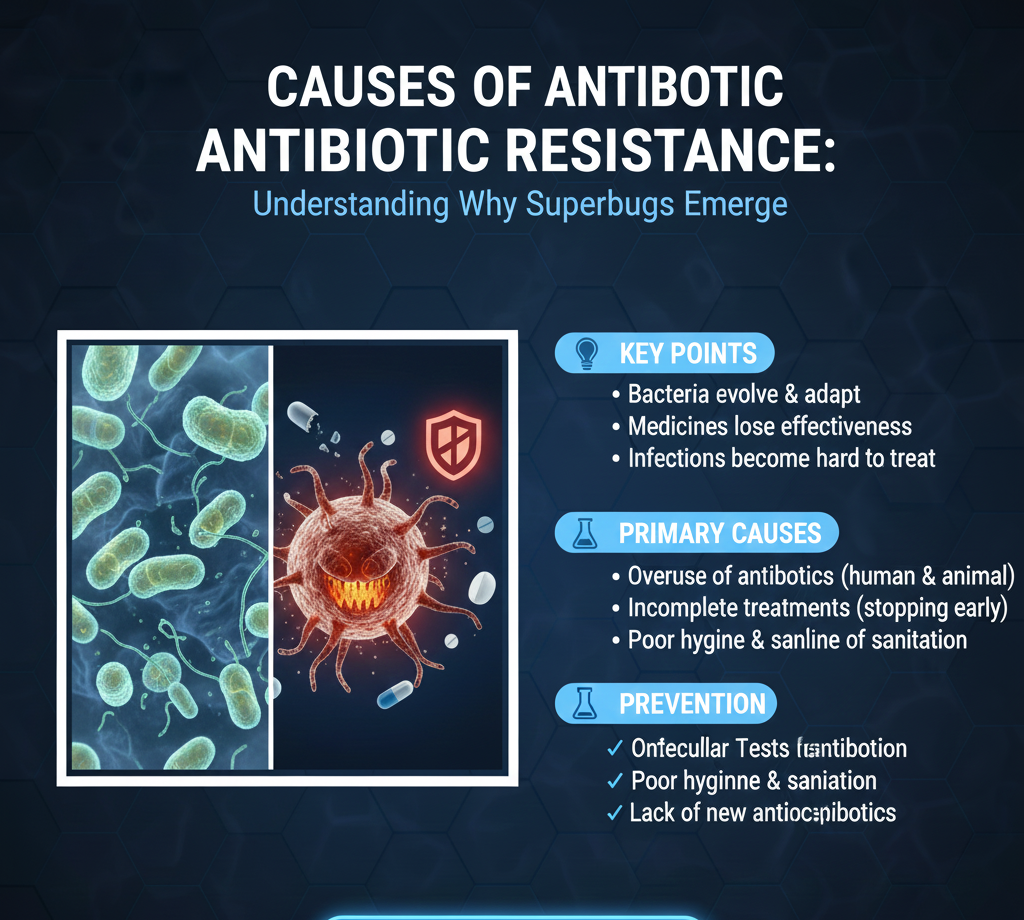
Using antibiotics when they aren’t needed (like for viral infections) speeds up resistance.
Use in Agriculture
Antibiotics given to livestock and poultry can promote resistance that spreads to humans through food.
Environmental Spread
Antibiotics and resistant bacteria released into soil and water help resistance spread in the environment.
9. Antibiotic Resistance Environment and Its Role
The environment plays a major role as resistant bacteria and antibiotic residues accumulate in wastewater, soil, and natural systems. This creates hot spots where genes can spread between bacteria, even outside hospitals.
10. Symptoms of Antibiotic Resistance in Infections
If an infection is resistant:
- Symptoms may persist longer despite treatment.
- There may be recurring fever.
- The infection may spread or worsen.
These signs suggest the antibiotic prescribed may not be effective.
11. How to Test for Antibiotic Resistance
Antibiotic Resistance Test Methods
Testing for AR tells clinicians which antibiotic will still work. This can be done by exposing bacteria in the lab to various drugs.
12. Antimicrobial Resistance Tests Explained
Disk Diffusion (Kirby-Bauer Method)
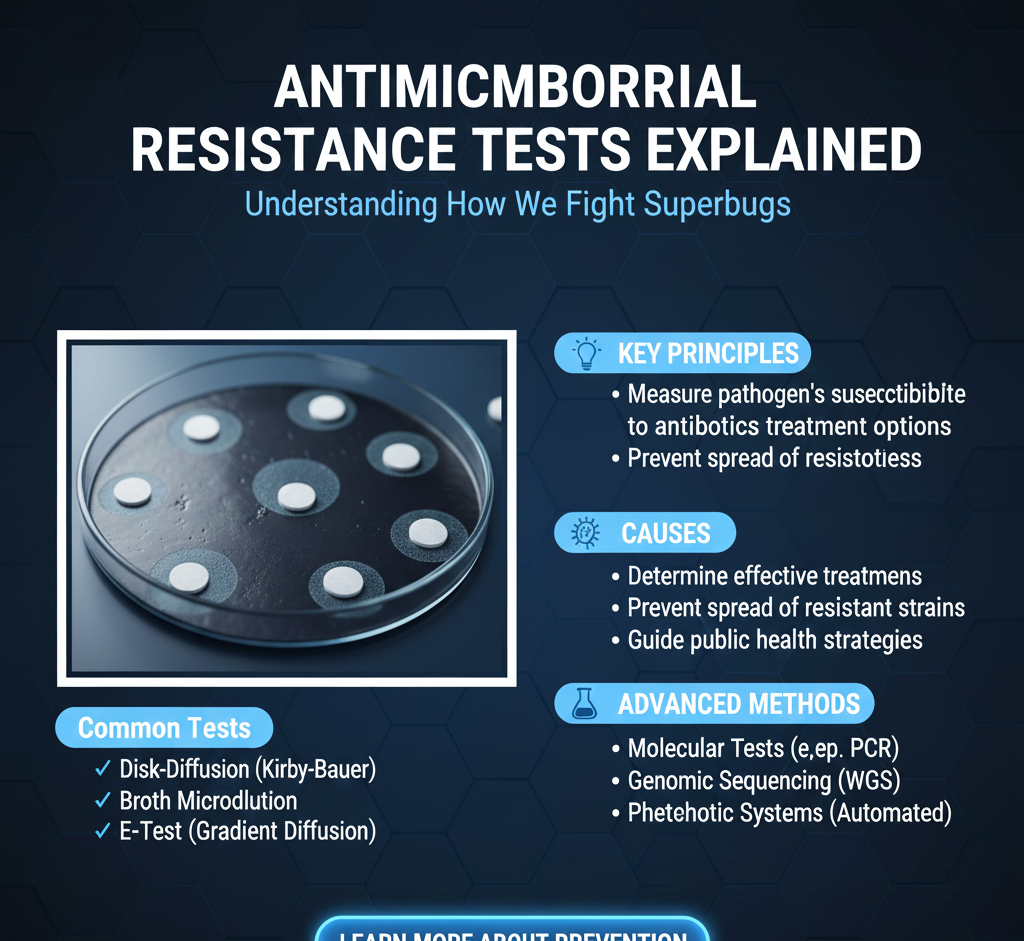
Bacteria are spread on a plate, and antibiotic-soaked discs are placed on it. If bacteria grow close to the disc, they are resistant.
Broth Microdilution and Agar Dilution
The bacteria are mixed with different antibiotic concentrations to find the minimum inhibitory concentration (MIC)—the lowest amount that stops growth.
Genetic Tests
Genetic testing detects known resistance genes directly in the bacteria’s DNA.
13. Antimicrobial Resistance Research
Research on AR includes creating better tests, tracking resistance trends, and understanding how genes move between bacteria. For example, bioinformatics tools can identify resistance genes in environmental samples.
14. Antibiotic Resistance Stats: Global and Regional
- In 2019, bacterial AMR directly caused an estimated 1.27 million deaths and was implicated in nearly 5 million deaths globally.
- One in six lab-confirmed infections worldwide is now resistant to antibiotics.
- If unchecked, research projects billions more deaths by 2050.
- A recent warning estimated 39 million deaths by 2050 if action is delayed.
15. Antibiotic Resistance in India
A heavy burden of antibiotic resistance in India led development of the National Action Plan on Antimicrobial Resistance (NAP-AMR) to curb this issue through better surveillance, infection control, public awareness, optimized use, and research.

16. How to Prevent Antibiotic Resistance
You can help prevent resistance by:
- Using antibiotics only when prescribed.
- Completing the full course.
- Practicing good hygiene and vaccination.
- Reducing unnecessary antibiotic use in agriculture.
17. How to Reverse Antibiotic Resistance — Is It Possible?
Once resistance is widespread, reversing it completely is extremely challenging. However, resistance can be slowed by careful antibiotic use, improved diagnostics, better stewardship, and new drug research. World Health Organization
Free Antimicrobial Resistance Courses with Links
| Course Title | Provider / Platform | Description |
| Understanding Antibiotic Resistance | Tropical Health Global Network (Free AMR Courses) | Introductory course on antibiotic resistance and its science. (amr.tghn.org) |
| Fleming Fund Online AMR Course | Open University / Fleming Fund | Free 25-module course covering AMR surveillance and One Health. (amr.tghn.org) |
| Antimicrobial Resistance – Theory and Methods | Coursera (audit free) | Covers antibiotic resistance mechanisms and susceptibility testing basics. (Coursera) |
| The Social Dimensions of AMR | Coursera (audit free) | Focuses on interdisciplinary and social aspects of antimicrobial resistance. (Coursera) |
| Antimicrobial Stewardship: Managing Antibiotic Resistance | FutureLearn | Free course on antibiotic stewardship principles and AMR impact (audit). (getyoureducation.net) |
| Online Free Course: AMR – Competency-Based | INDOHUN | Free interactive course on antimicrobial prescribing and stewardship practices. (indohun.org) |
| Antimicrobial Resistance in the Food Chain | Coursesity | Free course exploring AMR dynamics in food and farming. (Coursesity) |
Conclusion
Antibiotic resistance happens when bacteria evolve to survive drugs that used to kill them. It’s driven by genetic changes, misuse of antibiotics, and environmental factors. Testing for antibiotic resistance in India and taking preventive action can slow its spread—but global cooperation and research are vital to protect our ability to treat infections. Understanding resistance isn’t just for scientists; it’s a public-wide issue with real consequences for health everywhere.

FAQs
1. What is meant by antibiotic resistance?
It means bacteria no longer respond to antibiotics that used to kill them or stop their growth.
2. What are antibiotic resistance genes examples?
Examples include the NDM-1 gene and various beta-lactamase genes that confer resistance to powerful antibiotics.
3. How to test for antibiotic resistance in the lab?
Common methods include disk diffusion, broth microdilution, and genetic tests identifying resistance genes.
4. Can antibiotic resistance be reversed?
Reversal is difficult once widespread; prevention and stewardship can help reduce its progression.
5. Why is antibiotic resistance a global concern?
Resistant infections are harder to treat, cause more deaths, and strain healthcare systems worldwide.