
Table of Contents
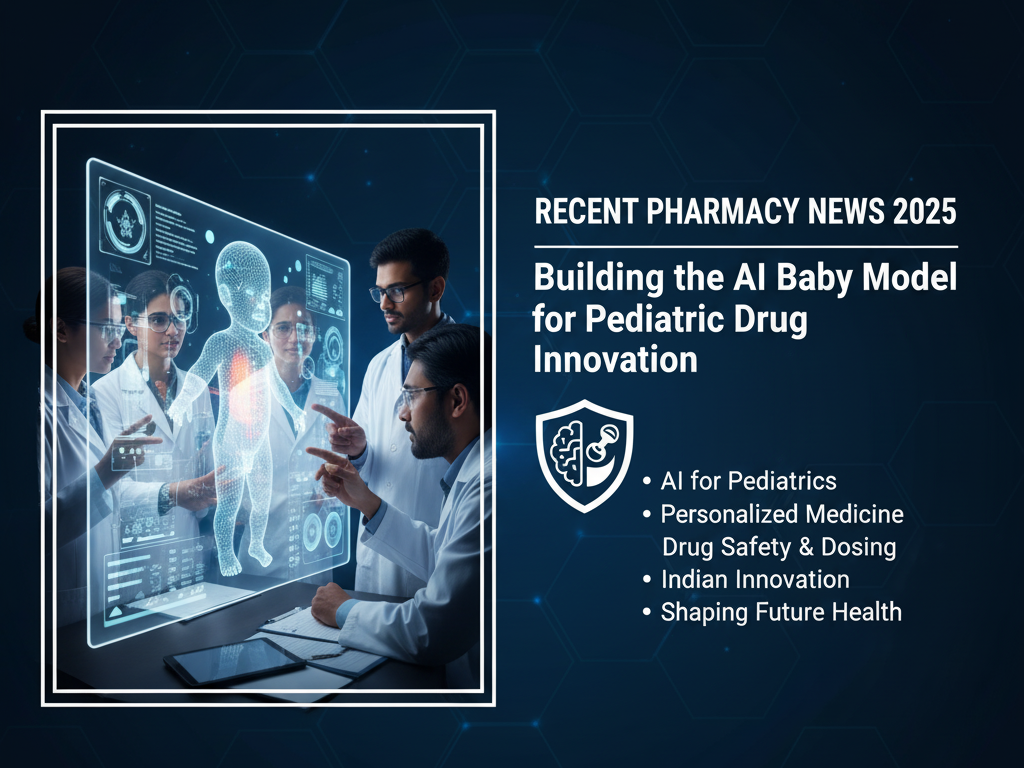
If you’ve been following recent pharmacy news 2025, you’ve probably noticed a term that’s reshaping global healthcare discussions: the “AI Baby.” No, it’s not a physical robot child—it’s a groundbreaking digital pediatric model trained to mimic the biological systems of infants. This innovation is rapidly changing how the medical world approaches pediatric drug research, dosing, safety, and clinical decision-making.
Pharmacists, researchers, and healthcare policymakers are calling the AI Baby one of the most promising advancements of 2025, especially as pediatric medicine remains one of the most challenging areas in drug development.
What Exactly Is the “AI Baby” in Healthcare?
Definition and Concept
The AI Baby is a digital simulation of a baby’s developing body, designed using deep learning, clinical datasets, genomic information, and developmental physiology. It acts as a digital twin capable of predicting how infants metabolize drugs, respond to treatments, and develop over time.
The Link Between AI Baby and Pediatric Digital Twins
Digital twins are already widely used in cardiology and oncology, but the AI Baby brings this concept into pediatrics—where real-world clinical testing is extremely limited.
Why AI Baby Matters in Recent Pharmacy News 2025
The AI Baby is making international headlines for these reasons:
- It drastically reduces reliance on risky pediatric trials.
- It helps predict drug safety for newborns.
- It supports faster development of pediatric formulations.
With pediatric care moving into the spotlight in recent pharmacy news 2025, AI Baby models are becoming essential tools for hospitals and pharma companies.
The Growing Influence of AI in Pharmacy
AI in Pediatric Pharmacology
Infants aren’t just “small adults.” Their metabolic pathways change rapidly, making traditional dosing unpredictable. AI Baby models simulate:
- Organ growth
- Drug absorption
- Drug–drug interactions
- Metabolic maturation
Predictive Analytics and Real-Time Pediatric Modeling
Imagine predicting how a premature baby will respond to a medication three months from now. With real-time AI modeling, this is now possible.
Safer Drug Dosing for Newborns
AI Baby identifies optimal dosing ranges, reducing life-threatening errors—one of the biggest issues highlighted in recent pharmacy news 2025.
AI-Powered Drug Response Simulations
From vaccines to antibiotics, AI Baby tests responses in the virtual world before drugs reach real infants.
Why the Pharmacy World Is Talking About AI Baby in 2025?
New 2025 Breakthroughs Making Headlines
Recent pharmacy news 2025 is filled with stories of:
- Hospitals adopting AI Baby systems
- Pharma companies using digital twins for pediatric trials
- Regulators drafting pediatric AI guidelines
Advanced Digital Patient Models
2025 has seen the launch of AI Babies that can simulate thousands of infant profiles across different genetic backgrounds.
AI-Enabled Clinical Decision Systems
Pediatric ICU teams now use AI Baby insights to adjust critical medication doses in real time.
Ethical and Regulatory Updates in 2025
Regulators worldwide are pushing for transparency, fairness, and strict data protection as AI Baby models evolve.
How the AI Baby Model Is Built
Step 1 – Data Collection
The foundation includes:
- Pediatric EHR datasets
- Genomic sequences
- NICU monitoring data
- Growth and developmental charts
Step 2 – Neural Network Architecture
Deep-learning models generate predictive simulations for metabolism, growth, and drug responses.
Step 3 – Pediatric Digital Twin Testing
The AI Baby is validated by comparing predictions against real neonatal clinical outcomes.
Step 4 – Deployment
Hospitals and pharmacies use AI Baby dashboards to evaluate dosing decisions and predict safety issues.
Integration With 2025 Pharmacovigilance Systems
AI Baby alerts pharmacists to potential risks before a drug reaches an infant’s bedside.
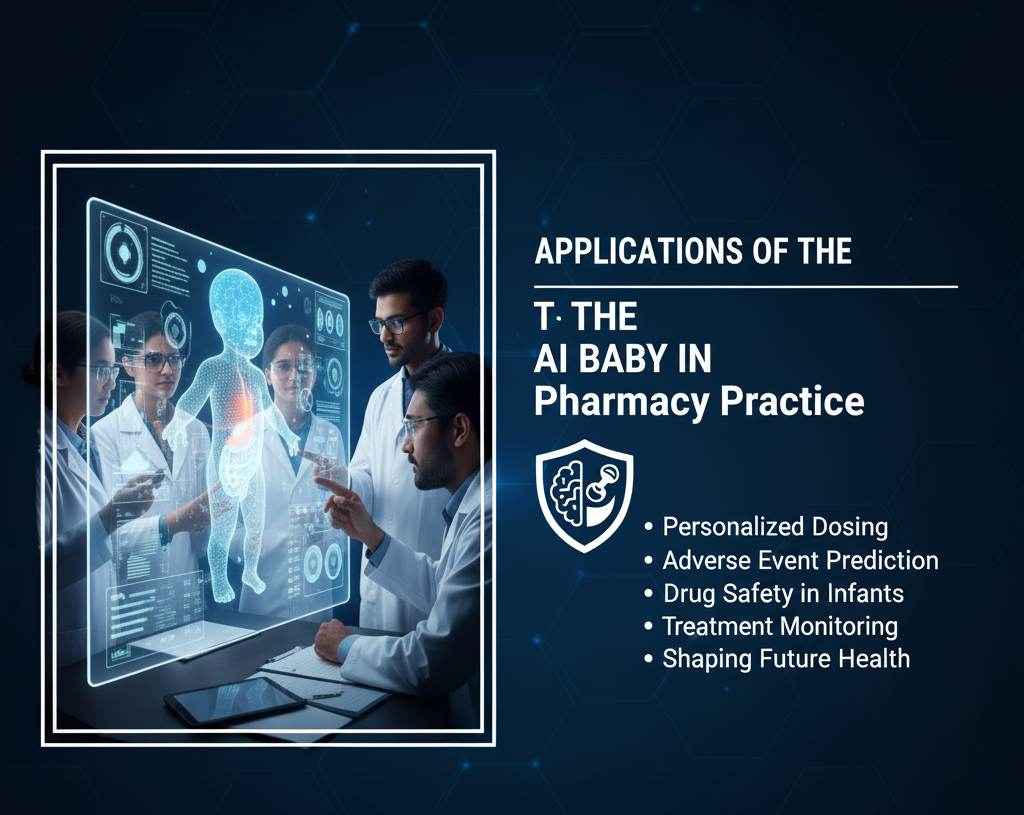
Applications of the AI Baby in Pharmacy Practice
Neonatal Drug Safety
AI Baby minimizes adverse drug reactions—the top pediatric safety concern in recent pharmacy news 2025.
Pediatric Clinical Trials
Virtual populations reduce the need to test on real infants.
Personalized Medicine for Infants
No two babies are alike; AI Baby tailors treatments accordingly.
AI-Guided Formulation Adjustments
AI suggests:
- Safer excipients
- Age-appropriate strengths
- Improved palatability
Pediatric Drug Supply Predictions (2025 Trends)
Predictive analytics help ensure critical pediatric drugs never go out of stock.
Impact on Pharmacists in 2025
New Skills Required
Pharmacists now need:
- AI literacy
- Data interpretation skills
- Understanding of predictive models
2025 Job Roles Emerging
AI Pediatric Analyst
Experts who operate and interpret AI Baby systems.
Clinical Data Pharmacist
Professionals blending clinical knowledge with AI analytics.
Challenges in Building an AI Baby Model
2025 Data Privacy Requirements
Children’s medical data requires the highest level of protection.
Ethical Issues
How much child-specific data should AI systems access? The debate continues.
Risk of Bias
AI Baby models must include diverse datasets to avoid misprediction across ethnic and regional populations.
The Future of AI Baby and Pediatric Pharmacy
Will Every Hospital Have an AI Baby Model by 2030?
Experts predict widespread adoption—especially in NICUs and teaching hospitals.
Upcoming Research & Global 2025 Trends
AI Baby may evolve into virtual toddlers, children, and even full family-based digital twins.
Conclusion
The concept of the AI Baby stands at the center of recent pharmacy news 2025, redefining pediatric drug development, safety, and precision medicine. As healthcare moves toward more intelligent, digital-first solutions, AI Baby models are offering safer, faster, and more compassionate ways to care for newborns and young children. The future of pediatric pharmacy is smarter—and it’s already here.
FAQs
1. What is an AI Baby in pharmacy?
A digital pediatric model that simulates how infants respond to medications.
2. Why is AI Baby trending in recent pharmacy news 2025?
Because it’s transforming pediatric drug research, safety, and dosing accuracy.
3. Does AI Baby improve drug safety for infants?
Yes. It predicts adverse reactions and optimizes medication doses.
4. Will AI Baby replace pharmacists?
No. It assists pharmacists by providing data-driven insights.
5. What is the future of AI Baby in drug development?
It will streamline pediatric trials and support personalized medicine for infants.