
Table of Contents
Introduction:
Quality Careers That Shape the Pharmaceutical Industry
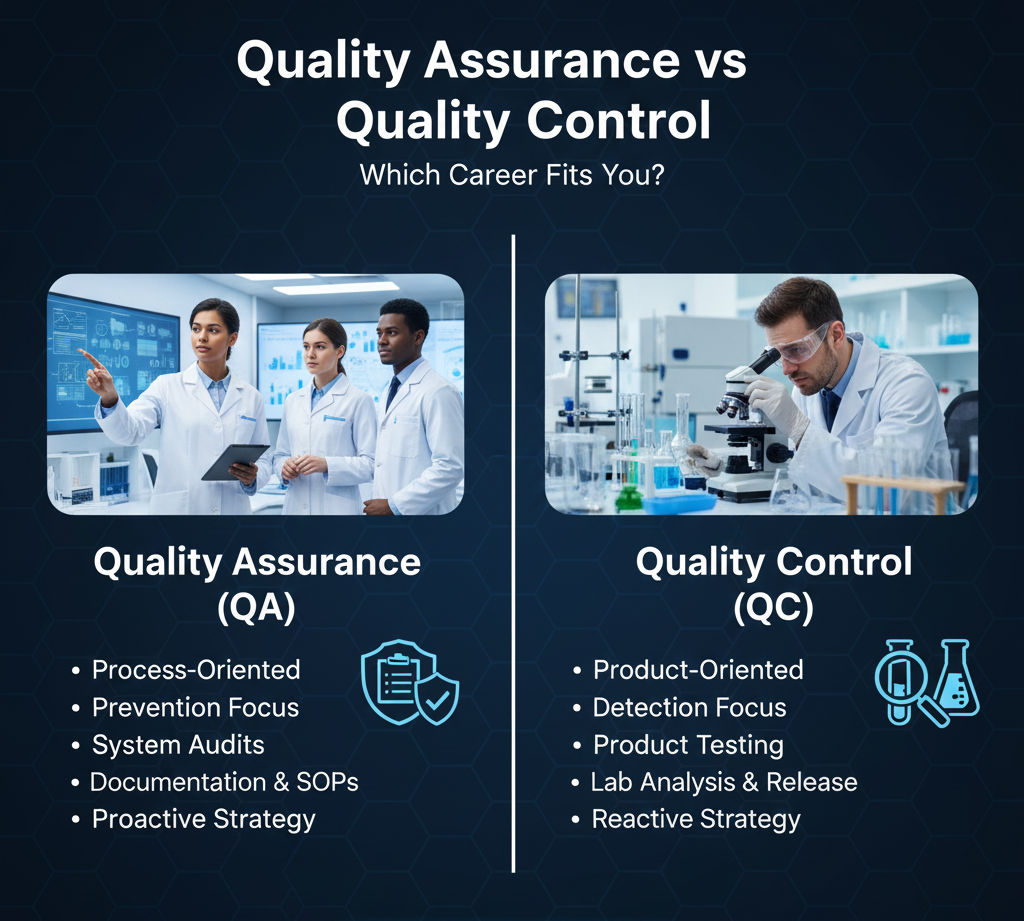
If you’re exploring a career as a quality assurance officer in pharmaceutical industry or debating quality assurance vs quality control, you’re not alone. These two roles form the backbone of patient safety, regulatory compliance, and product reliability.
While many confuse quality control and quality assurance, the reality is that each plays a distinct and equally important role—especially in the highly regulated pharmaceutical sector.
So, what is the difference between quality control and quality assurance, and which career path aligns better with your skills and goals? Let’s break it down.
Understanding Quality Assurance and Quality Control in Pharma
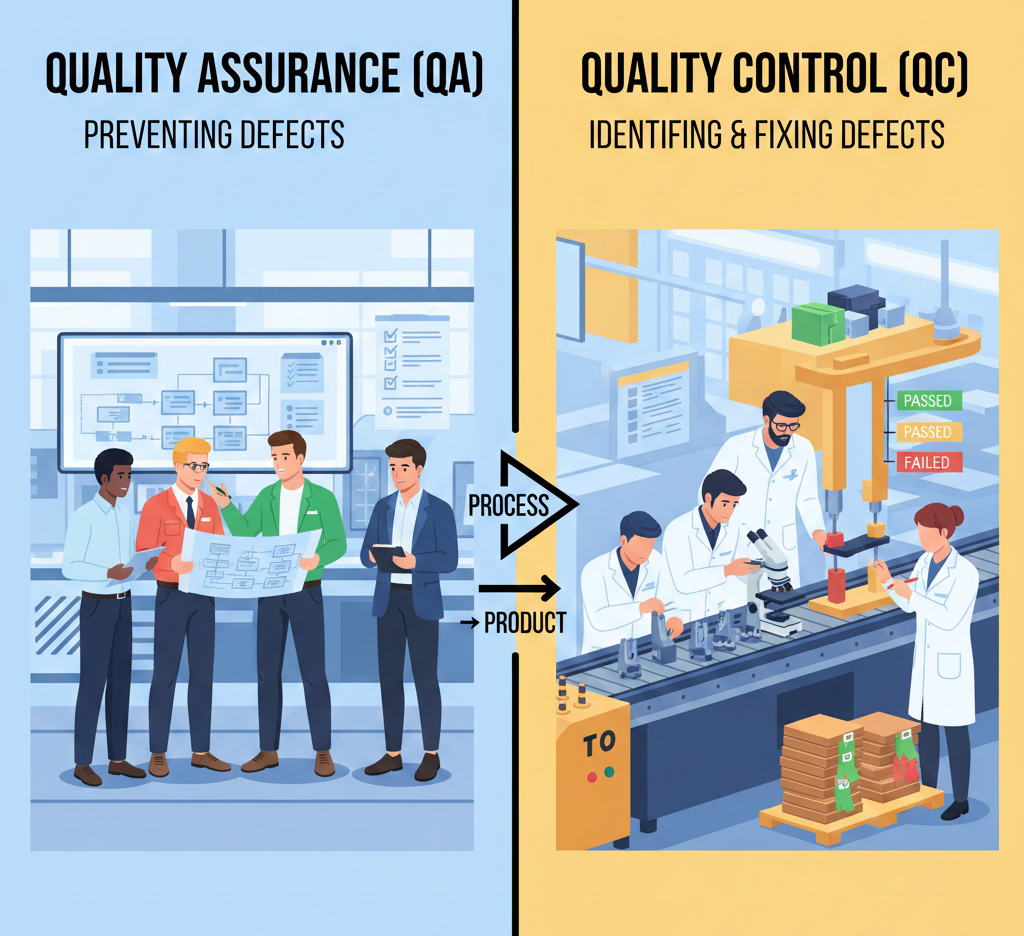
In the quality assurance in pharmaceutical industry, the goal is to prevent errors before they happen. In contrast, quality control in pharmaceutical industry focuses on identifying defects through testing and analysis.
Think of QA as building a strong foundation and QC as checking if the building is safe to live in.
What Is Quality Assurance in the Pharmaceutical Industry?
Role of a Quality Assurance Officer in Pharmaceutical Industry
A quality assurance officer in pharmaceutical industry ensures that every process—from raw material procurement to finished product release—meets regulatory standards such as GMP and regulatory guidelines.
Key responsibilities include:
- Preparing and maintaining SOPs
- Conducting internal audits
- Handling deviations, CAPA, and change control
- Ensuring regulatory compliance
- Training personnel on quality systems
Why Quality Assurance Jobs Are Process-Focused
Most quality assurance jobs revolve around systems rather than samples. QA professionals don’t test products daily; instead, they ensure that processes are robust enough to produce quality products every single time.
This preventive nature is what defines quality assurance and quality control.
What Is Quality Control in Pharmaceutical Industry?
Core Role of Quality Control Professionals
Quality control in pharmaceutical industry deals with laboratory testing and analysis. QC professionals work hands-on with instruments, samples, and data.
Responsibilities include:
- Testing raw materials and finished products
- Method validation and calibration
- Handling OOS and OOT results
- Maintaining lab documentation
If QA designs the rules, QC enforces them through evidence.
Difference Between Quality Control and Quality Assurance Explained Simply
Quality Assurance vs Quality Control: Key Differences
| Aspect | Quality Assurance | Quality Control |
| Focus | Process-oriented | Product-oriented |
| Nature | Preventive | Detective |
| Work Style | Documentation & audits | Testing & analysis |
| Industry Demand | High | High |
This clear difference between quality assurance and quality control helps candidates choose the right career direction.
Quality Control and Quality Assurance: How They Work Together
Although different, quality control and quality assurance are deeply interconnected. QA establishes quality standards, while QC verifies whether those standards are met.
In pharma, one cannot function effectively without the other.
Skills Required for Quality Assurance Jobs
To succeed in quality assurance jobs, you’ll need:
- Strong documentation skills
- Knowledge of GMP guidelines
- Audit and inspection readiness
- Communication skills
- Risk assessment and decision-making ability
QA is ideal for professionals who enjoy structured systems and compliance-driven roles.
Skills Required for Quality Control in Pharmaceutical Industry
QC professionals need:
- Strong analytical skills
- Laboratory experience
- Instrument handling expertise
- Data interpretation abilities
- Attention to precision and accuracy
If you enjoy hands-on lab work, quality control in pharmaceutical industry is a strong fit.
Educational Background for Quality Control and Quality Assurance Roles
Degrees commonly accepted:
- Pharmacy
- Chemistry
- Microbiology
- Biotechnology
- Life Sciences
Graduates from these streams can enter both Quality Control and Quality Assurance roles with appropriate training.
Quality Assurance Salary in Pharmaceutical Industry
One of the most searched topics is quality assurance salary in pharmaceutical industry. Typically:
- Entry-level QA professionals earn comparable salaries to QC roles
- Mid-level QA professionals often see faster salary growth
- Senior QA leadership roles attract higher compensation
Salary depends on experience, certifications, and company size.
Quality Assurance Jobs and Quality Control Jobs – Quick Apply Table with links
| Role | Job Title Examples | Experience Level |
| Quality Assurance (QA) | QA Officer, QA Executive, QA Associate, QA Manager | Freshers – Senior |
| Quality Assurance (QA) | GMP QA, Compliance Officer, Documentation QA | Entry – Mid |
| Quality Assurance (QA) | QA Auditor, Validation Associate | Mid – Senior |
| Quality Assurance (QA) | Regulatory & QA Roles | All Levels |
| Quality Control (QC) | QC Analyst, QC Chemist, QC Officer | Freshers – Mid |
| Quality Control (QC) | Analytical QC, Microbiology QC | Entry – Mid |
| Quality Control (QC) | QC Manager, Lab Supervisor | Mid – Senior |
| Quality Control (QC) | Lab Analyst, Testing Roles | All Levels |
Career Growth in Quality Assurance and Quality Control
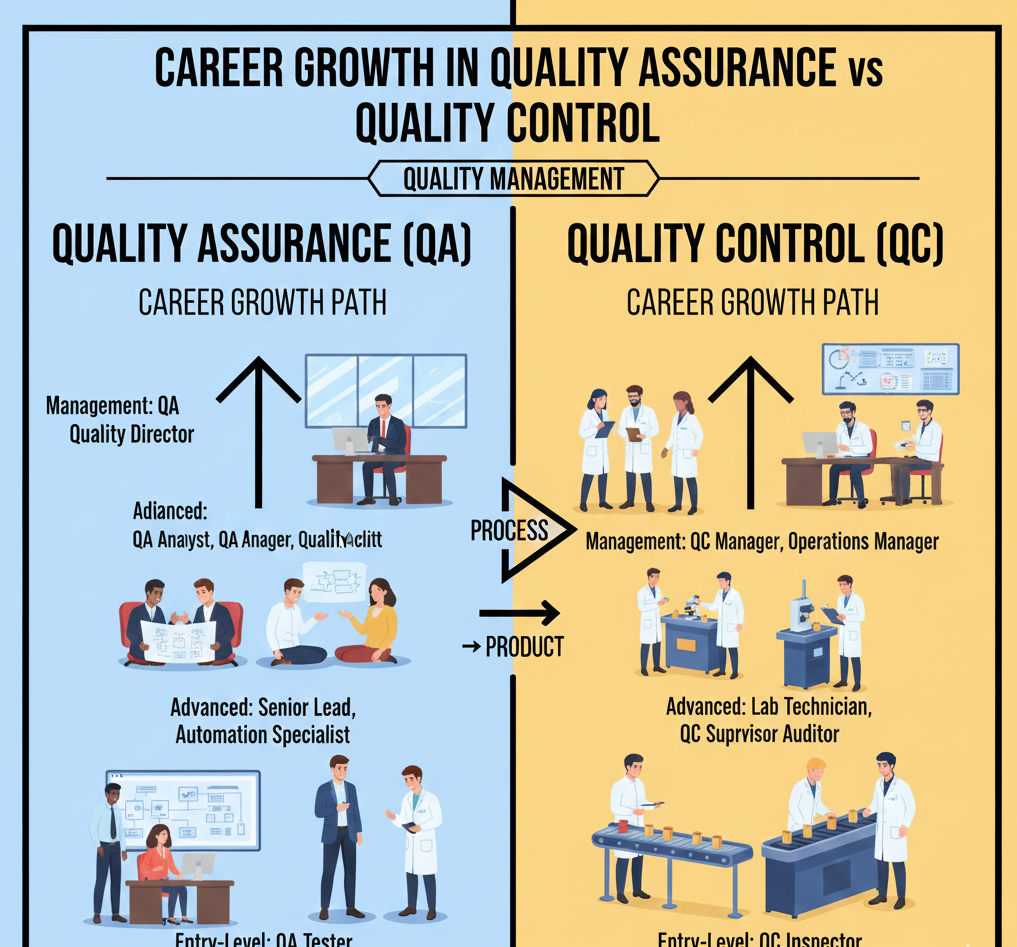
Quality Assurance Career Path
QA Executive → Senior QA → QA Manager → Head of Quality → Regulatory Leadership
Quality Control Career Path
QC Analyst → Senior Analyst → QC Manager → Head of QC → Quality Director
Both paths offer long-term stability and global relevance.
Job Opportunities in the Pharmaceutical Industry
There is consistent demand for:
- Quality assurance jobs
- Quality control professionals
- Compliance and regulatory specialists
The pharmaceutical sector continues to grow, making quality roles future-proof.
Who Should Choose Quality Assurance?
Choose QA if you:
- Want to become a quality assurance officer in pharmaceutical industry
- Prefer audits, documentation, and compliance
- Enjoy preventive problem-solving
QA professionals act as the guardians of pharmaceutical quality systems.
Who Should Choose Quality Control?
Choose QC if you:
- Enjoy lab testing and experiments
- Prefer hands-on technical roles
- Like working with data and instruments
QC professionals protect product quality before it reaches patients.
Final Verdict: Quality Assurance vs Quality Control
When it comes to quality assurance vs quality control, there is no “better” choice—only a better fit. Understanding the difference between quality assurance and quality control helps you build a career aligned with your strengths, interests, and long-term goals.
Conclusion
Both quality assurance in pharmaceutical industry and quality control in pharmaceutical industry play irreplaceable roles in ensuring patient safety and regulatory compliance. Whether you’re eyeing quality assurance jobs, exploring QC laboratories, or comparing quality assurance salary in pharmaceutical industry, the right choice comes down to mindset—systems or samples, prevention or detection.
Choose wisely, and your career in pharma quality will stand strong.

FAQs
1. What is the main difference between quality assurance and quality control?
Quality assurance focuses on preventing defects, while quality control focuses on detecting defects.
2. Are quality assurance jobs better paid than QC jobs?
At senior levels, quality assurance salary in pharmaceutical industry is often higher, but early careers are similar.
3. Can a QC professional move into QA?
Yes, many professionals transition from QC to QA with experience and certifications.
4. Which role is better for laboratory lovers?
Quality control in pharmaceutical industry is ideal for lab-focused professionals.
5. Is QA more documentation-heavy than QC?
Yes, QA involves more SOPs, audits, and compliance documentation.