
Table of Contents
Cancer treatment has entered a turning point where the immune system is no longer a supporting actor—it’s the hero of the story. Among all immunotherapies, pembrolizumab has reshaped oncology more than most. Now, in 2025, a new development is attracting intense global attention: Russian pembrolizumab.
This isn’t just another international headline. It’s the kind of breakthrough that regularly appears in pharmacy news today in India, dominates LinkedIn discussions, and features alongside big pharma news today in India because of what it could mean for pricing, access, and the future of cancer care. As healthcare professionals scan latest pharma news 2 hours ago in India, this topic keeps showing up—and for good reason.
Let’s break this down clearly, without heavy jargon, and understand why Russian pembrolizumab matters not just to Russia, but to India and the global oncology ecosystem.
The Global Importance of Immuno-Oncology
Traditional chemotherapy works like a blunt weapon—it attacks fast-dividing cells, including healthy ones. Immunotherapy, on the other hand, is precision medicine. It trains the immune system to recognize cancer cells and eliminate them intelligently.
That’s why immune checkpoint inhibitors changed oncology forever—and why pembrolizumab became one of the most valuable cancer drugs in the world.
Understanding Pembrolizumab
What Is Pembrolizumab?
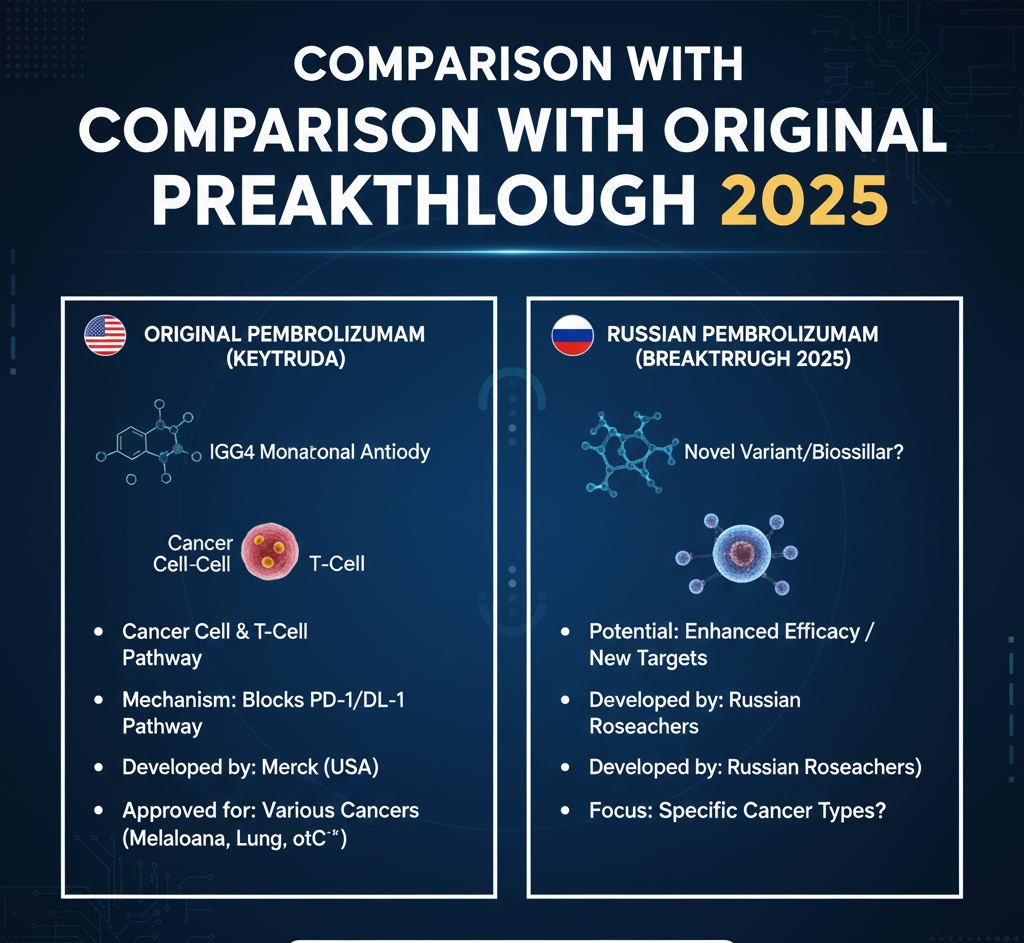
Pembrolizumab is a monoclonal antibody used in cancer immunotherapy. Originally developed by Merck & Co. and known globally under the brand Keytruda, it targets the PD-1 pathway—one of cancer’s favorite escape routes.
Mechanism of Action Explained Simply
Cancer cells are sneaky. They use PD-1/PD-L1 signals to tell immune cells, “Don’t attack me.” Pembrolizumab blocks this signal. Remove the disguise, and the immune system does what it does best—attack foreign invaders.
Why Pembrolizumab Became a Game-Changer
From lung cancer and melanoma to head & neck and lymphoma, pembrolizumab delivered survival benefits that were once unthinkable. That success explains its high global demand—and its equally high cost.
Why This Development Is Trending in Pharmacy News Today in India
In recent months, Russian pembrolizumab has become a recurring topic across platforms focused on pharmacy news today in India. For Indian pharmacy students, oncology pharmacists, medical writers, and clinical research professionals, this is far more than global curiosity—it’s a signal of where cancer therapeutics may be heading next.
Many publications covering big pharma news today in India are closely watching how Russia’s domestic immunotherapy efforts could influence biosimilar strategies in countries like India. With India already dominating the global generics market, the shift toward complex biologics such as pembrolizumab represents the next major leap for the pharmaceutical industry.
What makes this story even more powerful is its constant presence in international pharma news feeds. As Western pharmaceutical giants continue to control high-cost immunotherapies, new entrants from Russia and Asia are challenging the status quo. That’s exactly why updates about Russian pembrolizumab frequently appear under latest pharma news 2 hours ago in India on pharmacy portals, oncology blogs, and professional news aggregators.
For Indian readers following breaking international pharma news, this development checks every box—innovation, affordability, patient access, global competition, and future career potential in biologics, pharmacovigilance, and clinical research.
Comparison With Original Pembrolizumab
Efficacy and Safety
Early data suggests comparable response rates and safety profiles. However, global acceptance hinges on transparency and peer-reviewed publications.
Cost and Accessibility
Here’s the real disruption: Russian pembrolizumab is reportedly significantly cheaper than the original. That’s huge for long-term cancer treatment.
Manufacturing and Quality Standards
Biologic manufacturing is unforgiving. Minor variations can matter. Russian manufacturers emphasize GMP-compliant, state-controlled facilities to ensure consistency.
What This Means for Global Cancer Care
Democratization of Immunotherapy
Russian pembrolizumab is more than a regional alternative. It represents a broader movement toward making elite cancer treatments accessible across borders. For countries like India, frequently highlighted in pharmacy news today in India for their pharmaceutical strength, this reinforces the possibility of affordable, world-class oncology care without total dependence on Western pricing models.
Conclusion
Russian pembrolizumab isn’t just another drug approval—it’s a statement. A statement that life-saving immunotherapies don’t have to remain financially unreachable. As 2025 unfolds, this development will continue to dominate international pharma news, influence big pharma news today in India, and shape how future cancer treatments are developed, priced, and delivered.
For pharmacists, researchers, and healthcare professionals in India, this isn’t just news to read—it’s a trend to prepare for.

FAQs
1. Is Russian pembrolizumab the same as Keytruda?
Not exactly. It is a locally developed equivalent or biosimilar designed to match clinical performance.
2. Is it safe for cancer patients?
Safety data so far appears comparable, but long-term surveillance is essential.
3. Will it be available outside Russia?
International availability depends on regulatory approvals and legal considerations.
4. Why is it cheaper than original pembrolizumab?
Local manufacturing and government support significantly reduce costs.
5. What does this mean for pharmacy and clinical research careers?
It increases demand for biologic manufacturing experts, clinical researchers, and pharmacovigilance professionals.
For more information-