
Table of Contents
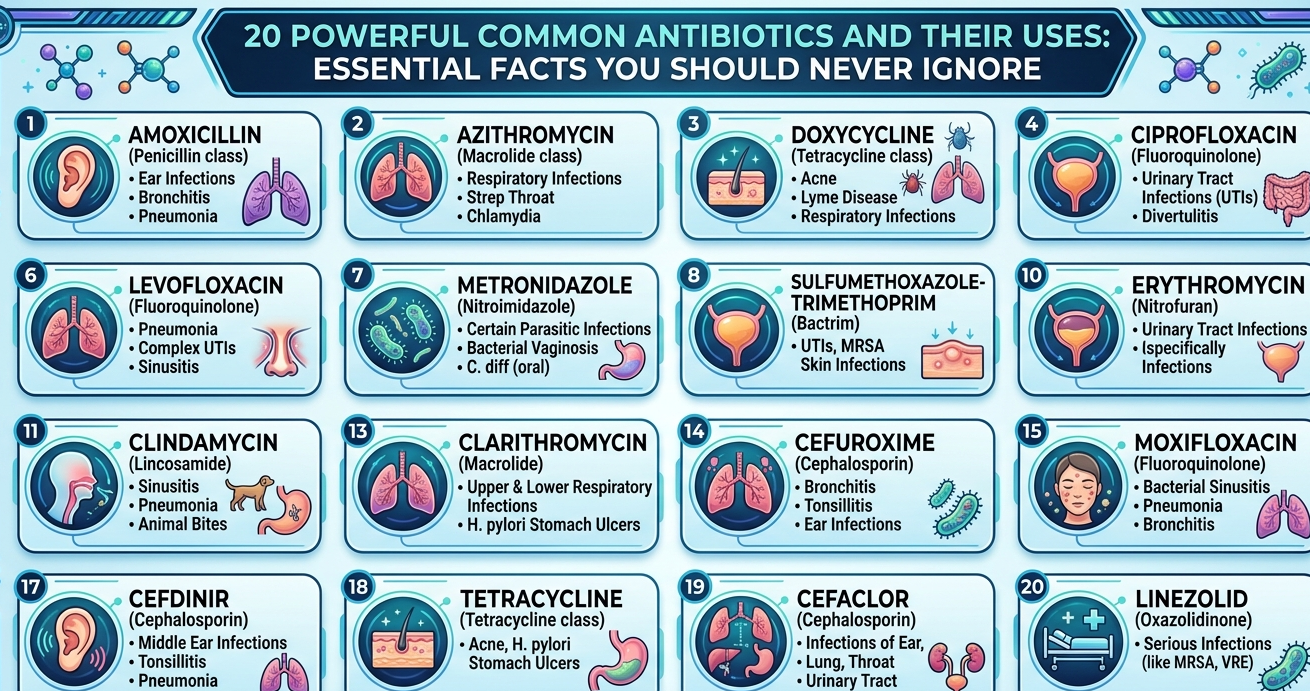
Antibiotics changed the history of medicine. Before antibiotics existed, even a small wound or throat infection could turn dangerous. Today, these life-saving drugs help doctors treat bacterial infections ranging from urinary tract infections to pneumonia. Yet, there’s another side to the story. Antibiotic resistance is growing rapidly across the world, and health organizations are warning people not to misuse these medications. According to the World Health Organization (WHO), one in six bacterial infections worldwide is now resistant to standard antibiotic treatment.
As a Pharm D student, I’ve personally seen how commonly antibiotics are prescribed in clinics and hospitals. I remember one patient during clinical rounds who stopped taking antibiotics after just three days because he “felt better.” A week later, the infection returned stronger than before. That moment made me realize why pharmacists and healthcare professionals constantly stress completing the full antibiotic course. Antibiotics are powerful allies, but only when used correctly.
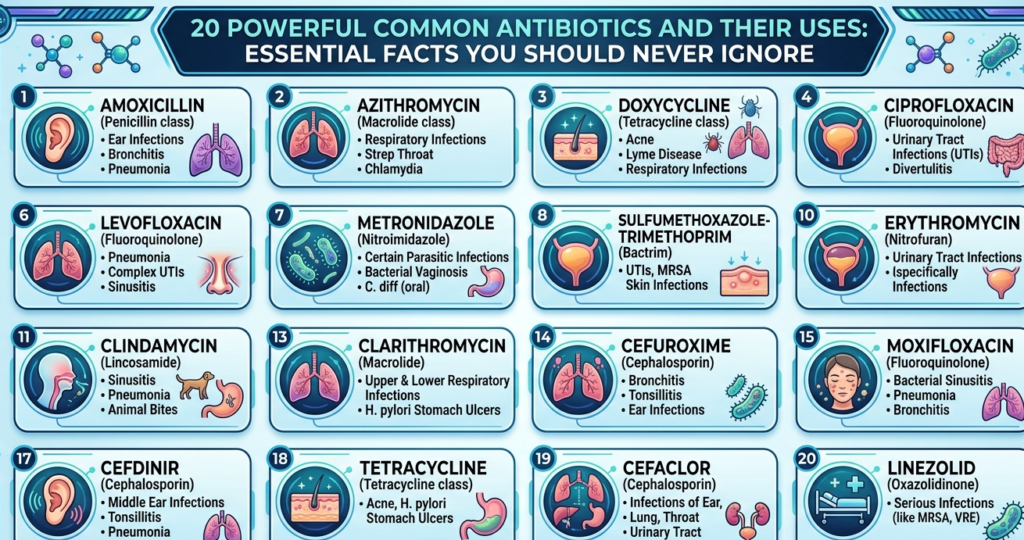
This detailed guide explores the top 20 antibiotics and their uses, the different types of antibiotics and their uses, List Of Common Antibiotics and Their Uses, side effects, resistance patterns, FAQs, and practical clinical examples. Whether you are a healthcare student, patient, blogger, or someone curious about common antibiotics and their uses, this article will help you understand antibiotics in a simple and practical way.
What Are Antibiotics and How Do They Work?
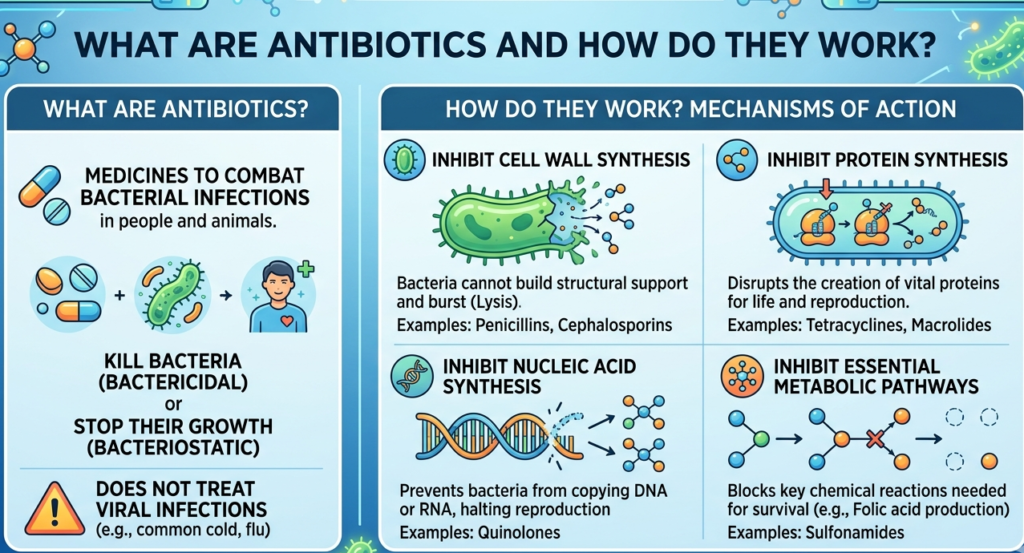
Antibiotics are medicines used to kill bacteria or stop their growth inside the body. They are among the most important discoveries in modern medicine because they help treat infections that once caused millions of deaths. When someone develops bacterial pneumonia, a severe urinary tract infection, or infected wounds, antibiotics often become the first line of treatment. Many people search online for what are antibiotics and their uses / List Of Common Antibiotics and Their Uses, and the answer is simple: antibiotics fight bacterial infections, not viral illnesses.
One of the biggest misconceptions among patients is assuming antibiotics work for every illness. They do not treat viral infections like the common cold, flu, or most sore throats. The Centers for Disease Control and Prevention (CDC) clearly states that antibiotics should only be used when necessary because misuse increases resistance and side effects.
Antibiotics work in different ways. Some destroy bacterial cell walls, while others stop bacteria from making proteins needed for survival. Imagine bacteria as tiny factories. Antibiotics shut down essential machines inside those factories, eventually killing them or preventing multiplication. This is why doctors choose specific antibiotics depending on the type of bacteria causing the infection.
As a Pharm D student, I noticed patients frequently asking for antibiotics for fever or viral coughs. In community pharmacies, inappropriate antibiotic demand remains common. Many people stop medicines early or share leftover antibiotics with family members. These habits may seem harmless, but they contribute heavily to antibiotic resistance, one of the biggest public health threats globally.
Difference Between Bacteria and Viruses : List Of Common Antibiotics and Their Uses
Understanding the difference between bacteria and viruses is essential before learning about different antibiotics and their uses & List Of Common Antibiotics and Their Uses. Bacteria are living microorganisms that can survive independently. Viruses, however, need a host cell to multiply. Antibiotics target bacterial structures, not viruses.
For example:
| Infection | Cause | Antibiotics Needed? |
|---|---|---|
| Strep throat | Bacteria | Yes |
| Common cold | Virus | No |
| Tuberculosis | Bacteria | Yes |
| Influenza | Virus | No |
| Urinary tract infection | Bacteria | Yes |
This distinction is extremely important because unnecessary antibiotic use accelerates resistance. According to WHO surveillance reports, resistance to common antibiotics has risen sharply worldwide.
Why Antibiotic Resistance Is Rising
Antibiotic resistance happens when bacteria evolve and stop responding to medicines that once killed them. Think of it like weeds becoming resistant to pesticides over time. The more antibiotics are misused, the faster bacteria adapt.
Some major reasons include:
- Over-the-counter antibiotic use
- Incomplete antibiotic courses
- Self-medication
- Unnecessary prescriptions
- Antibiotic use in livestock farming
India faces a particularly severe antimicrobial resistance crisis due to widespread misuse and over-the-counter access. During hospital postings, I saw patients arrive with infections resistant to first-line antibiotics because they had already taken multiple random medications before consulting doctors.
Types of Antibiotics and Their Uses : List Of Common Antibiotics and Their Uses
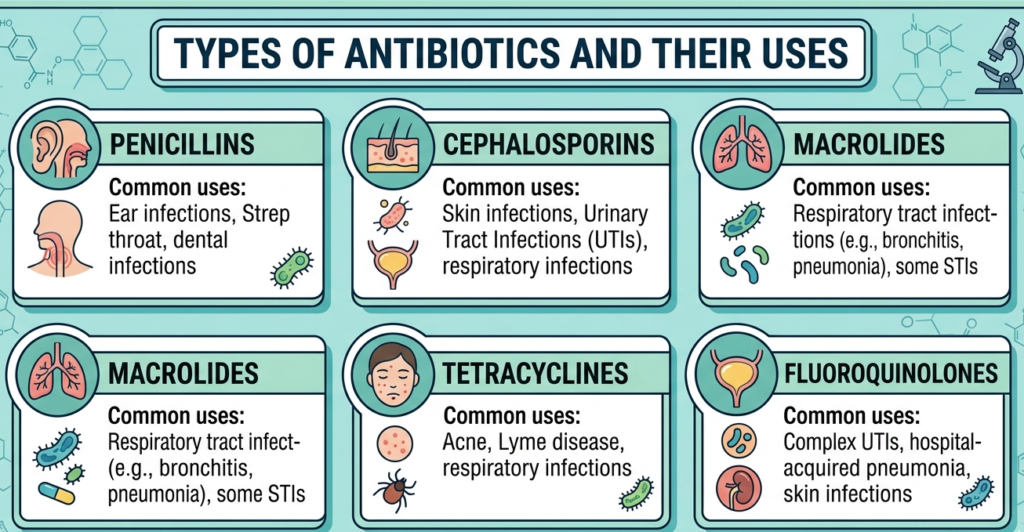
When people search for types of antibiotics and their uses or classes of antibiotics and their uses, list of common antibiotics and their uses they are usually trying to understand how antibiotics are grouped. Antibiotics are classified based on their chemical structure and mechanism of action.
Penicillins
Penicillins are among the oldest and most widely used antibiotics. They work by damaging bacterial cell walls. Common examples include:
- Amoxicillin
- Ampicillin
- Penicillin V
These medicines are often prescribed for throat infections, ear infections, dental infections, and respiratory tract infections.
Cephalosporins
Cephalosporins are broad-spectrum antibiotics used for more severe infections. Examples include:
- Cefixime
- Ceftriaxone
- Cephalexin
Doctors commonly use them for pneumonia, UTIs, meningitis, and skin infections.
Macrolides
Macrolides are especially useful in respiratory infections and in patients allergic to penicillin.
Examples:
- Azithromycin
- Clarithromycin
- Erythromycin
These antibiotics are frequently prescribed for bronchitis and sinusitis.
Fluoroquinolones
These antibiotics are powerful and broad-spectrum.
Examples:
- Ciprofloxacin
- Levofloxacin
- Ofloxacin
They treat UTIs, gastrointestinal infections, and severe bacterial infections.
Tetracyclines
Tetracyclines are widely used for acne, sexually transmitted infections, and malaria prevention.
Examples:
- Doxycycline
- Tetracycline
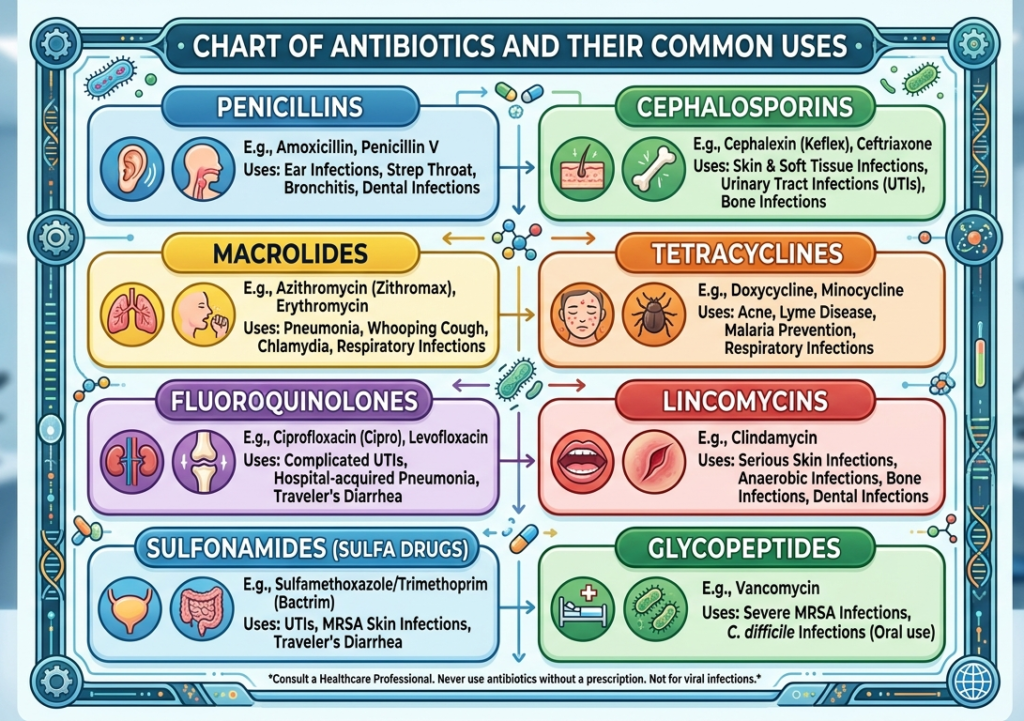
Chart of Antibiotics and Their Uses : List Of Common Antibiotics and Their Uses
Here is a quick chart of antibiotics and their uses that healthcare students and readers often look for.
| Antibiotic | Class | Common Uses |
|---|---|---|
| Amoxicillin | Penicillin | Ear infection, throat infection |
| Azithromycin | Macrolide | Respiratory infections |
| Ciprofloxacin | Fluoroquinolone | UTI, typhoid |
| Doxycycline | Tetracycline | Acne, malaria |
| Metronidazole | Nitroimidazole | Anaerobic infections |
| Cefixime | Cephalosporin | Typhoid, UTI |
| Ceftriaxone | Cephalosporin | Pneumonia, meningitis |
| Clindamycin | Lincosamide | Dental infections |
| Nitrofurantoin | Urinary antiseptic | UTI |
| Linezolid | Oxazolidinone | Resistant infections |
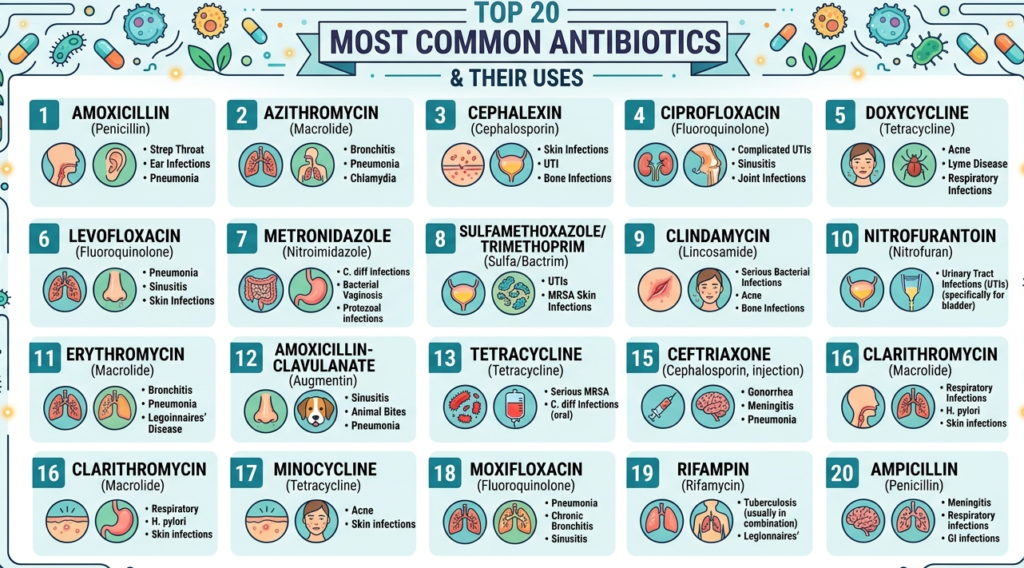
Top 20 Most Common Antibiotics and Their Uses : List Of Common Antibiotics and Their Uses
1. Amoxicillin
Amoxicillin is one of the most common antibiotics worldwide and top of the List Of Common Antibiotics and Their Uses. It belongs to the penicillin class and is often prescribed for throat infections, ear infections, sinusitis, and dental abscesses. Many people ask, “Is amoxicillin 500 safe?” In most cases, yes, when prescribed properly. However, allergic reactions can occur in penicillin-sensitive patients.
During clinical rotations, I saw amoxicillin prescribed daily because it is effective, affordable, and widely available. It is especially common in pediatric infections.
2. Azithromycin
Azithromycin is popular because of its short treatment duration. Patients often call it the “3-day antibiotic” because some infections require only three doses. It is commonly used for respiratory infections, pneumonia, sinusitis, and certain sexually transmitted diseases.
Many people search: “Why is azithromycin 500 used?” Doctors prescribe Azithromycin 500 mg for moderate bacterial infections, especially respiratory tract infections.
3. Ciprofloxacin
Ciprofloxacin is widely used for urinary tract infections and gastrointestinal infections like typhoid fever. It is highly effective but must be used cautiously because overuse contributes to resistance.
4. Doxycycline
Doxycycline is a versatile antibiotic used for acne, malaria prevention, and respiratory infections. Dermatologists frequently prescribe it for long-term acne management.
5. Metronidazole
Metronidazole is commonly prescribed for anaerobic bacterial infections and parasitic infections. Dentists frequently use it for gum and dental infections.
6. Cefixime
Cefixime is a third-generation cephalosporin effective in typhoid fever and urinary tract infections.
7. Ceftriaxone
Ceftriaxone is usually given as an injection in hospitals for serious infections such as meningitis and pneumonia.
8. Clindamycin
Clindamycin is especially effective for dental and skin infections.
9. Levofloxacin
Levofloxacin treats respiratory and urinary infections. It belongs to the fluoroquinolone class.
10. Nitrofurantoin
Nitrofurantoin is specifically used for urinary tract infections and is very common in outpatient settings.
11. Linezolid
Linezolid is reserved for resistant infections like MRSA.
12. Vancomycin
Vancomycin is often called a “last-resort” antibiotic for severe resistant infections.
13. Meropenem
Meropenem is a carbapenem antibiotic used in ICU settings.
14. Piperacillin-Tazobactam
Piperacillin/Tazobactam treats severe hospital-acquired infections.
15. Clarithromycin
Clarithromycin is used in respiratory infections and H. pylori treatment.
16. Cephalexin
Cephalexin is commonly prescribed for skin and soft tissue infections.
17. Trimethoprim-Sulfamethoxazole
Trimethoprim/Sulfamethoxazole is used for UTIs and certain opportunistic infections.
18. Ofloxacin
Ofloxacin treats gastrointestinal and urinary infections.
19. Tetracycline
Tetracycline is useful in acne and bacterial infections.
20. Penicillin
Penicillin remains one of the most important discoveries in medicine and is still used for streptococcal infections.
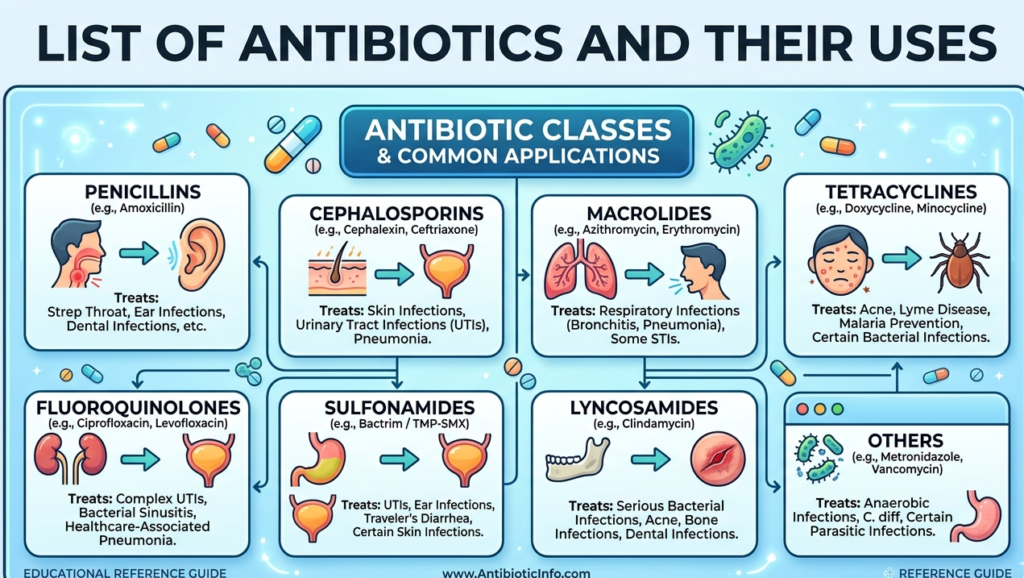
List of Antibiotics and Their Uses pdf : List Of Common Antibiotics and Their Uses
List of Antibiotics and Their Uses pdf link
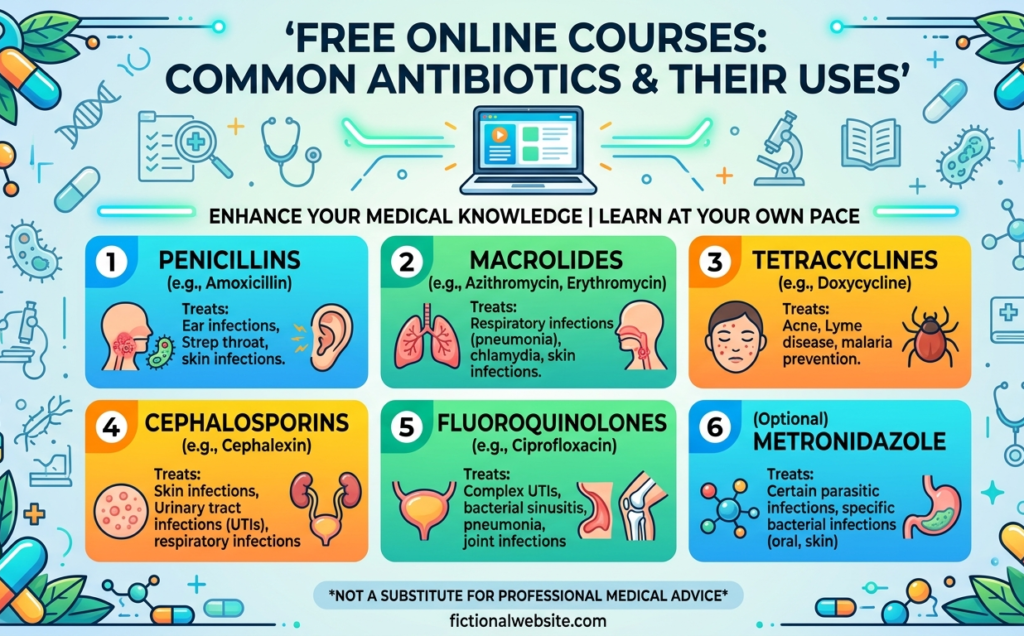
Free Online Courses on List of Common Antibiotics and Their Uses
| Course Name | Platform | What You’ll Learn |
| Antibiotics Course | Cursa | Types of antibiotics, resistance, mechanisms, clinical uses |
| Pharmacology Complete | Cursa | Antibiotics, pharmacokinetics, antimicrobial pharmacology |
| Pharmacology Basics | Cursa | Antibacterial drugs, chemotherapy, drug actions |
| Microbiology Course | Cursa | Bacterial infections, treatment basics, microbiology concepts |
| Beta-Lactam Antibiotics Course | Elevify | Penicillins, cephalosporins, resistance, dosing |
| Antimicrobial Stewardship Course | INDOHUN | Rational antibiotic prescribing and resistance prevention |
| Drug Discovery & Antimicrobial Drugs | Alison | Antimicrobial drugs and pharmaceutical basics |
| Pharmacology Course INBDE ADAT | Cursa | Antibiotics, CNS drugs, pharmacology review |
| Free Pharmacology Courses Collection | Cursa | Multiple free pharmacology and antibiotic-related courses |
| Free Pharma Learning Resources | ClinPath | Free pharma, clinical research, pharmacology resources |

Case Study From Hospital Training Using List Of Common Antibiotics and Their Uses
During one of my Pharm D ward rounds, we encountered a middle-aged diabetic patient admitted with a severe foot infection. Initially, he had taken random antibiotics from a local pharmacy without completing the course. By the time he arrived at the hospital, the bacteria had become resistant to first-line antibiotics.
The doctors ordered culture sensitivity testing, which revealed resistance to multiple antibiotics. Eventually, stronger intravenous antibiotics like Meropenem and Vancomycin were required. The patient stayed hospitalized for nearly two weeks.
That case taught me three critical lessons:
- Never self-medicate with antibiotics
- Always complete the prescribed course
- Culture testing is extremely important in resistant infections
This real-life experience mirrors WHO concerns regarding growing antimicrobial resistance globally.
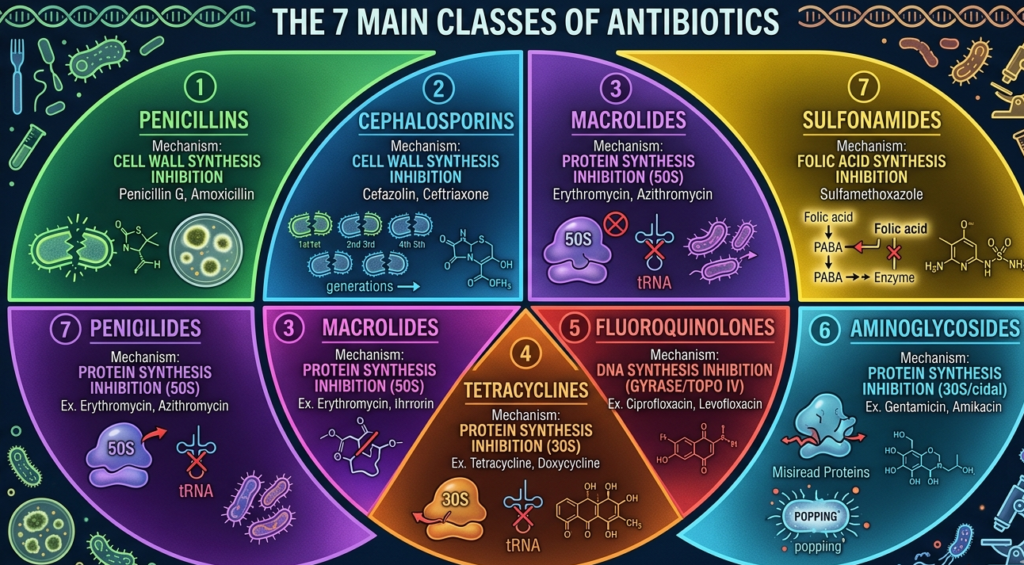
What Are the 7 Main Classes of Antibiotics?
People frequently ask about the 7 main classes of antibiotics and List Of Common Antibiotics and Their Uses. Here they are:
| Class | Examples | Uses |
|---|---|---|
| Penicillins | Amoxicillin | Throat infections |
| Cephalosporins | Cefixime | Pneumonia |
| Macrolides | Azithromycin | Respiratory infections |
| Fluoroquinolones | Ciprofloxacin | UTIs |
| Tetracyclines | Doxycycline | Acne |
| Aminoglycosides | Gentamicin | Severe infections |
| Carbapenems | Meropenem | Resistant infections |
What Are the Big 4 Antibiotics?
The term “Big 4 antibiotics” is often used informally for widely prescribed antibiotic groups:
- Penicillins
- Cephalosporins
- Macrolides
- Fluoroquinolones
These classes cover a large number of common bacterial infections.
What Is the Strongest Antibiotic for Bacterial Infection?
There is no single “strongest antibiotic.” The best antibiotic depends on:
- Type of bacteria
- Site of infection
- Resistance pattern
- Patient condition
For resistant infections, doctors may use:
- Vancomycin
- Meropenem
- Colistin
- Linezolid
These are usually reserved for severe hospital-acquired infections.
Which Fruit Kills Bacteria Naturally?
Some fruits have natural antibacterial properties, including:
- Cranberries
- Lemon
- Pineapple
- Pomegranate
However, these are not substitutes for prescription antibiotics in serious infections.
Antibiotic Resistance and Safe Usage : List Of Common Antibiotics and Their Uses
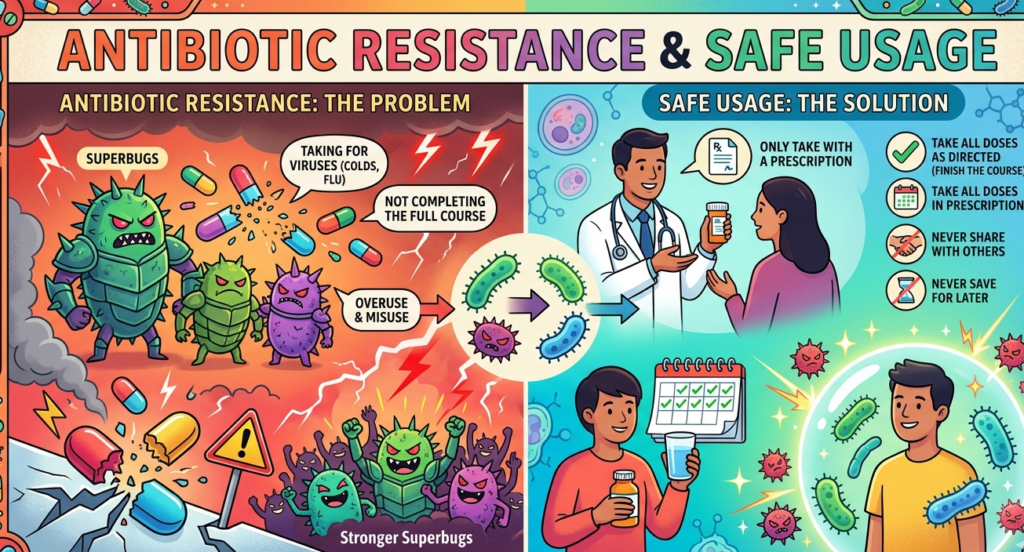
Antibiotic resistance is now one of the world’s biggest healthcare threats. WHO reports show resistance rising rapidly across many common bacteria. Experts warn that misuse today may make simple infections untreatable tomorrow.
The CDC also emphasizes proper antibiotic stewardship to reduce unnecessary use.
Safe Antibiotic Tips
- Never self-medicate
- Finish the full course
- Avoid sharing medicines
- Don’t pressure doctors for antibiotics
- Take antibiotics only for bacterial infections
As healthcare students, we are repeatedly taught that antibiotics are precious resources. Losing their effectiveness would push medicine backward by decades.

Conclusion
Antibiotics remain among the greatest achievements in medical science. From treating simple throat infections to life-threatening sepsis, these medicines save millions of lives every year. Understanding the top 20 antibiotics and their uses, the types of antibiotics and their uses, List Of Common Antibiotics and Their Uses and the dangers of misuse is essential for both healthcare professionals and the general public.
As a Pharm D student, I’ve seen both the benefits and dangers of antibiotics firsthand. I’ve watched patients recover rapidly after the right treatment, but I’ve also seen resistant infections caused by incomplete courses and self-medication. Antibiotics are powerful tools, but they demand responsible use.
The future of healthcare depends heavily on preserving antibiotic effectiveness. Every patient, pharmacist, doctor, and healthcare worker plays a role in preventing resistance. Taking antibiotics responsibly today may protect lives tomorrow.

FAQs
1. What are the 10 most common antibiotics?
The most common antibiotics & List Of Common Antibiotics and Their Uses include:
- Amoxicillin
- Azithromycin
- Ciprofloxacin
- Doxycycline
- Metronidazole
- Cefixime
- Ceftriaxone
- Clindamycin
- Levofloxacin
- Nitrofurantoin
2. What is a 3-day antibiotic?
Azithromycin is commonly known as a 3-day antibiotic because some infections require only three doses.
3. What kills bacteria inside the body?
Antibiotics kill bacteria inside the body by targeting bacterial structures or preventing bacterial growth.
4. What are 5th generation antibiotics?
Fifth-generation cephalosporins include advanced antibiotics like Ceftaroline, designed to treat resistant bacteria including MRSA.
5. Which antibiotic is most commonly used?
Amoxicillin is one of the most commonly prescribed antibiotics worldwide because it is effective for many bacterial infections.