
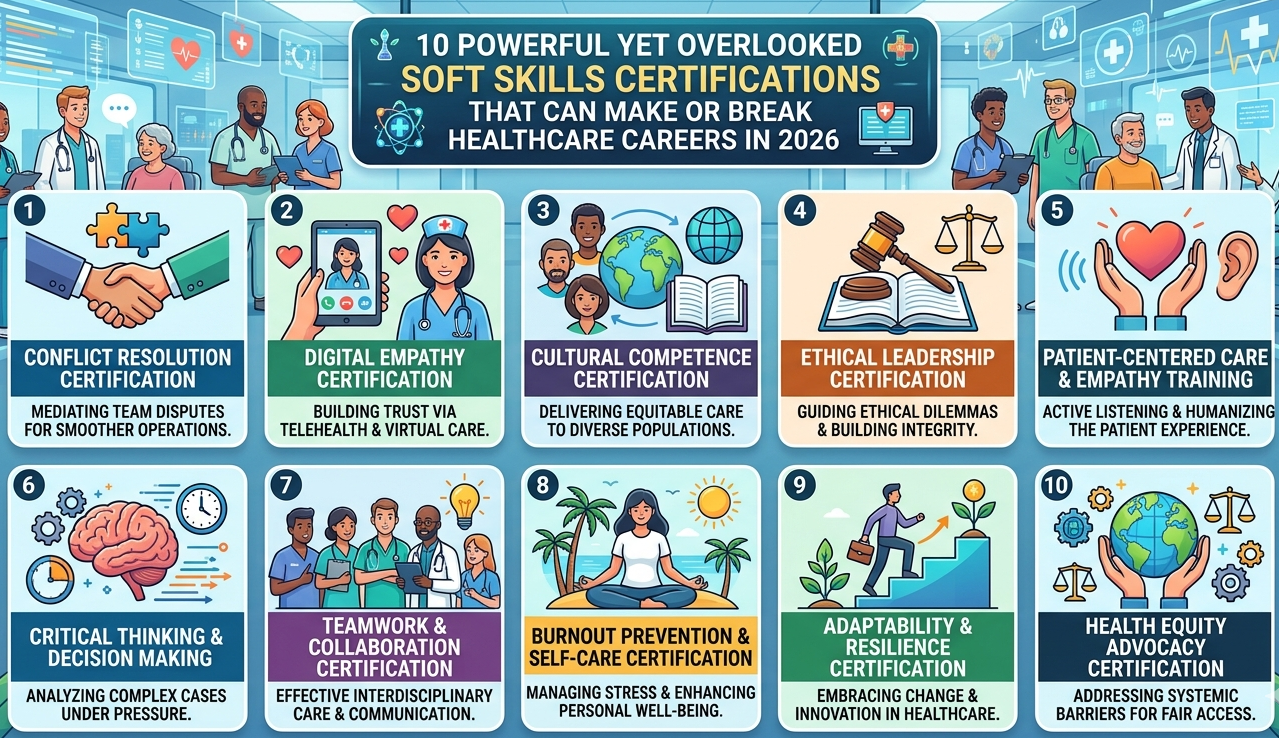
Table of Contents
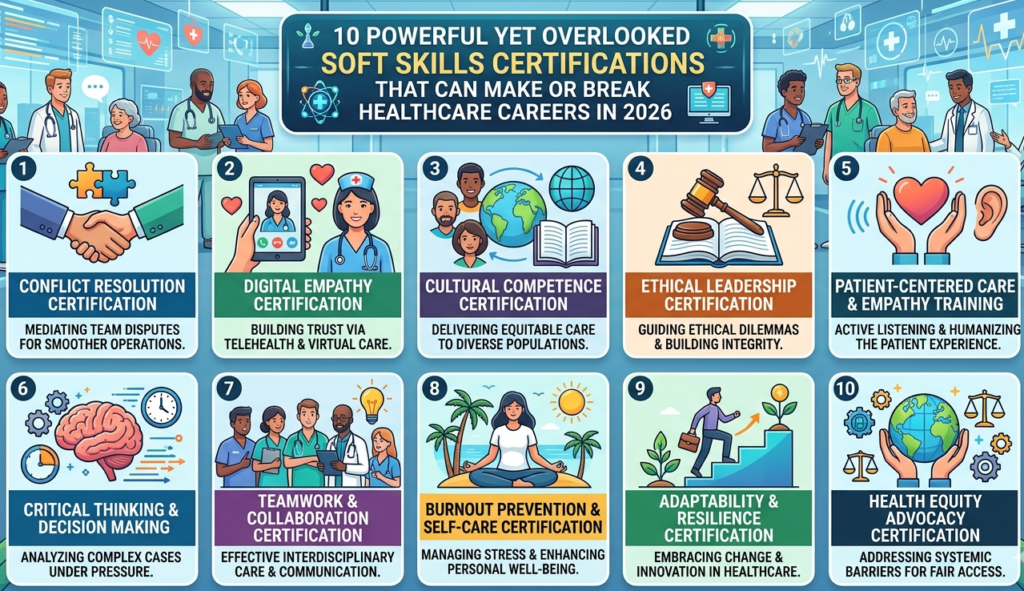
What is a Healthcare Professional Meaning?
When we talk about the health care professionals, we’re not just referring to doctors and nurses. The term health care professional meaning covers a wide spectrum—pharmacists, physiotherapists, lab technicians, clinical researchers, healthcare administrators, and even telemedicine experts. Anyone who contributes directly or indirectly to patient care falls under this umbrella.
In 2026, the definition has expanded even further. With telehealth, AI-assisted diagnostics, and remote monitoring becoming mainstream, healthcare professionals now work both in hospitals and from home setups. This shift has made soft skill online training more critical than ever because communication, empathy, and adaptability are now required in both physical and digital environments.
Think about it—would you trust a doctor who is technically brilliant but unable to communicate clearly? Probably not. That’s where soft skills certifications courses come into play, helping professionals bridge the gap between knowledge and patient interaction.
Why Soft Skills Certifications Matters in Healthcare
Role of Soft Skills in Patient Care
Soft skills are the invisible force behind effective healthcare delivery. While clinical knowledge treats the disease, soft skills treat the patient. Communication, empathy, and emotional intelligence are what make patients feel safe and understood.
In real-life scenarios, a patient rarely remembers the exact medication prescribed—but they always remember how a healthcare professional made them feel. That emotional connection directly impacts treatment adherence and recovery.
Statistics & Industry Demand in 2026
Recent data shows that hospitals focusing on communication and empathy training report 22% higher patient satisfaction rates . That’s huge. It means soft skills are no longer optional—they are career-defining.
Employers today are actively searching for candidates with most recognized soft skills certifications 2026, especially in roles involving patient interaction, telehealth, and leadership. In fact, many recruiters now prioritize behavioral skills alongside technical qualifications.
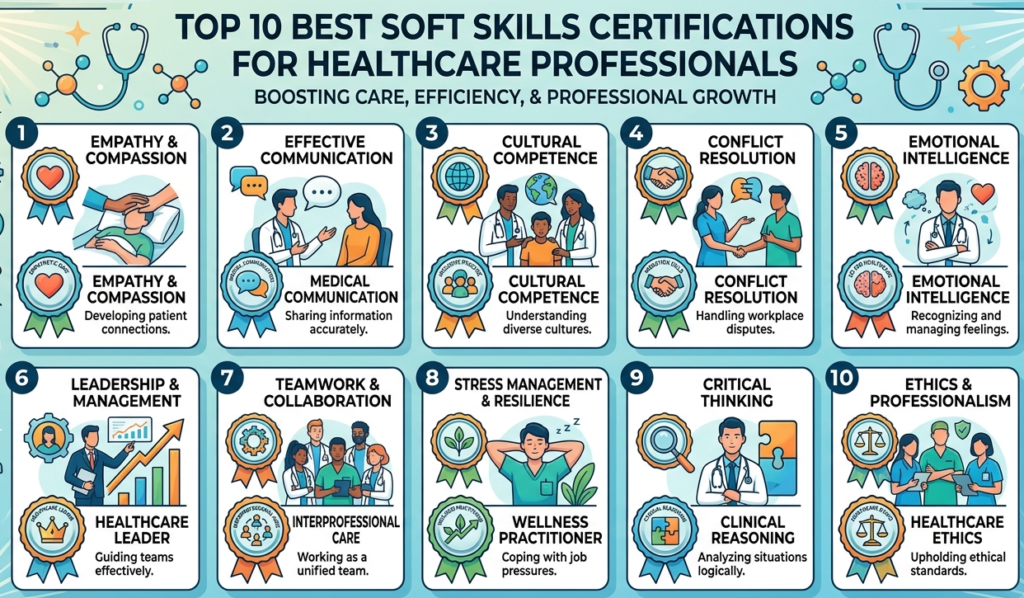
Top 10 Best Soft Skills Certifications for Healthcare Professionals
1. Communication Skills Certification
- Focus: Patient interaction, active listening
- Best for: Doctors, nurses, pharmacists
- Why it matters: Reduces medical errors caused by miscommunication
2. Emotional Intelligence Certification
- Focus: Self-awareness, empathy
- Helps in handling high-stress clinical situations
3. Leadership & Management Certification
- Ideal for senior healthcare professionals
- Builds decision-making and team management
4. Patient Handling & Empathy Training
- Core for patient satisfaction
- Enhances bedside manners
5. Conflict Resolution Certification
- Useful in hospital disputes and emergencies
- Improves workplace harmony
6. Time Management Certification
- Helps manage long shifts and workload
- Essential for productivity
7. Teamwork & Collaboration Certification
- Healthcare is team-driven
- Improves interdisciplinary coordination
8. Critical Thinking Certification
- Enhances clinical decision-making
- Reduces errors
9. Stress Management Certification
- Prevents burnout
- Improves mental resilience
10. Certified Soft Skills Trainer Course
- For professionals who want to teach
- High demand in training institutes
Best Soft Skills Certifications in India
India has seen a surge in demand for best soft skills certification in India due to growing healthcare infrastructure. Some popular options include:
- NPTEL Soft Skills Certification
- Coursera Soft Skills Programs
- Skill India Courses
- Apollo MedSkills Training
These soft skills certificate course options are affordable, flexible, and globally recognized.
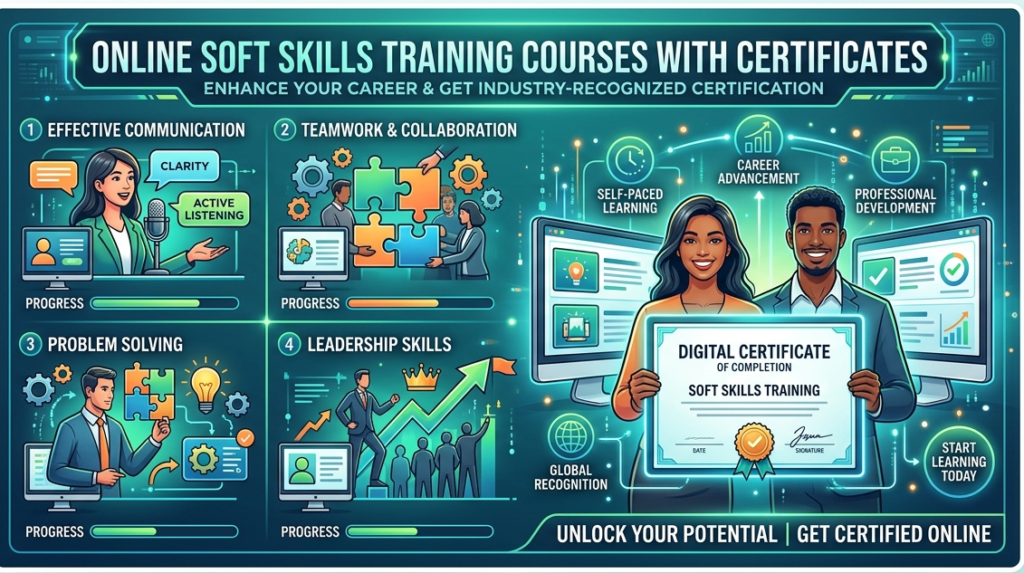
Online Soft Skills Training Courses with Certificates
The rise of soft skills course online platforms has made learning accessible anytime, anywhere. Popular platforms include:
- Coursera
- Udemy
- LinkedIn Learning
- FutureLearn
These platforms offer online soft skills training courses with certificates, allowing healthcare professionals to upgrade skills without leaving their jobs.
🎓Best Soft Skills Certifications for Healthcare Professionals in 2026 (With Valid Links)
| Certification Type | Duration | Best For | Mode | Recognition |
| Communication Skills | 4–6 weeks | Beginners | Online | High |
| Emotional Intelligence | 1–2 hours | Mid-level | Online | Medium |
| Leadership Training | 6–7 hours | Seniors | Online | High |
| Time Management | 2–4 weeks | All levels | Online | Medium |
| Certified Soft Skills Trainer | 3–6 months | Trainers | Online | High |
Work From Home Jobs for Healthcare Professionals
Soft skills open doors to work from home jobs for healthcare professionals, such as:
- Telehealth consultant
- Medical content writer
- Clinical data analyst
- Healthcare virtual assistant
- Online health coach
With the right soft skill certificate, professionals can transition into flexible roles without compromising career growth.
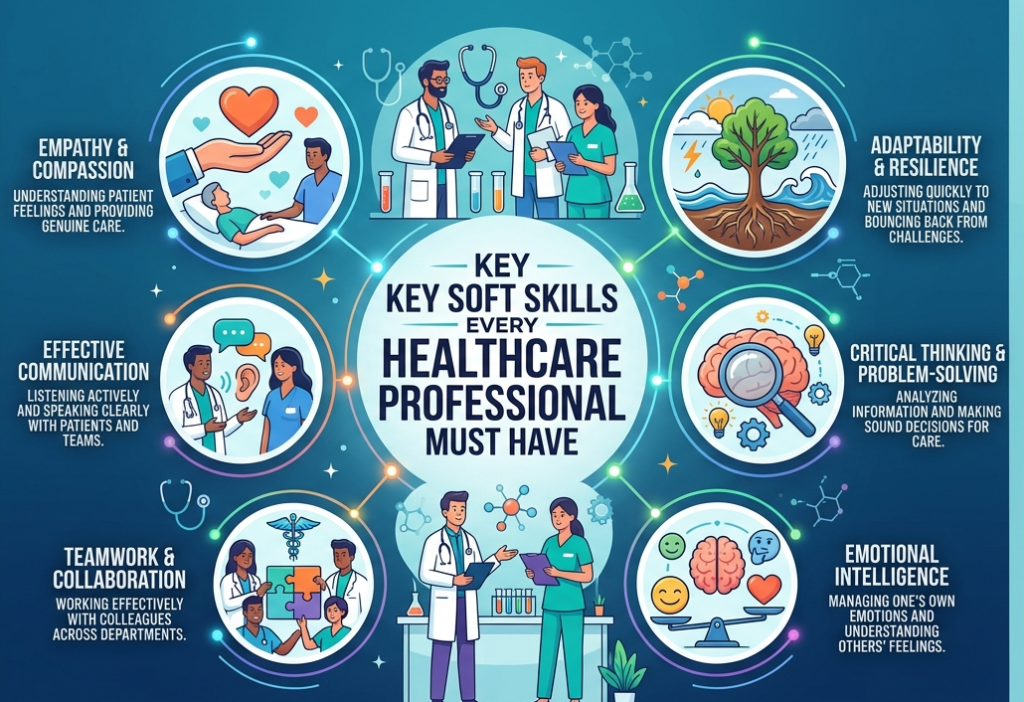
Key Soft Skills Every Healthcare Professional Must Have
According to recent industry insights, the most essential soft skills include:
- Communication
- Empathy
- Emotional intelligence
- Adaptability
- Teamwork
These skills are considered the backbone of modern healthcare practice .
The 7 Major Soft Skills
The 7 major soft skills include:
- Communication
- Leadership
- Teamwork
- Problem-solving
- Emotional intelligence
- Time management
- Adaptability
The 5 C’s of Soft Skills
The famous 5 C’s of soft skills are:
- Communication
- Collaboration
- Critical thinking
- Creativity
- Confidence
The 4 Pillars of Soft Skills
The 4 pillars of soft skills include:
- Personal effectiveness
- Communication skills
- Leadership skills
- Interpersonal skills
Difference Between Soft Skills and Hard Skills
Soft skills are behavioral and interpersonal abilities, while hard skills are technical competencies. In 2026, both are essential, but soft skills are harder to automate and more transferable across roles .
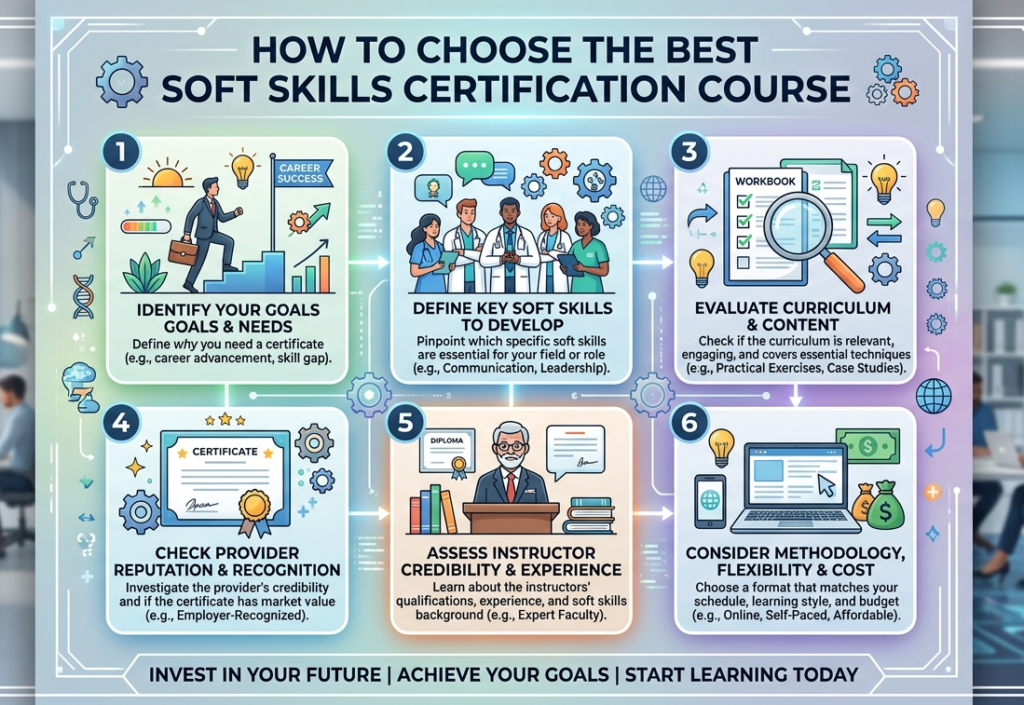
How to Choose the Best Soft Skills Certifications Course
Choosing the right certificate course in soft skills can feel overwhelming. Here’s how to simplify it:
- Identify your career goal
- Choose industry-recognized programs
- Prefer practical training over theory
- Look for certifications with real-world projects
Conclusion
Healthcare is no longer just about clinical expertise—it’s about human connection. The professionals who thrive in 2026 are those who combine technical knowledge with emotional intelligence and communication skills.
Investing in soft skills certifications courses is not just a career upgrade—it’s a transformation. Whether you’re aiming for leadership roles, better patient interaction, or remote healthcare jobs, the right certification can completely redefine your career path.
FAQs
1. What are soft skills that are useful as a healthcare professional?
Communication, empathy, emotional intelligence, teamwork, and adaptability are the most important.
2. Which healthcare professionals should be certified?
All—doctors, nurses, pharmacists, and even healthcare administrators benefit from certification.
3. What are the 7 hard skills?
Clinical procedures, data analysis, EHR handling, diagnostics, pharmacology, patient care, and technical tools.
4. What is the best soft skills certification in India?
NPTEL, Coursera, and Skill India certifications are widely recognized.
5. Are online soft skills courses worth it?
Yes, especially soft skills online training programs with certificates that are industry-recognized.