
Table of Contents
Introduction to Drug Interactions
Ever wondered why pharmacists pause before handing over your medicines? Or why doctors ask, “Are you taking anything else?” That pause is where patient safety lives. Drug interactions are like invisible conversations between medicines—sometimes friendly, sometimes dangerous. And that’s where drug interaction charts become lifesavers.
In today’s world of polypharmacy, knowing how drugs interact isn’t optional—it’s essential. Whether you’re a pharmacy student, clinician, or healthcare writer, this guide breaks down drug interaction charts and tables in a way that’s simple, practical, and actually useful.
Why Drug Interaction Charts Matter in Healthcare
Think of drug interaction charts as traffic signals for medications. Green means safe, yellow means caution, and red means stop. Without them, prescribing would be like driving blindfolded.
These charts:
- Reduce medication errors
- Improve clinical decision-making
- Save time during ward rounds
- Enhance patient safety
In short, they turn complex pharmacology into actionable knowledge.
What Are Drug Interactions?
Definition in Simple Terms
Drug interactions occur when one drug affects the action, effectiveness, or toxicity of another drug. Sometimes the effect is mild. Other times, it’s catastrophic.
Why They Occur
Because the body is not a static container. It’s a dynamic system where enzymes, receptors, and organs constantly interact—just like people at a busy marketplace.
The Four Major Types of Drug Interactions
Drug–Drug Interactions
When two or more drugs react with each other. This is the most common and most dangerous category.
Drug–Food Interactions
Grapefruit juice with statins? A classic example of food altering drug metabolism.
Drug–Disease Interactions
NSAIDs in peptic ulcer disease—enough said.
Drug–Herb Interactions
Herbal doesn’t mean harmless. St. John’s Wort is notorious for reducing drug levels.
Drug Interactions in Clinical Pharmacy
Role of Clinical Pharmacists
Clinical pharmacists act as gatekeepers. They evaluate prescriptions, review drug-drug interaction charts, and prevent harm before it happens.
Real-World Impact on Patient Safety
Studies consistently show that pharmacist intervention reduces adverse drug reactions. One timely chart reference can save a life.
Classification of Drug–Drug Interactions
Pharmacokinetic Interactions
These affect how the body handles drugs.
Absorption
Antacids reducing tetracycline absorption.
Distribution
Protein-binding displacement, like warfarin interactions.
Metabolism
CYP450 enzyme inhibition or induction—this is where most interactions live.
Excretion
Probenecid increasing penicillin levels.
Pharmacodynamic Interactions
These occur at the receptor or physiological level. Example: benzodiazepines + opioids = respiratory depression.
The Four Stages of Drug Interaction
Pharmaceutical Stage
Physical or chemical incompatibility before administration.
Pharmacokinetic Stage
Changes in ADME (Absorption, Distribution, Metabolism, Excretion).
Pharmacodynamic Stage
Additive, synergistic, or antagonistic effects.
Clinical Outcome Stage
The final impact seen in the patient—beneficial or harmful.
Understanding Drug Interaction Charts
What Is a Drug Interaction Chart?
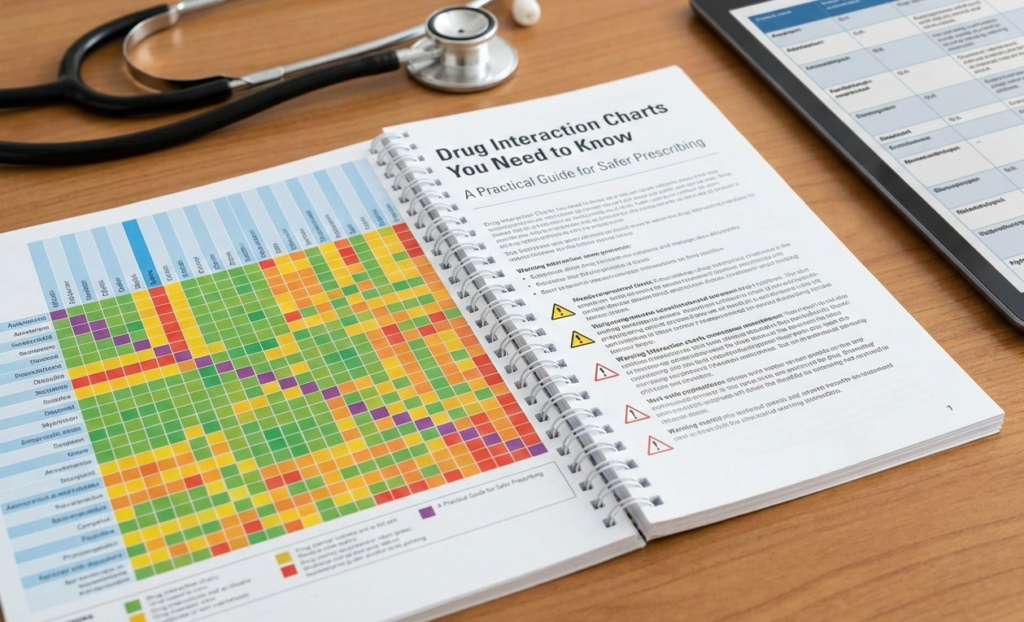
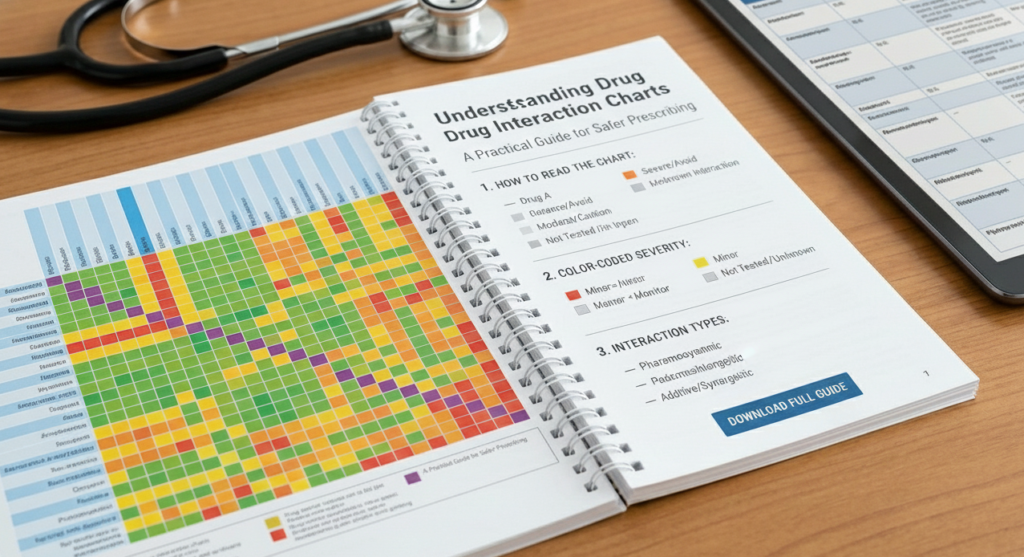
A drug interaction chart is a structured table listing drugs alongside their potential interactions, severity, and management strategies.
How to Read a Medication Interaction Chart
Most charts use:
- Color codes
- Severity levels (minor, moderate, major)
- Action steps (monitor, avoid, adjust dose)
Once you know the language, it’s surprisingly intuitive.
Common Drug Interaction Charts and Tables
Antibiotics Interaction Chart
Macrolides + statins = increased myopathy risk.
Cardiovascular Drugs Interaction Chart
ACE inhibitors + potassium-sparing diuretics = hyperkalemia.
CNS Drugs Interaction Chart
SSRIs + MAO inhibitors = serotonin syndrome.
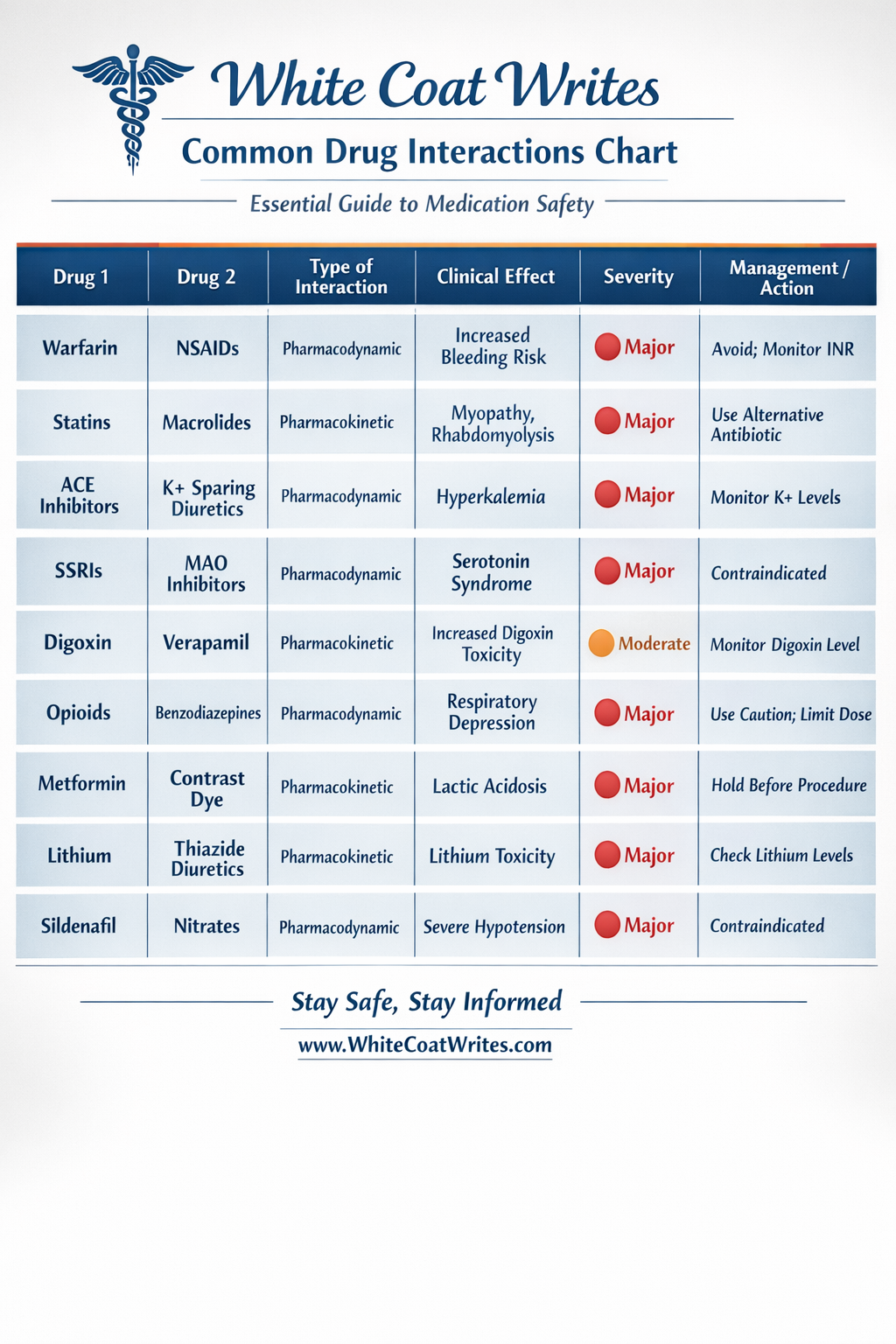
Common Drug Interactions Chart (Quick Reference)
This kind of common drug interactions chart is gold during emergencies.
| Drug 1 | Drug 2 | Type of Interaction | Clinical Effect | Severity | Management / Action |
| Warfarin | NSAIDs | Pharmacodynamic | Increased bleeding risk | Major | Avoid combination; monitor INR closely |
| Warfarin | Metronidazole | Pharmacokinetic (CYP inhibition) | Increased INR, bleeding | Major | Reduce warfarin dose; monitor INR |
| ACE inhibitors | Potassium-sparing diuretics | Pharmacodynamic | Hyperkalemia | Major | Monitor potassium levels |
| Statins | Macrolide antibiotics (e.g., Clarithromycin) | Pharmacokinetic (CYP3A4 inhibition) | Myopathy, rhabdomyolysis | Major | Avoid or use alternative antibiotic |
| Digoxin | Verapamil | Pharmacokinetic | Increased digoxin toxicity | Moderate | Monitor digoxin levels |
| SSRIs | MAO inhibitors | Pharmacodynamic | Serotonin syndrome | Major | Contraindicated |
| Opioids | Benzodiazepines | Pharmacodynamic | Respiratory depression | Major | Avoid or use lowest effective doses |
| Metformin | Iodinated contrast media | Pharmacokinetic | Lactic acidosis | Major | Stop metformin before procedure |
| Theophylline | Ciprofloxacin | Pharmacokinetic | Theophylline toxicity | Moderate | Monitor drug levels |
| Antacids | Tetracyclines | Pharmacokinetic (absorption) | Reduced antibiotic effect | Moderate | Separate dosing by 2–4 hours |
| Oral contraceptives | Rifampicin | Pharmacokinetic (enzyme induction) | Reduced contraceptive efficacy | Major | Use alternative contraception |
| Clopidogrel | Omeprazole | Pharmacokinetic | Reduced antiplatelet effect | Moderate | Use pantoprazole instead |
| Lithium | Thiazide diuretics | Pharmacokinetic | Lithium toxicity | Major | Monitor lithium levels |
| Insulin | Beta-blockers | Pharmacodynamic | Masked hypoglycemia symptoms | Moderate | Monitor blood glucose closely |
| Sildenafil | Nitrates | Pharmacodynamic | Severe hypotension | Major | Contraindicated |
Drug–Drug Interaction Examples You Must Know
- Warfarin + antibiotics
- Opioids + benzodiazepines
- ACE inhibitors + ARBs
- SSRIs + Triptans
These drug-drug interaction examples are frequently tested and clinically relevant.
Drug Interaction Charts and Tables for Daily Practice
Hospital Setting
Used during medication reconciliation and rounds.
Community Pharmacy
Quick checks before dispensing.
Academic and Exam Preparation
Essential for GPAT, NAPLEX, and clinical exams.
Drug Interactions PDF: Why Digital Charts Are Essential
Drug–Drug Interaction PDF Free Download
PDFs are portable, searchable, and ideal for offline use. Many institutions rely on drug-drug interaction PDF free download resources.
Benefits of PDF Charts
- Easy updates
- Mobile-friendly
- Quick access
A drug interactions PDF is like having a mini clinical mentor in your pocket.
Medication Interaction Chart vs Drug Interaction Chart
They’re often used interchangeably, but:
- Medication interaction charts may include food and disease interactions
- Drug interaction charts usually focus on drug–drug interactions
Both are valuable depending on context.
Limitations of Drug Interaction Charts
No chart replaces clinical judgment. They don’t always account for:
- Patient-specific factors
- Dose variations
- Duration of therapy
Charts guide—but clinicians decide.
Best Practices to Prevent Harmful Drug Interactions
- Always review medication history
- Use updated interaction charts
- Educate patients
- Encourage pharmacist consultations
Prevention beats treatment—every time.
People Also Ask
What are drug interactions?
Drug interactions occur when one substance alters the effect of another, leading to increased toxicity or reduced efficacy.
What are drug interactions in clinical pharmacy?
They are evaluated risks managed by pharmacists to ensure safe and effective therapy.
What are the classification of drug-drug interactions?
Pharmacokinetic and pharmacodynamic interactions.
What are the four stages of drug interaction?
Pharmaceutical, pharmacokinetic, pharmacodynamic, and clinical outcome stages.
What is a drug interaction chart used for?
A drug interaction chart is used to quickly identify harmful or beneficial interactions between medicines, helping healthcare professionals make safer prescribing decisions.
How do drug interaction charts improve patient safety?
They reduce medication errors by highlighting high-risk combinations, allowing early intervention, dose adjustment, or avoidance of dangerous drug pairs.
Are drug interaction charts reliable for clinical decisions?
Yes, they are reliable reference tools, but they should always be used alongside clinical judgment and patient-specific factors.
Conclusion
Drug interaction charts are more than tables—they’re safety nets. In a healthcare system juggling countless medications, these charts bring clarity to chaos. Whether you’re scanning a drug drug interaction chart, reviewing a medication interaction chart, or downloading a drug interactions PDF, remember this: informed decisions save lives. Use charts wisely, think clinically, and never underestimate the power of prevention.